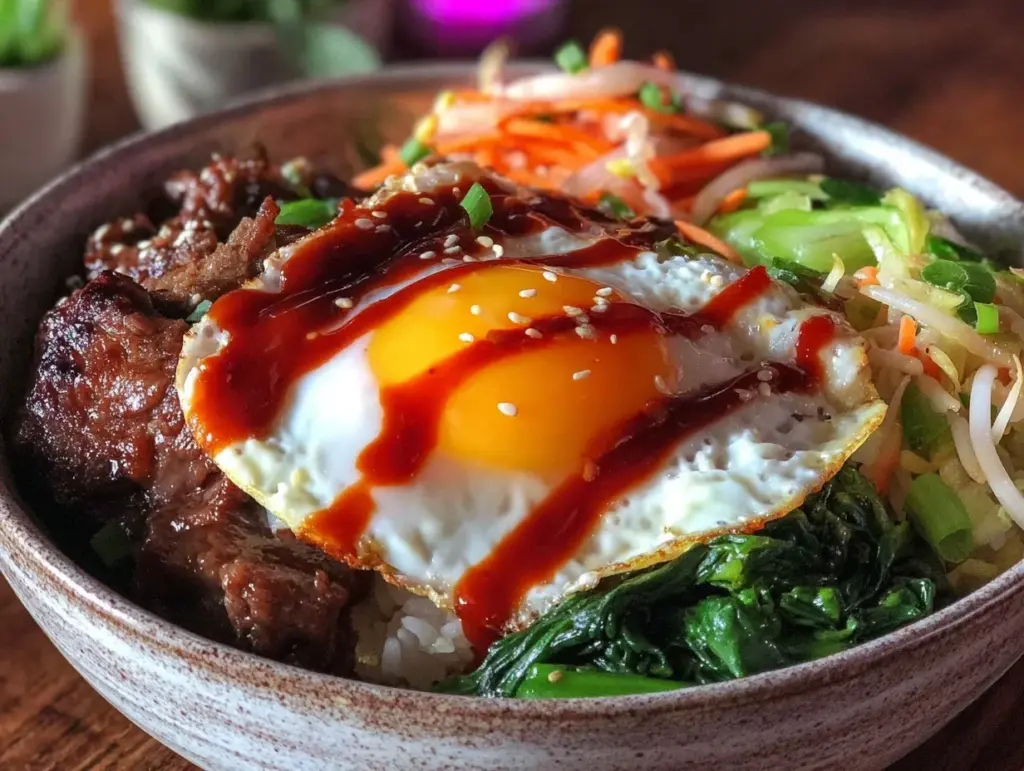
“You know, I never thought a simple bowl of rice could make me feel like I was sitting in a bustling Seoul street market,” my friend once said while digging into this flavorful Korean bibimbap bowl. I have to admit, I wasn’t expecting such a humble dish to pack this much punch. It all started on a lazy Wednesday evening when I was skimming through a little Korean cookbook I found tucked between dusty shelves at a thrift store. The recipe was scribbled hastily, probably by someone who loved food more than neat handwriting. I tried it that very night, though half the ingredients were missing, and honestly, it was a bit of a mess. Somehow, the mix of gochujang, crisp veggies, and that fried egg on top created this magical flavor combination that kept me coming back for more.
Maybe you’ve been there—craving something comforting yet exciting, and this Korean bibimbap bowl hits that perfect spot. The sizzle of the egg frying, the vibrant colors of the veggies, and the spicy-sweet kick of gochujang make it a bowl that’s more than just food; it’s a whole experience. I still laugh remembering how I forgot to cook the spinach one time and ended up with a less green but still tasty bowl. It’s these little kitchen quirks that make cooking fun, right? This recipe stuck with me because it’s approachable, satisfying, and honestly, it feels like a warm hug after a long day.
Let me tell you, once you get the hang of the layering and that perfect fried egg on top, you’ll find yourself whipping up this bibimbap bowl again and again. It’s one of those dishes that makes you stop, savor, and maybe even close your eyes for a moment. So, if you’re ready to try a recipe that’s got soul, spice, and a bit of crunch, keep reading—I promise it’s worth every bite.
Why You’ll Love This Recipe
Cooking this flavorful Korean bibimbap bowl is like having a little piece of Korea right in your kitchen, without the fuss or fancy ingredients. I’ve tested this recipe multiple times—sometimes on hectic weeknights—and it never fails to deliver that perfect balance of flavors and textures. Here’s why you’ll want to make it your new go-to:
- Quick & Easy: Comes together in about 30 minutes, perfect for whipping up after work or when you need a last-minute meal that feels special.
- Simple Ingredients: Most are pantry staples or fresh veggies you can find anywhere, no need for exotic markets.
- Perfect for Any Occasion: Whether it’s a casual solo dinner or a fun potluck dish, bibimbap brings color and flavor that impresses.
- Crowd-Pleaser: Even the pickiest eaters tend to love it—there’s something about that gochujang sauce paired with crispy veggies and a runny fried egg that wins hearts.
- Unbelievably Delicious: The way the spicy, sweet, and savory notes mingle with the toasted sesame oil and rice is next-level comfort food.
What makes this recipe stand out? The gochujang sauce here isn’t just spooned on; it’s mixed with a touch of sesame oil and garlic to deepen the flavor, giving you that perfect heat without overpowering the dish. Plus, frying the egg with a little extra oil until the edges are crispy adds a delightful texture contrast that I didn’t expect but now can’t live without. Honestly, it’s these little details that make this Korean bibimbap bowl feel like more than just a recipe—it’s a celebration in a bowl.
What Ingredients You Will Need
This Korean bibimbap bowl uses simple, wholesome ingredients to deliver bold flavor and a satisfying texture without the fuss. Most ingredients are easy to find and pantry-friendly, with a few fresh veggies to brighten things up.
- For the Bowl:
- 1 ½ cups short-grain white rice, cooked (about 280g) – the sticky texture is key for bibimbap
- 2 large eggs (preferably free-range)
- 1 cup fresh spinach, washed and drained (about 30g)
- 1 medium carrot, julienned or thinly sliced
- 1 cup shiitake mushrooms, sliced (about 75g) – fresh or dried rehydrated
- ½ cup bean sprouts, blanched (about 60g)
- 1 small zucchini, julienned (about 100g)
- For the Gochujang Sauce:
- 2 tablespoons gochujang (Korean chili paste) – I recommend Chung Jung One brand for authentic flavor
- 1 tablespoon toasted sesame oil
- 1 teaspoon sugar or honey (balances the heat)
- 1 teaspoon garlic, finely minced
- 1 tablespoon water (to loosen the sauce)
- Other Seasonings & Garnishes:
- 2 teaspoons soy sauce (or tamari for gluten-free option)
- 1 tablespoon vegetable or canola oil (for frying veggies and egg)
- 1 teaspoon toasted sesame seeds (for garnish)
- Optional: kimchi on the side for extra zing
Pro tip: For the best texture, look for firm, fresh shiitake mushrooms and crisp spinach leaves. If you want a gluten-free version, swap soy sauce with tamari and ensure your gochujang is gluten-free (some brands vary). If fresh veggies are scarce, frozen spinach and mushrooms work just fine, just thaw and drain them well.
Equipment Needed
- Non-stick skillet or frying pan – for cooking the egg and sautéing vegetables (I prefer a 10-inch pan for even heat)
- Medium pot with lid – for cooking rice (a rice cooker works beautifully too, but stovetop is fine)
- Mixing bowls – a couple for blanching and prepping veggies
- Knife and cutting board – sharp knife for slicing julienne vegetables
- Small bowl and spoon – for mixing the gochujang sauce
- Tongs or spatula – to handle the fried egg carefully
If you don’t have a non-stick pan, a well-seasoned cast iron works, but be extra gentle when flipping the egg to avoid sticking. For the rice, a rice cooker is a great investment if you plan to make Asian dishes often, but I’ve managed just fine with a pot and a tight lid. Keeping your tools simple helps you focus on the cooking, honestly.
Preparation Method
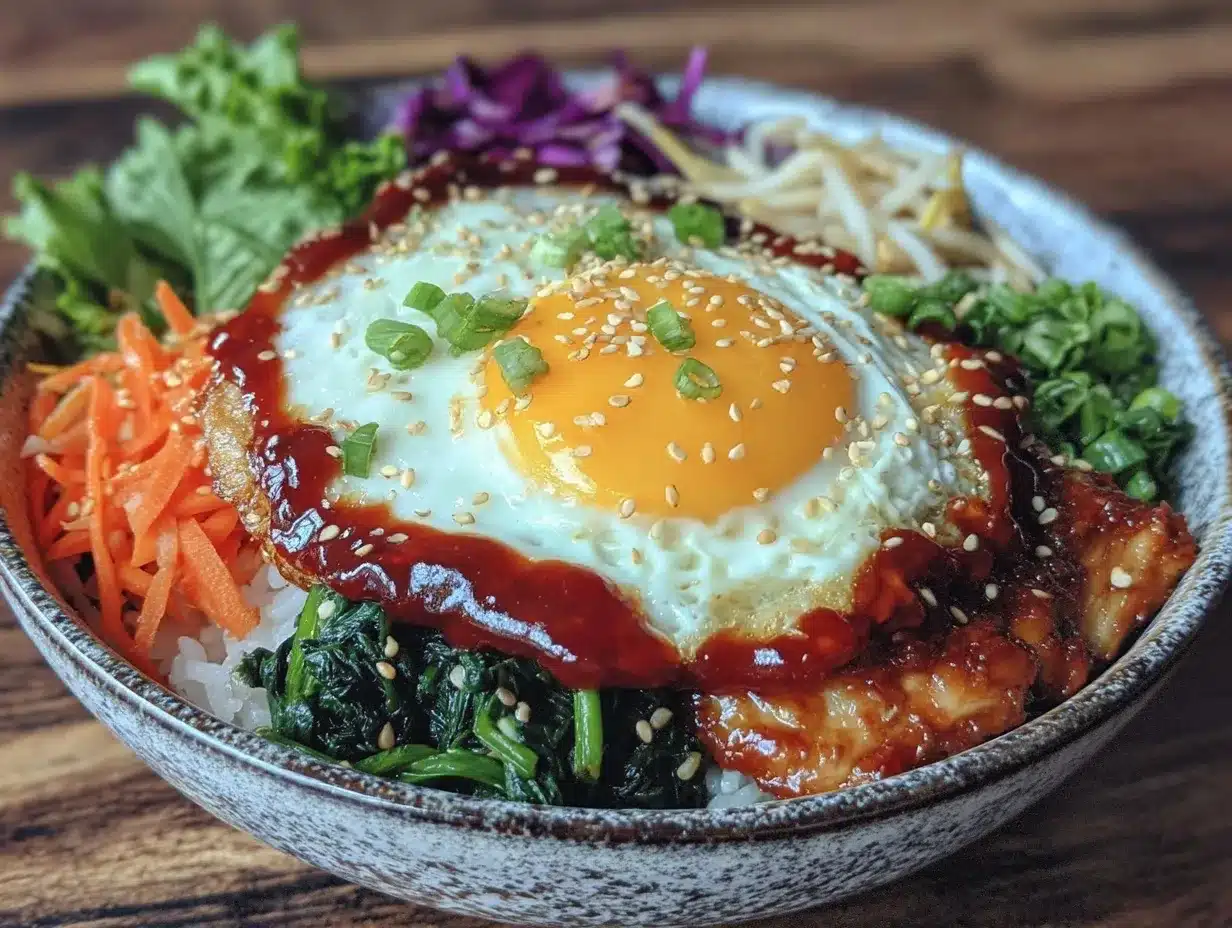
- Cook the Rice: Rinse 1 ½ cups (280g) short-grain rice under cold water until the water runs clear. Drain and cook in a medium pot with 1 ¾ cups (420ml) water. Bring to a boil, then reduce heat to low, cover, and simmer for 15 minutes. Remove from heat and let it steam for another 10 minutes without lifting the lid.
- Prepare the Vegetables: While the rice cooks, blanch the spinach and bean sprouts separately in boiling water for 1 minute each. Drain and squeeze out excess water with your hands. Season each with a pinch of salt and a few drops of sesame oil. Set aside.
- Sauté the Carrot, Zucchini, and Mushrooms: Heat 1 tablespoon vegetable oil in a skillet over medium heat. Cook the carrots for 2-3 minutes until slightly softened but still crisp. Remove and repeat with zucchini and mushrooms separately, seasoning each with a pinch of salt. This keeps flavors distinct and textures perfect.
- Mix the Gochujang Sauce: In a small bowl, combine 2 tablespoons gochujang, 1 tablespoon toasted sesame oil, 1 teaspoon sugar, 1 teaspoon minced garlic, and 1 tablespoon water. Stir until smooth. Taste and adjust sweetness or heat if needed.
- Fry the Eggs: Use the same skillet, add a little more oil if needed, and fry the eggs one at a time over medium heat. Cook until the whites are crisp around the edges but the yolk is still runny, about 2-3 minutes. Season with a pinch of salt.
- Assemble the Bowl: Scoop the cooked rice into individual bowls. Arrange the sautéed veggies, blanched spinach, and bean sprouts around the rice in colorful sections. Place the fried egg right in the center.
- Add Sauce & Garnish: Drizzle the gochujang sauce over the top or serve on the side for dipping. Sprinkle with toasted sesame seeds and add kimchi if you like.
- Mix & Enjoy: Just before eating, stir everything together so the sauce coats every bite, and the egg yolk adds richness. The contrast of spicy, savory, and fresh is just unbeatable.
Note: If you end up with a bit of leftover sauce, it’s fantastic as a dip for veggies or grilled meats. Also, don’t rush the rice cooking; properly steamed rice is the foundation of a great bibimbap bowl.
Cooking Tips & Techniques
Getting that perfect Korean bibimbap bowl is about balance and a few little tricks I picked up along the way. First, don’t skip rinsing the rice until the water runs clear—that washes away excess starch and prevents the rice from becoming gluey. Trust me, I once tried skipping that step in a hurry, and it was a sticky mess.
When blanching the spinach and bean sprouts, timing is everything. Just a quick dip in boiling water keeps them bright and tender-crisp. Overcooking turns them soggy and dull, which kind of ruins the whole texture harmony.
The vegetables are best sautéed separately so each retains its unique texture and flavor. I know it sounds like more work, but this layering really pays off. Plus, you can multitask by prepping the sauce while veggies cook.
About the fried egg—aim for crispy edges with a runny yolk. Use enough oil and moderate heat to get that lacy edge without burning. If you’re nervous about frying, cover the pan for a minute to steam the top gently.
Lastly, when mixing the gochujang sauce, taste as you go. Gochujang varies in heat and sweetness across brands, so tweaking sugar or water keeps it just right for your palate.
Variations & Adaptations
- Vegetarian or Vegan: Skip the fried egg or replace it with a tofu scramble or pan-fried tempeh. Use tamari instead of soy sauce and check that your gochujang is vegan-friendly.
- Protein Additions: Add marinated bulgogi beef, grilled chicken, or shrimp for a heartier bowl. Cook the protein separately and add alongside the veggies.
- Seasonal Veggies: Swap in whatever’s fresh—like bell peppers, cucumbers, or roasted sweet potatoes. In winter, try sautéed kale or broccoli instead of spinach.
- Grain Alternatives: Use brown rice, quinoa, or cauliflower rice for a different texture or lower carb option. Adjust cooking times accordingly.
- Spice Level: If you’re heat-sensitive, reduce the gochujang amount or mix in a little plain yogurt to mellow the sauce.
Personally, I once tried adding roasted pumpkin to the mix for a fall twist, and it was surprisingly good—the sweetness balanced the spicy sauce beautifully. Feel free to experiment and find your favorite combo!
Serving & Storage Suggestions
Serve your Korean bibimbap bowl immediately while the egg is warm and the veggies still have a bit of snap. Presentation is part of the fun—arranging colorful veggies around the rice makes it feel special. A small side of kimchi or pickled radishes adds a nice tang contrast.
If you have leftovers, store everything separately in airtight containers—rice, veggies, and sauce. The fried egg is best eaten fresh but can be reheated gently in a pan or microwave if needed. When reheating, sprinkle a few drops of water over the rice to keep it moist.
Flavors tend to deepen after a day, especially the sauce melding with the veggies, so leftovers can be just as tasty. Just remember that texture gets softer with time, so reheating gently and quickly is key.
Nutritional Information & Benefits
This Korean bibimbap bowl offers a balanced meal packed with fiber, protein, and vitamins from the fresh vegetables and egg. The gochujang sauce adds flavor without excessive calories, and the sesame oil provides heart-healthy fats.
Per serving (one bowl), you can expect roughly:
| Nutrient | Amount |
|---|---|
| Calories | 450-500 kcal |
| Protein | 15-18 g |
| Carbohydrates | 60-65 g |
| Fat | 12-15 g |
| Fiber | 6-8 g |
Gluten-free and can be adapted for vegan diets. The ingredients bring antioxidants and vitamins A and C from the veggies, plus healthy fats from sesame oil. I find it a satisfying meal that keeps me energized without feeling heavy.
Conclusion
So, if you’re looking for a dish that’s vibrant, flavorful, and surprisingly easy to make, this Korean bibimbap bowl with gochujang and a fried egg might just become your new favorite. It’s a recipe that’s easy to personalize depending on what’s in your fridge, yet consistent enough to deliver that satisfying taste every time.
I love this recipe because it’s approachable but still feels special, and honestly, it’s a great way to sneak in more veggies without feeling like you’re on a diet. Give it a try, play around with the veggies or protein, and make it your own. I’d love to hear how you customize your bibimbap bowl—drop a comment below and share your twists!
Remember, cooking is about joy and a little adventure, and this bibimbap bowl definitely brings both to my kitchen. Happy cooking!
FAQs
What is the best rice to use for bibimbap?
Short-grain white rice is ideal because it’s sticky and holds the ingredients well. You can also use medium-grain rice, but avoid long-grain varieties which are less sticky.
Can I make bibimbap ahead of time?
Yes, but keep the components separate and assemble just before serving. The fried egg is best fresh, but veggies and rice can be prepped earlier.
How spicy is gochujang?
Gochujang has a mild to moderate spice level with a sweet and savory flavor. You can adjust the amount in the sauce to suit your heat preference.
What can I use instead of gochujang if I can’t find it?
Mixing a bit of chili paste or sriracha with a touch of miso or soy sauce can mimic some flavors, but it won’t be quite the same. It’s worth trying to find gochujang for the authentic taste.
Is bibimbap gluten-free?
It can be gluten-free if you use tamari instead of soy sauce and check that your gochujang doesn’t contain wheat. Many brands offer gluten-free versions.
Pin This Recipe!
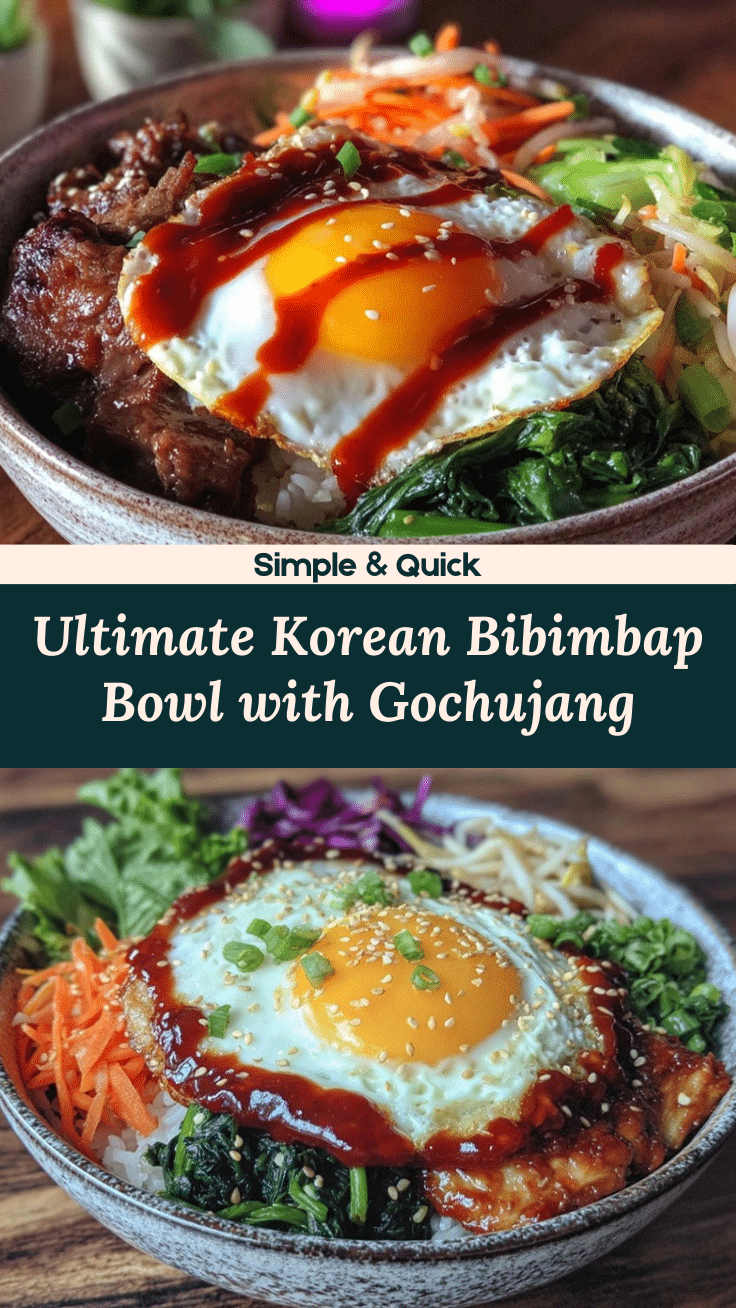
Flavorful Korean Bibimbap Bowl Recipe with Easy Gochujang and Fried Egg
A vibrant and satisfying Korean bibimbap bowl featuring sticky short-grain rice, sautéed veggies, a spicy-sweet gochujang sauce, and a crispy-edged fried egg. This recipe is quick, approachable, and perfect for a comforting meal with bold flavors.
- Prep Time: 10 minutes
- Cook Time: 20 minutes
- Total Time: 30 minutes
- Yield: 2 servings 1x
- Category: Main Course
- Cuisine: Korean
Ingredients
- 1 ½ cups short-grain white rice, cooked (about 280g / 10 oz)
- 2 large eggs (preferably free-range)
- 1 cup fresh spinach, washed and drained (about 30g / 1 oz)
- 1 medium carrot, julienned or thinly sliced
- 1 cup shiitake mushrooms, sliced (about 75g / 2.6 oz) – fresh or dried rehydrated
- ½ cup bean sprouts, blanched (about 60g / 2.1 oz)
- 1 small zucchini, julienned (about 100g / 3.5 oz)
- 2 tablespoons gochujang (Korean chili paste)
- 1 tablespoon toasted sesame oil
- 1 teaspoon sugar or honey
- 1 teaspoon garlic, finely minced
- 1 tablespoon water
- 2 teaspoons soy sauce or tamari (for gluten-free option)
- 1 tablespoon vegetable or canola oil (for frying veggies and egg)
- 1 teaspoon toasted sesame seeds (for garnish)
- Optional: kimchi on the side
Instructions
- Rinse 1 ½ cups (280g / 10 oz) short-grain rice under cold water until the water runs clear. Drain and cook in a medium pot with 1 ¾ cups (420ml / 14 fl oz) water. Bring to a boil, then reduce heat to low, cover, and simmer for 15 minutes. Remove from heat and let it steam for another 10 minutes without lifting the lid.
- While the rice cooks, blanch the spinach and bean sprouts separately in boiling water for 1 minute each. Drain and squeeze out excess water. Season each with a pinch of salt and a few drops of sesame oil. Set aside.
- Heat 1 tablespoon vegetable oil in a skillet over medium heat. Cook the carrots for 2-3 minutes until slightly softened but still crisp. Remove and repeat with zucchini and mushrooms separately, seasoning each with a pinch of salt.
- In a small bowl, combine 2 tablespoons gochujang, 1 tablespoon toasted sesame oil, 1 teaspoon sugar, 1 teaspoon minced garlic, and 1 tablespoon water. Stir until smooth. Adjust sweetness or heat if needed.
- Use the same skillet, add a little more oil if needed, and fry the eggs one at a time over medium heat. Cook until the whites are crisp around the edges but the yolk is still runny, about 2-3 minutes. Season with a pinch of salt.
- Scoop the cooked rice into individual bowls. Arrange the sautéed veggies, blanched spinach, and bean sprouts around the rice in colorful sections. Place the fried egg in the center.
- Drizzle the gochujang sauce over the top or serve on the side for dipping. Sprinkle with toasted sesame seeds and add kimchi if desired.
- Just before eating, stir everything together so the sauce coats every bite and the egg yolk adds richness.
Notes
Rinse rice until water runs clear to avoid sticky texture. Blanch spinach and bean sprouts briefly to keep them crisp. Sauté vegetables separately for best texture and flavor. Fry eggs with enough oil for crispy edges and runny yolk. Adjust gochujang sauce sweetness and heat to taste. Leftover sauce is great as a dip. Store components separately for best freshness.
Nutrition
- Serving Size: 1 bowl
- Calories: 475
- Sugar: 5
- Sodium: 600
- Fat: 13.5
- Saturated Fat: 2.5
- Carbohydrates: 62.5
- Fiber: 7
- Protein: 16.5
Keywords: bibimbap, Korean food, gochujang, fried egg, rice bowl, easy Korean recipe, healthy meal, vegetarian option, gluten-free