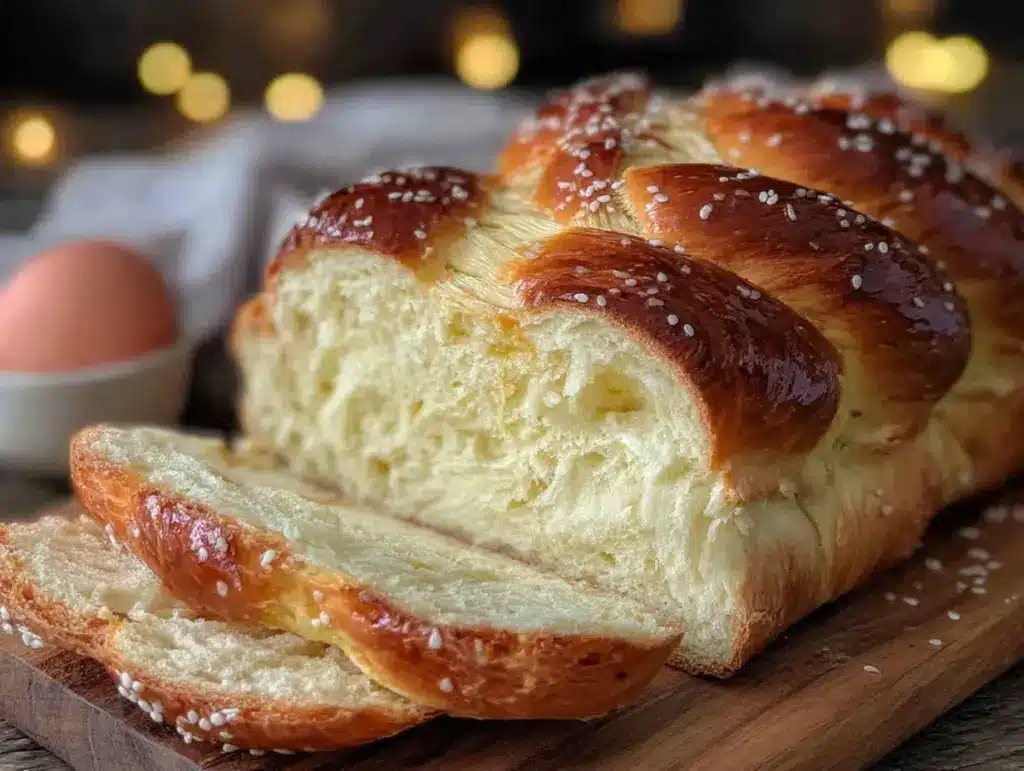
“You wouldn’t believe it, but I first stumbled upon this Greek Easter tsoureki sweet bread recipe while chatting with my neighbor, Yannis, the florist. It was a bright Saturday morning, and as I was lugging a cracked bowl from my kitchen, he casually mentioned how his mother’s tsoureki was the highlight of every Easter feast. Honestly, I wasn’t expecting much — I mean, how special could a braided sweet bread be? But then, a few days later, I found myself whisking mahleb spice into the dough, a scent so warm and mysterious it transported me straight to his mother’s cozy kitchen in Thessaloniki.
Now, you know that feeling when a simple fragrance pulls you back to a moment? That’s exactly what mahleb does here — it’s this subtle cherry-almond note that dances through the bread, making it utterly unforgettable. The first time I baked this tsoureki, I forgot to set the timer and got called away by an unexpected phone call (classic me). But when I finally sliced into the golden loaf, the texture was so soft and the flavor so rich, I just had to smile.
This isn’t just any sweet bread; it’s a tradition braided into every bite, a recipe that’s become a favorite in my kitchen (and hopefully yours too). Whether you’re celebrating Easter or just craving something comforting with a twist, this tsoureki with mahleb will stick with you — and maybe make your kitchen smell like a Greek bakery on a sunny Sunday morning.
Why You’ll Love This Recipe
Let me tell you, this Perfect Greek Easter Tsoureki Sweet Bread with Mahleb Spice is a little slice of heaven for anyone who loves baking and trying new flavors. After several rounds of testing and tweaking (and yes, a few dough disasters), this version has become my go-to for its balance of sweet, fragrant, and tender—all wrapped up in a beautiful braided loaf.
- Quick & Easy: This bread comes together in just about 3 hours, including rising time—perfect for weekend bakers or last-minute holiday baking.
- Simple Ingredients: No need for fancy or hard-to-find items—most of these are pantry staples, and mahleb can be ordered online or found in specialty stores.
- Perfect for Easter and Special Occasions: While it’s the star of Greek Easter tables, this tsoureki also shines at brunches, potlucks, or cozy family breakfasts.
- Crowd-Pleaser: Kids and adults alike love its soft crumb and subtle spice; it often gets rave reviews at gatherings.
- Unbelievably Delicious: The mahleb adds a unique aroma and flavor that sets it apart from other sweet breads in a delightful way.
What makes this recipe stand out is the use of mahleb combined with a gentle kneading technique that keeps the bread tender but structured enough to hold the signature braid. I also swap in orange zest and a touch of mastic for that authentic vibe, making this tsoureki truly special. Honestly, it’s the kind of bread that makes you close your eyes after the first bite and smile, knowing you nailed it.
What Ingredients You Will Need
This recipe uses simple, wholesome ingredients to deliver bold flavor and that perfect fluffy texture without fuss. Most are pantry staples, with a few unique touches like mahleb to create that authentic Greek flavor.
- For the Dough:
- 4 cups (480 g) all-purpose flour, plus extra for dusting (I prefer King Arthur for consistency)
- 1/2 cup (100 g) granulated sugar
- 2 1/4 tsp (7 g) active dry yeast (one packet)
- 1/2 tsp (2 g) salt
- 1/2 tsp (1 g) mahleb spice (ground; adds that signature cherry-almond aroma)
- 1/4 tsp (0.5 g) ground mastic (optional, but highly recommended for authentic flavor)
- 1/2 cup (120 ml) whole milk, warm (about 110°F/43°C)
- 1/4 cup (60 ml) unsalted butter, melted and slightly cooled
- 2 large eggs, room temperature (one for dough, one for egg wash)
- 1 tsp (5 ml) orange zest (freshly grated; adds brightness)
- For the Topping:
- 1 egg yolk (for glazing, gives that gorgeous shine)
- 1 tbsp (15 ml) milk (to mix with egg yolk)
- Sesame seeds or slivered almonds (optional, for sprinkling)
Ingredient tips: Look for fresh mahleb—if you can’t find it, you can substitute with a mix of ground almonds and a pinch of cherry extract, but it won’t be quite the same. Mastic can be tricky; a little goes a long way. For a dairy-free version, swap milk with almond or oat milk, and butter with coconut oil. In warmer months, feel free to add a handful of chopped dried apricots or cherries for a fruity twist.
Equipment Needed
- Large mixing bowl – I like glass or stainless steel, easy to clean and keeps dough warm
- Stand mixer with dough hook (optional but handy for kneading; if not, a sturdy wooden spoon and some elbow grease will do)
- Measuring cups and spoons – accuracy matters here for yeast and spices
- Kitchen thermometer – to check milk temperature (around 110°F/43°C is ideal to activate yeast)
- Baking sheet or loaf pan – I prefer a baking sheet lined with parchment paper for the braided shape
- Kitchen towel or plastic wrap – to cover dough while rising
- Pastry brush – for applying the egg wash glaze
If you don’t have a stand mixer, don’t sweat it; kneading by hand is totally doable and even therapeutic. Just prepare for about 10-12 minutes of kneading until the dough feels smooth and elastic. Also, keeping your kitchen warm helps the dough rise—if it’s chilly, try placing the bowl in a slightly warm (but off) oven or near a radiator.
Preparation Method

- Activate the yeast: In a small bowl, combine warm milk (about 110°F/43°C) with 1 tsp sugar and yeast. Stir gently and let sit for 5-10 minutes until frothy and bubbly. If it doesn’t foam, your yeast might be inactive—start over with fresh yeast.
- Mix dry ingredients: In a large mixing bowl, whisk together flour, remaining sugar, salt, mahleb, and mastic (if using). Add orange zest for that fresh burst.
- Combine wet ingredients: Beat one egg lightly, then add melted butter and the frothy yeast mixture. Pour into the dry ingredients.
- Form the dough: Using a stand mixer with a dough hook or your hands, mix until the ingredients come together into a shaggy dough.
- Knead: Knead on medium speed for 8-10 minutes (or by hand for 10-12 minutes) until the dough is smooth, slightly tacky but not sticky. The dough should spring back when poked. If it’s too sticky, add a tablespoon of flour at a time.
- First rise: Shape dough into a ball and place it in a lightly greased bowl. Cover with a kitchen towel or plastic wrap. Let it rise in a warm spot for 1.5 to 2 hours, or until doubled in size.
- Shape the tsoureki: Punch down the dough gently to release air. Divide into three equal pieces (about 200 g/7 oz each). Roll each into long ropes about 14-16 inches (35-40 cm) long.
- Braid: Pinch the three ropes together at one end and braid loosely but firmly. Pinch the ends together and tuck them underneath.
- Second rise: Place braided loaf on a parchment-lined baking sheet. Cover loosely with plastic wrap and let rise for another 45 minutes until puffy.
- Preheat oven: While dough rises, preheat your oven to 350°F (175°C).
- Glaze and add toppings: Beat the remaining egg yolk with milk. Brush generously over the loaf. Sprinkle with sesame seeds or slivered almonds if desired.
- Bake: Bake for 30-35 minutes until golden brown and hollow-sounding when tapped on the bottom. If it browns too fast, tent loosely with foil.
- Cool: Let cool on a wire rack for at least 30 minutes before slicing. Fresh tsoureki is best the same day but also delicious toasted the next morning.
Pro tip: Keep an eye on the dough texture during kneading. It should be soft and elastic, not sticky or dry. If you get interrupted (like I did once by a surprise visitor), cover it well so the dough doesn’t dry out. The smell during baking will pull neighbors to your door, trust me!
Cooking Tips & Techniques
Kneading is key for this tsoureki’s delicate crumb, so don’t rush it. I learned the hard way that under-kneaded dough leads to dense bread, while over-kneading can make it tough. Aim for a smooth, elastic dough that’s slightly tacky but not sticky.
Mahleb and mastic are subtle but powerful. Use them sparingly at first—too much mastic can overpower the bread with a pine-like flavor. If you’re new to these spices, start with half the amount and adjust in future batches.
When braiding, keep the strands similar thickness for even baking. If the dough is too cold, it’s harder to braid; warm hands and a cozy kitchen help. I often warm my dough ropes by keeping them near the oven before braiding.
Don’t skip the egg wash; it’s what gives tsoureki that iconic shiny, golden crust. If you want extra crunch, sprinkle sesame seeds or sliced almonds on top right after glazing.
Finally, timing is your friend. Let the dough rise fully but don’t overproof it, or the bread can collapse during baking. If you poke the dough and it springs back slowly, you’re good to go. Also, baking temperature matters: 350°F (175°C) keeps the crust from burning while baking the inside through.
Variations & Adaptations
- Vegan Tsoureki: Replace eggs with flax eggs (1 tbsp flaxseed meal + 3 tbsp water per egg) and swap butter for vegan margarine or coconut oil. Use plant-based milk like almond or oat.
- Chocolate Chip Tsoureki: Fold in 1/2 cup (90 g) mini dark chocolate chips into the dough after the first rise, for a sweet surprise in every bite.
- Gluten-Free Version: Use a gluten-free flour blend designed for yeast breads (like Bob’s Red Mill 1-to-1). Add a teaspoon of xanthan gum if your blend doesn’t include it, and increase rising time slightly.
- Seasonal Twist: In spring and summer, add chopped dried apricots or fresh orange zest for brightness. In fall, try cinnamon and chopped walnuts instead of mahleb for a cozy vibe.
- Personal Variation: One time I mixed in a tablespoon of rose water with the wet ingredients, and it gave the tsoureki a lovely floral hint. It was a hit with my friends!
Serving & Storage Suggestions
Tsoureki is best served slightly warm or at room temperature. The aroma and softness really shine when it’s fresh. I like slicing it thick with a smear of butter or a drizzle of honey for breakfast. It also pairs beautifully with strong black coffee or a cup of Greek mountain tea.
If you’re serving it at a gathering, arrange slices on a platter with fresh fruit or cheese for a beautiful spread. Leftovers keep well in an airtight container at room temperature for 2 days or in the fridge up to 5 days.
For longer storage, wrap well in plastic wrap and freeze for up to 3 months. To reheat, thaw overnight in the fridge, then warm in a 300°F (150°C) oven for 10 minutes wrapped in foil to keep it soft.
Over time, the flavors of tsoureki mellow and deepen, especially if you include fragrant spices like mahleb and mastic. It’s delightful eaten on day two or three toasted with a bit of jam.
Nutritional Information & Benefits
This Greek Easter tsoureki bread is a treat that combines traditional ingredients with a few healthful touches. Each slice (about 60 g) contains approximately:
| Calories | 180 |
|---|---|
| Carbohydrates | 32 g |
| Protein | 5 g |
| Fat | 4 g |
| Sugar | 7 g |
Mahleb, a key ingredient, offers antioxidants and has traditionally been used for digestion support. The eggs and milk add protein and calcium, making this bread more nourishing than your average sweet treat. While not low-carb or gluten-free by default, you can adapt it accordingly.
From a wellness perspective, this bread is a reminder that tradition and comfort can coexist with mindful eating. I like to enjoy it as part of a balanced breakfast or special occasion, savoring the flavor without guilt.
Conclusion
This Perfect Greek Easter Tsoureki Sweet Bread with Mahleb Spice is one of those recipes that feels like a warm embrace from a culture rich in tradition and flavor. It’s not just baking; it’s sharing a story, a scent, a memory. You get the softness, the subtle spices, and the beautiful braided shape that makes every slice special.
Feel free to tweak the spices or add your favorite mix-ins — this bread welcomes creativity. I love it for its comforting aroma and the way it brings people together around the table. If you try it, drop a comment to share how it turned out or any personal twists you made. And hey, don’t be shy about sharing this recipe with friends who love a good homemade bread!
Bake with joy, and may your kitchen smell like a Greek Easter morning.
FAQs
What is mahleb, and can I substitute it?
Mahleb is a ground spice made from cherry seeds, giving a unique almond-cherry aroma. If you can’t find it, a mix of ground almonds and a tiny drop of cherry extract can work, but the flavor won’t be quite the same.
Can I make tsoureki without mastic?
Yes, mastic is optional but adds a distinctive pine-like flavor. If you don’t have it, the bread will still be delicious with mahleb and orange zest.
How long does tsoureki keep fresh?
Fresh tsoureki is best eaten within 2 days at room temperature, but it can last up to 5 days in the fridge. For longer storage, freeze it well wrapped.
Can I make this bread vegan?
Absolutely! Replace eggs with flax eggs and dairy with plant-based alternatives. The texture changes slightly but remains delicious.
What’s the best way to store leftover tsoureki?
Store in an airtight container or wrapped tightly at room temperature for a couple of days, or freeze for up to 3 months. Reheat gently to keep it soft.
Pin This Recipe!
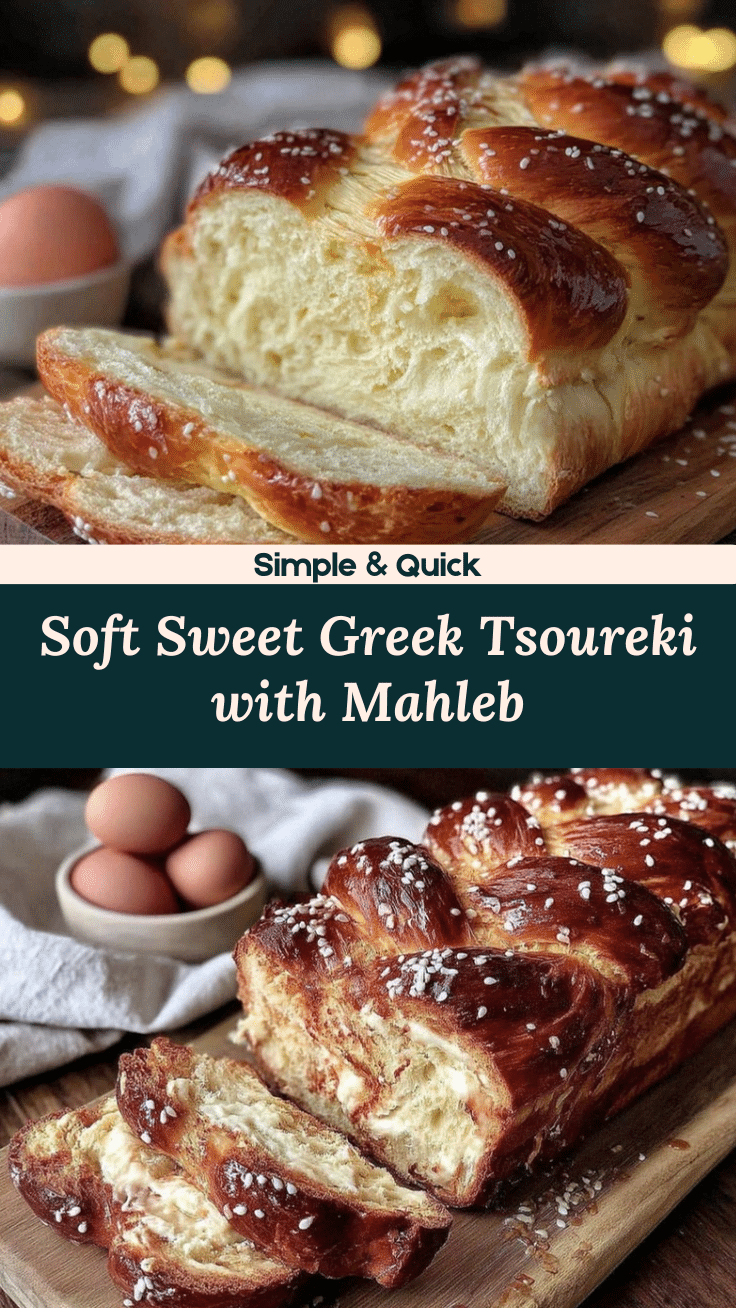
Perfect Greek Easter Tsoureki Sweet Bread Recipe with Mahleb Spice

A traditional Greek Easter braided sweet bread flavored with mahleb and mastic, offering a soft crumb and a unique cherry-almond aroma. Perfect for Easter, brunches, or cozy family breakfasts.
- Prep Time: 30 minutes
- Cook Time: 30-35 minutes
- Total Time: 3 hours
- Yield: 1 loaf (about 12 servings) 1x
- Category: Bread
- Cuisine: Greek
Ingredients
- 4 cups (480 g) all-purpose flour, plus extra for dusting
- 1/2 cup (100 g) granulated sugar
- 2 1/4 tsp (7 g) active dry yeast (one packet)
- 1/2 tsp (2 g) salt
- 1/2 tsp (1 g) mahleb spice (ground)
- 1/4 tsp (0.5 g) ground mastic (optional)
- 1/2 cup (120 ml) whole milk, warm (about 110°F/43°C)
- 1/4 cup (60 ml) unsalted butter, melted and slightly cooled
- 2 large eggs, room temperature (one for dough, one for egg wash)
- 1 tsp (5 ml) orange zest (freshly grated)
- 1 egg yolk (for glazing)
- 1 tbsp (15 ml) milk (to mix with egg yolk)
- Sesame seeds or slivered almonds (optional, for sprinkling)
Instructions
- Activate the yeast: In a small bowl, combine warm milk (about 110°F/43°C) with 1 tsp sugar and yeast. Stir gently and let sit for 5-10 minutes until frothy and bubbly.
- Mix dry ingredients: In a large mixing bowl, whisk together flour, remaining sugar, salt, mahleb, and mastic (if using). Add orange zest.
- Combine wet ingredients: Beat one egg lightly, then add melted butter and the frothy yeast mixture. Pour into the dry ingredients.
- Form the dough: Using a stand mixer with a dough hook or your hands, mix until the ingredients come together into a shaggy dough.
- Knead: Knead on medium speed for 8-10 minutes (or by hand for 10-12 minutes) until the dough is smooth, slightly tacky but not sticky.
- First rise: Shape dough into a ball and place it in a lightly greased bowl. Cover and let rise in a warm spot for 1.5 to 2 hours, or until doubled in size.
- Shape the tsoureki: Punch down the dough gently. Divide into three equal pieces (about 7 oz each). Roll each into long ropes about 14-16 inches long.
- Braid: Pinch the three ropes together at one end and braid loosely but firmly. Pinch the ends together and tuck them underneath.
- Second rise: Place braided loaf on a parchment-lined baking sheet. Cover loosely and let rise for another 45 minutes until puffy.
- Preheat oven to 350°F (175°C).
- Glaze and add toppings: Beat the remaining egg yolk with milk. Brush generously over the loaf. Sprinkle with sesame seeds or slivered almonds if desired.
- Bake for 30-35 minutes until golden brown and hollow-sounding when tapped on the bottom. Tent with foil if browning too fast.
- Cool on a wire rack for at least 30 minutes before slicing.
Notes
Use fresh mahleb for authentic flavor; substitute with ground almonds and cherry extract if unavailable. Mastic is optional but recommended. For dairy-free or vegan versions, substitute milk and butter with plant-based alternatives and eggs with flax eggs. Knead dough until smooth and elastic but not sticky. Let dough rise fully but avoid overproofing. Egg wash gives a shiny golden crust. Store leftovers in airtight container for up to 5 days refrigerated or freeze up to 3 months.
Nutrition
- Serving Size: 1 slice (about 60 g)
- Calories: 180
- Sugar: 7
- Fat: 4
- Carbohydrates: 32
- Protein: 5
Keywords: Greek Easter bread, tsoureki, mahleb, sweet bread, braided bread, traditional Greek recipe, Easter bread, homemade bread