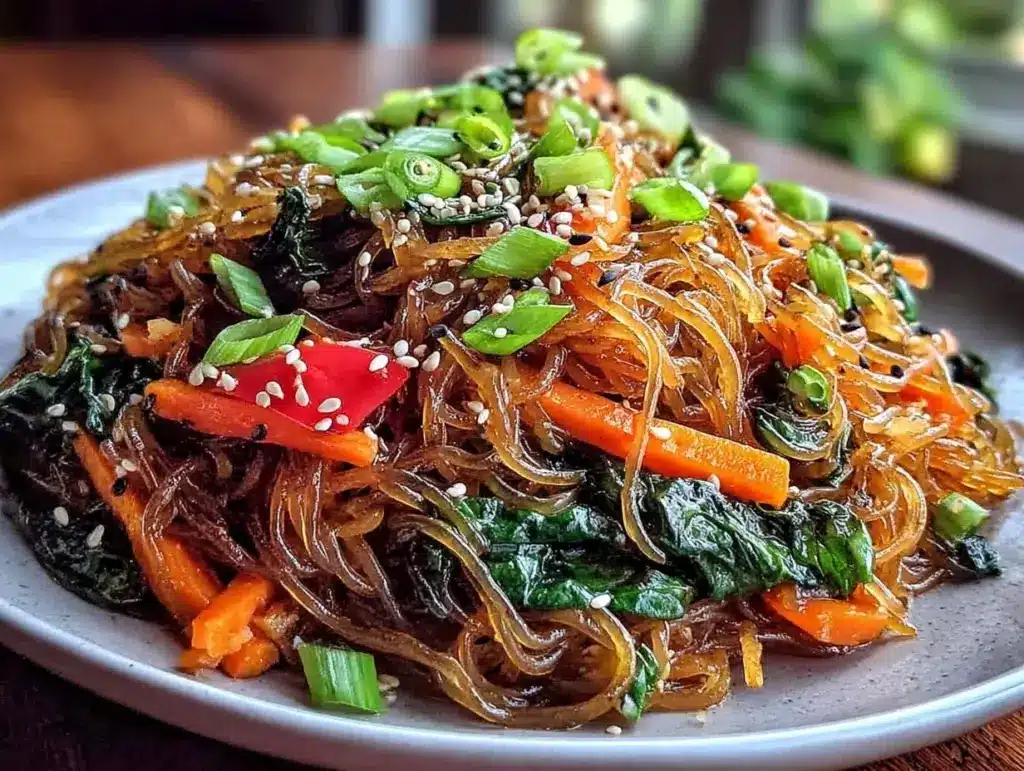
“You won’t believe this came from a mix-up in my kitchen,” my friend Jae remarked one evening as I watched her toss the glossy sweet potato noodles with colorful veggies. It was a Wednesday, and honestly, I was just stopping by for a quick hello, but the aroma pulled me right into her kitchen like a magnet. That night, I learned how simple Korean japchae could be—and how it wasn’t just a side dish but a whole experience of flavors and textures. I remember Jae laughing when she admitted she’d forgotten to buy the usual wheat noodles and grabbed the sweet potato starch noodles instead. The result? A dish that was chewier, sweeter, and honestly, a bit more exciting than the classic version.
Maybe you’ve been there—standing in the grocery aisle, staring at a noodle package, wondering if you should try something new. This flavorful Korean japchae sweet potato noodle salad is exactly that kind of happy accident. The mix of tender veggies, the slightly slippery but firm noodles, and the savory-sweet sauce come together in a way that feels both comforting and fresh. I’ll admit, I made a mess trying to chop the bell peppers quickly while chatting, but that’s part of the charm, right? This recipe stuck with me because it’s easy enough for beginners but still feels like a little culinary adventure. Plus, it’s perfect for warm weather or anytime you want a light, vibrant meal that’s packed with umami and texture.
So if you’re new to Korean cooking or just looking for a tasty noodle salad that’s bursting with flavor, this recipe is a solid pick. Let me tell you—once you try it, you might find yourself craving japchae on random weeknights just like I did.
Why You’ll Love This Recipe
This flavorful Korean japchae sweet potato noodle salad isn’t just another noodle dish—it’s a celebration of textures and tastes that I’ve tested over multiple kitchen trials to get just right. Whether you’re a seasoned cook or a newbie, this recipe fits right in.
- Quick & Easy: Ready in about 30 minutes, making it perfect for busy weeknights or last-minute cravings.
- Simple Ingredients: Uses pantry staples and fresh veggies you likely already have—no hunting down obscure items.
- Perfect for Gatherings: Light and colorful, it’s a great choice for potlucks, picnics, or casual dinners with friends.
- Crowd-Pleaser: The chewy sweet potato noodles combined with the savory-sweet sauce get rave reviews from kids and adults alike.
- Unbelievably Delicious: The balance of nutty, sweet, and savory flavors makes each bite memorable without being overwhelming.
What makes this japchae recipe stand out is the use of sweet potato noodles instead of traditional wheat noodles. They give the dish a wonderful bounce and a slightly sweet note that pairs beautifully with the soy-based sauce. Also, I recommend lightly toasting sesame seeds on top for an added crunch and aroma—trust me, it’s a game-changer. This recipe isn’t just tasty; it’s the kind of dish that makes you close your eyes and savor every bite. It’s comfort food with a fresh twist and a dash of Korean soul that’s surprisingly easy to pull off at home.
What Ingredients You Will Need
This recipe uses straightforward, wholesome ingredients to deliver bold flavors and a satisfying texture without any fuss. Most of these are pantry staples, and if you’re swapping in seasonal veggies, the taste only gets better.
- Sweet Potato Noodles (Dangmyeon): 7 oz (200 g), dried glass noodles made from sweet potato starch (I recommend the brand Jinju for best texture)
- Beef or Mushrooms: 4 oz (115 g) thinly sliced beef sirloin or shiitake mushrooms (for a vegetarian version)
- Spinach: 2 cups fresh leaves, washed and tough stems removed (adds vibrant color and freshness)
- Carrot: 1 medium, julienned (for sweetness and crunch)
- Red Bell Pepper: 1 medium, thinly sliced (adds brightness and a mild peppery flavor)
- Onion: ½ medium, thinly sliced (provides a subtle sweetness when cooked)
- Garlic: 3 cloves, minced (aromatic base for the sauce)
- Soy Sauce: 3 tablespoons (use low sodium if preferred, adds the savory umami)
- Sesame Oil: 2 tablespoons (toasted sesame oil gives that nutty aroma)
- Sugar: 1½ teaspoons (balances the savory sauce with a touch of sweetness)
- Salt and Pepper: to taste
- Sesame Seeds: 1 tablespoon, toasted (for garnish and crunch)
- Green Onion: 1 stalk, finely sliced (optional, for garnish and freshness)
Ingredient Tips: If you can’t find fresh shiitake mushrooms, cremini or button mushrooms work fine. For a gluten-free version, be sure to use tamari instead of regular soy sauce. In summer, swapping spinach for fresh pea shoots or watercress adds a peppery note. I’ve tried this with frozen spinach too—just squeeze out excess water before adding.
Equipment Needed
- Large pot (to boil the noodles and blanch spinach)
- Large skillet or wok (for stir-frying the veggies and beef)
- Cutting board and sharp knife (julienne and thin slicing make a big difference)
- Colander or strainer (to drain noodles and veggies)
- Mixing bowl (to toss everything together)
- Tongs or chopsticks (helpful for mixing noodles without breaking)
If you don’t have a wok, a large non-stick skillet works just as well. I often use my cast iron skillet for stir-frying because it retains heat well, but be mindful of seasoning it properly to avoid sticking. For budget-friendly options, look for sturdy stainless steel pots and pans at local stores—they do the job without breaking the bank. Also, a fine mesh sieve is handy for washing the spinach thoroughly, but a regular colander with gentle shaking works too.
Preparation Method
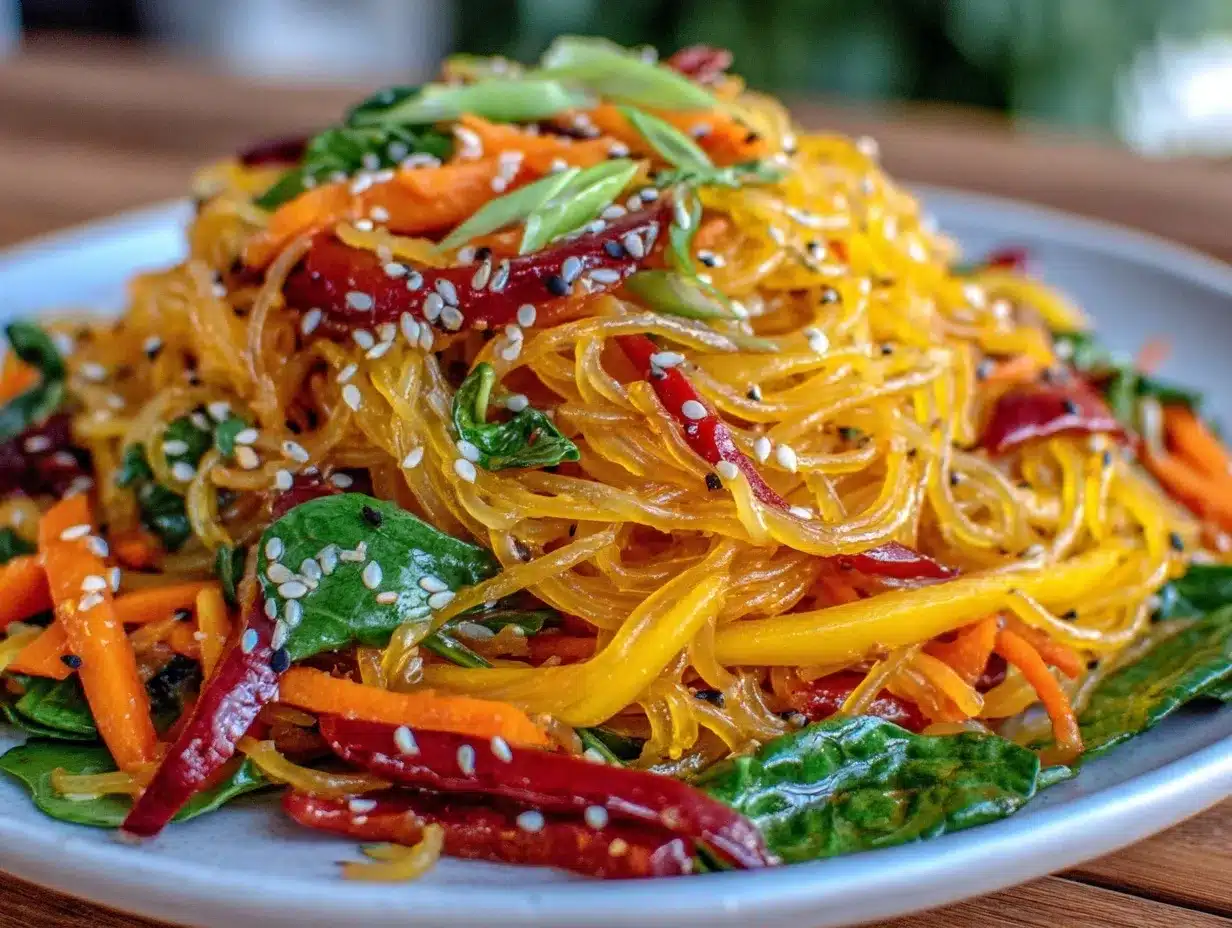
- Soak and Cook the Noodles: Place the sweet potato noodles in a large bowl and cover with warm water. Let soak for 20-30 minutes until softened but still chewy. Then, bring a large pot of water to a boil and cook the noodles for 6-7 minutes (or according to package instructions), stirring occasionally to prevent sticking. Drain and rinse under cold water. Set aside.
- Prepare the Spinach: Bring a small pot of salted water to boil. Blanch the spinach for about 30 seconds until just wilted, then drain and rinse under cold water to stop cooking. Squeeze out excess water gently and set aside.
- Cook the Beef or Mushrooms: Heat 1 tablespoon of sesame oil in a large skillet over medium-high heat. Add the beef slices or mushrooms, season lightly with salt and pepper, and stir-fry until cooked through—about 3-4 minutes. Remove from skillet and set aside.
- Stir-Fry the Vegetables: In the same skillet, add the remaining tablespoon of sesame oil. Toss in the minced garlic and sliced onion; cook until fragrant and translucent, about 2 minutes. Add the julienned carrot and bell pepper, stir-frying for another 3-4 minutes until veggies are tender but still crisp.
- Combine Everything: Return the cooked beef or mushrooms and blanched spinach to the skillet with the veggies. Add the drained noodles on top. Pour soy sauce and sprinkle sugar evenly over the ingredients.
- Toss and Finish: Using tongs or chopsticks, gently toss everything together in the skillet over low heat for 2-3 minutes, allowing the noodles to absorb the sauce. Taste and adjust seasoning with salt or more soy sauce if needed.
- Serve: Transfer the japchae noodle salad to a serving bowl or plate. Garnish with toasted sesame seeds and sliced green onions. Enjoy warm or at room temperature.
Preparation Notes: Be careful not to overcook the noodles—they should remain slightly chewy, not mushy. When tossing the noodles, do it gently to avoid breaking them. If the sauce seems a bit dry, add a teaspoon of water or a splash of broth to loosen it up. I once got interrupted mid-tossing and ended up with a few broken noodles, but honestly, that didn’t ruin the dish one bit.
Cooking Tips & Techniques
One trick I’ve learned is to soak the sweet potato noodles in warm water before boiling—that helps them cook evenly and prevents them from sticking together. Also, don’t skip rinsing the noodles under cold water after cooking; this stops the cooking process and keeps them from turning gummy.
When stir-frying, make sure your pan is hot enough so the veggies get a nice sear but not so hot that they burn. Medium-high heat usually works best. I’ve had the onion turn bitter once because I cranked the heat too high, so watch for that golden translucence instead.
Multitasking helps: while the noodles soak, prep your veggies and blanch the spinach to save time. Also, toss the ingredients gently at the end—japchae noodles can be fragile, and you want to keep their chewy texture intact.
For consistent flavor, measure out your soy sauce and sugar carefully. A little too much soy sauce can overpower the dish, but too little leaves it bland. Taste as you go, and adjust seasonings slowly.
Variations & Adaptations
- Vegetarian/Vegan: Skip the beef and add more mushrooms or tofu for protein. Use vegan soy sauce or tamari for gluten-free options.
- Spicy Twist: Add gochujang (Korean chili paste) or red pepper flakes to the sauce for a kick. I tried this once on a chilly evening, and it warmed me right up.
- Seasonal Veggies: Swap bell pepper for thinly sliced zucchini or use baby bok choy instead of spinach in cooler months.
- Cooking Method: Instead of stir-frying, toss the cooked noodles and veggies in a large bowl with sauce and briefly heat everything in a pan just to warm through. This reduces oil use and makes it lighter.
- Nutty Variation: Add crushed roasted peanuts or walnuts on top for an extra crunch and flavor dimension.
Serving & Storage Suggestions
Japchae tastes wonderful both warm and at room temperature, making it a versatile dish for any season. Serve it as a main dish with a side of kimchi or alongside grilled meats for a fuller meal. For drinks, green tea or a light Korean rice wine (makgeolli) complement the flavors nicely.
To store leftovers, place japchae in an airtight container and refrigerate for up to 3 days. The noodles may firm up in the fridge, but reheating gently in a skillet with a splash of water or broth helps restore the texture. Avoid microwaving directly without adding moisture—it can dry out the dish.
Flavors tend to meld and deepen after a day, so if you can resist, japchae often tastes even better the next day. Just give it a quick toss in a warm pan before serving to revive the noodles and veggies.
Nutritional Information & Benefits
This flavorful Korean japchae sweet potato noodle salad is a relatively light dish with a balanced mix of carbohydrates, protein, and fiber. A typical serving contains around 250-300 calories, making it suitable for a satisfying yet not heavy meal.
Sweet potato noodles are naturally gluten-free and lower in calories than traditional wheat noodles. Spinach offers a good dose of iron, vitamins A and C, and antioxidants. The sesame oil adds heart-healthy fats, while garlic and soy sauce provide beneficial compounds known for immune support.
For those watching sodium intake, using low-sodium soy sauce helps reduce salt levels without sacrificing flavor. This dish also fits well into vegetarian and vegan diets when adapted accordingly, making it a flexible choice for various nutritional needs.
Conclusion
This flavorful Korean japchae sweet potato noodle salad is a recipe that has earned a special place in my kitchen rotation. It’s approachable for beginners but still delivers layers of flavor that keep you coming back for more. Whether you want a light lunch, a colorful side, or a crowd-pleasing dish for your next gathering, this japchae ticks all the boxes.
Feel free to tweak the veggies or protein to suit your taste buds or what’s on hand. I love how adaptable it is—last time, I swapped in kale for spinach, and it was surprisingly good. Honestly, it’s one of those dishes where each attempt feels a little like a fresh discovery.
If you make this recipe, I’d love to hear how it turns out for you. Leave a comment, share your variations, or just say hi—I’m always here to chat about noodles and cooking mishaps alike. Enjoy the cheerful textures and savory-sweet flavors, and happy cooking!
FAQs
What are sweet potato noodles, and where can I find them?
Sweet potato noodles, also known as dangmyeon, are translucent, chewy noodles made from sweet potato starch. You can find them at Asian grocery stores or online. Look for packages labeled “Japchae noodles.”
Can I make japchae ahead of time?
Yes, japchae can be prepared a few hours ahead and stored in the refrigerator. Just reheat gently before serving or enjoy it at room temperature.
Is there a gluten-free version of japchae?
Absolutely. Use gluten-free tamari instead of soy sauce and make sure the noodles are pure sweet potato starch without added wheat.
Can I use other types of noodles?
You can, but sweet potato noodles have a unique chewy texture that defines japchae. If you must substitute, try glass noodles made from mung bean starch, though the taste and texture will differ.
How do I avoid the noodles sticking together?
Soak the noodles in warm water before cooking, stir during boiling, and rinse with cold water afterward. Tossing them with a little sesame oil after draining also helps prevent sticking.
Pin This Recipe!
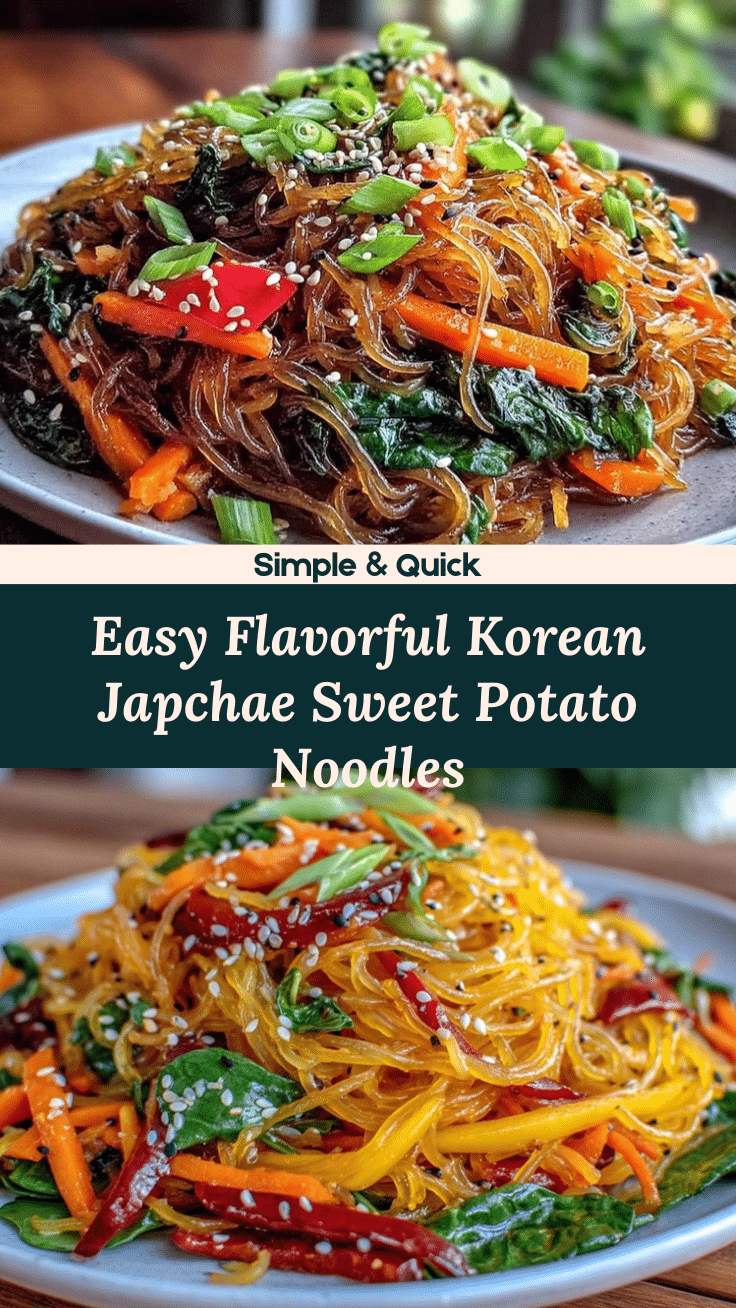
Flavorful Korean Japchae Sweet Potato Noodle Salad Recipe Easy and Perfect for Beginners
A vibrant and chewy Korean japchae noodle salad made with sweet potato noodles, fresh veggies, and a savory-sweet sauce. Perfect for beginners and quick to prepare, this dish offers a fresh twist on a classic Korean favorite.
- Prep Time: 15 minutes
- Cook Time: 15 minutes
- Total Time: 30 minutes
- Yield: 4 servings 1x
- Category: Main Course
- Cuisine: Korean
Ingredients
- 7 oz (200 g) dried sweet potato noodles (dangmyeon)
- 4 oz (115 g) thinly sliced beef sirloin or shiitake mushrooms (for vegetarian version)
- 2 cups fresh spinach leaves, washed and tough stems removed
- 1 medium carrot, julienned
- 1 medium red bell pepper, thinly sliced
- ½ medium onion, thinly sliced
- 3 cloves garlic, minced
- 3 tablespoons soy sauce (low sodium preferred)
- 2 tablespoons toasted sesame oil
- 1½ teaspoons sugar
- Salt and pepper to taste
- 1 tablespoon toasted sesame seeds (for garnish)
- 1 stalk green onion, finely sliced (optional garnish)
Instructions
- Soak the sweet potato noodles in warm water for 20-30 minutes until softened but still chewy.
- Bring a large pot of water to a boil and cook the noodles for 6-7 minutes, stirring occasionally to prevent sticking. Drain and rinse under cold water. Set aside.
- Bring a small pot of salted water to boil. Blanch the spinach for about 30 seconds until just wilted, then drain and rinse under cold water. Squeeze out excess water and set aside.
- Heat 1 tablespoon of sesame oil in a large skillet over medium-high heat. Add the beef slices or mushrooms, season lightly with salt and pepper, and stir-fry until cooked through, about 3-4 minutes. Remove from skillet and set aside.
- In the same skillet, add the remaining tablespoon of sesame oil. Add minced garlic and sliced onion; cook until fragrant and translucent, about 2 minutes.
- Add julienned carrot and bell pepper; stir-fry for another 3-4 minutes until veggies are tender but still crisp.
- Return cooked beef or mushrooms and blanched spinach to the skillet with the veggies. Add the drained noodles on top.
- Pour soy sauce and sprinkle sugar evenly over the ingredients.
- Using tongs or chopsticks, gently toss everything together in the skillet over low heat for 2-3 minutes, allowing noodles to absorb the sauce. Taste and adjust seasoning with salt or more soy sauce if needed.
- Transfer the japchae noodle salad to a serving bowl or plate. Garnish with toasted sesame seeds and sliced green onions. Serve warm or at room temperature.
Notes
Soak noodles in warm water before boiling to prevent sticking and ensure even cooking. Rinse noodles under cold water after cooking to stop cooking and keep texture. Toss noodles gently to avoid breaking. If sauce is dry, add a teaspoon of water or broth. Use low sodium soy sauce to reduce salt. Toast sesame seeds for added crunch and aroma. Can be served warm or at room temperature. Leftovers keep well refrigerated for up to 3 days; reheat gently with added moisture.
Nutrition
- Serving Size: 1 serving (approxima
- Calories: 275
- Sugar: 5
- Sodium: 600
- Fat: 9
- Saturated Fat: 1.5
- Carbohydrates: 38
- Fiber: 3
- Protein: 10
Keywords: Korean japchae, sweet potato noodles, japchae salad, Korean noodle salad, easy Korean recipe, vegetarian japchae, gluten-free japchae