
“You wouldn’t believe it,” my neighbor chuckled last winter, “but this crazy stew recipe started during a time when food was scarce.” I was standing by the cracked kitchen window, snowflakes dusting the sill, as he described the origins of this flavorful Korean Army Stew—Budae Jjigae. Honestly, I wasn’t expecting much from a dish that combines Spam, instant noodles, and leftover bits from the pantry. But, as he ladled the rich, spicy broth into my bowl, I realized this wasn’t just any stew; it was comfort in a pot, a story of resilience, and a burst of umami in every bite.
That afternoon, the kitchen filled with a mouthwatering mix of sizzling sausage, bubbling kimchi, and the faint sweetness of gochujang. The stew was a delightful mess, like a hearty hug after a long day. Maybe you’ve been there—the craving for something warm and satisfying that feels both familiar and exciting. This recipe, with its blend of savory Spam, chewy noodles, and vibrant vegetables, has stuck with me ever since that snowy Tuesday. It’s a dish that’s quick enough for weeknights but special enough to bring people together.
Let’s face it, Korean Army Stew isn’t your usual dinner plan, but that’s what makes it so memorable. It’s a fusion born from necessity and creativity, and it’s been perfected through countless pots in kitchens like mine and maybe yours soon. I’ll share everything you need to know to make this flavorful Korean Army Stew with Spam and noodles a staple in your home.
Why You’ll Love This Recipe
After numerous attempts and happy accidents, this Korean Army Stew recipe has become one of those dishes I turn to when I want something hearty without fuss. It’s been tested in my kitchen, approved by friends who usually shy away from Spam, and loved by anyone who craves a spicy, savory bowl brimming with textures and flavors.
- Quick & Easy: Ready in under 40 minutes, perfect for busy weeknights or unexpected guests.
- Simple Ingredients: Uses pantry staples like canned Spam, kimchi, and ramen noodles—no gourmet runs required.
- Perfect for Cozy Dinners: The spicy broth and melty cheese topping make it a go-to for chilly evenings.
- Crowd-Pleaser: Kids and adults alike love the mix of familiar and bold flavors.
- Unbelievably Delicious: The combination of salty, spicy, and tangy creates an addictive taste.
What sets this recipe apart is the balance of ingredients and a homemade broth that’s layered with gochujang and garlic, giving it that authentic Korean kick without overwhelming the palate. Plus, using Spam and hot dogs isn’t just about convenience—it adds a nostalgic, savory depth that echoes the stew’s military origins. Honestly, once you get the hang of layering flavors, you’ll want to make it again and again.
What Ingredients You Will Need
This recipe uses simple, wholesome ingredients to deliver bold flavor and satisfying texture without the fuss. Most items are pantry staples or easy to find at your local Asian market or grocery store.
- For the Broth and Base:
- 4 cups (1 liter) chicken or vegetable broth (preferably low sodium)
- 2 tablespoons gochujang (Korean chili paste) – adds a spicy, savory depth
- 1 tablespoon soy sauce (use tamari for gluten-free)
- 1 teaspoon sugar (balances the heat)
- 3 cloves garlic, minced (fresh is best for aroma)
- 1 teaspoon sesame oil (to finish)
- For the Protein:
- 1 can (12 oz / 340 g) Spam, sliced into bite-sized pieces (I use Spam Classic for best texture)
- 2 hot dogs, sliced diagonally (optional, adds smoky flavor)
- 100 g firm tofu, cut into cubes (optional for extra protein)
- Vegetables & Extras:
- 1 cup kimchi, chopped (fresh or store-bought, goes well with the stew’s tang)
- 1/2 onion, thinly sliced
- 2 green onions, chopped (for garnish)
- 1 small carrot, julienned (adds sweetness and crunch)
- 1 cup mushrooms (shiitake or button), sliced
- 1 cup cabbage, chopped
- 1 cup cooked baked beans (optional but traditional and adds sweetness)
- For the Noodles & Topping:
- 1 package instant ramen noodles (discard seasoning packet)
- 1/2 cup shredded mozzarella cheese (melts beautifully on top)
- 1 slice American cheese (optional, for creaminess)
Ingredient Tips: For gluten-free, swap soy sauce with tamari and use gluten-free noodles. I recommend using medium-spicy gochujang like Chung Jung One brand for balanced heat. In summer, fresh kimchi works wonders; in winter, jarred is just fine. If you don’t have Spam, thick-cut ham or bacon can stand in, but Spam’s smoky saltiness is hard to beat.
Equipment Needed
- Large pot or deep skillet (at least 4-quart capacity) – I prefer a heavy-bottomed pot to prevent burning
- Sharp knife and cutting board for prepping vegetables and Spam
- Measuring spoons and cups for precise flavor balance
- Wooden spoon or heat-resistant spatula for stirring
- Strainer (optional) if rinsing noodles or vegetables
- Ladle for serving
Don’t worry if you don’t own a fancy Korean stone pot (dolsot)—a regular pot works just fine. If you have a portable burner, it’s perfect for serving the stew bubbling hot at the table. For budget-friendly options, any mid-sized saucepan with a lid will do the trick. Just keep an eye on the heat to avoid scorching the broth.
Preparation Method
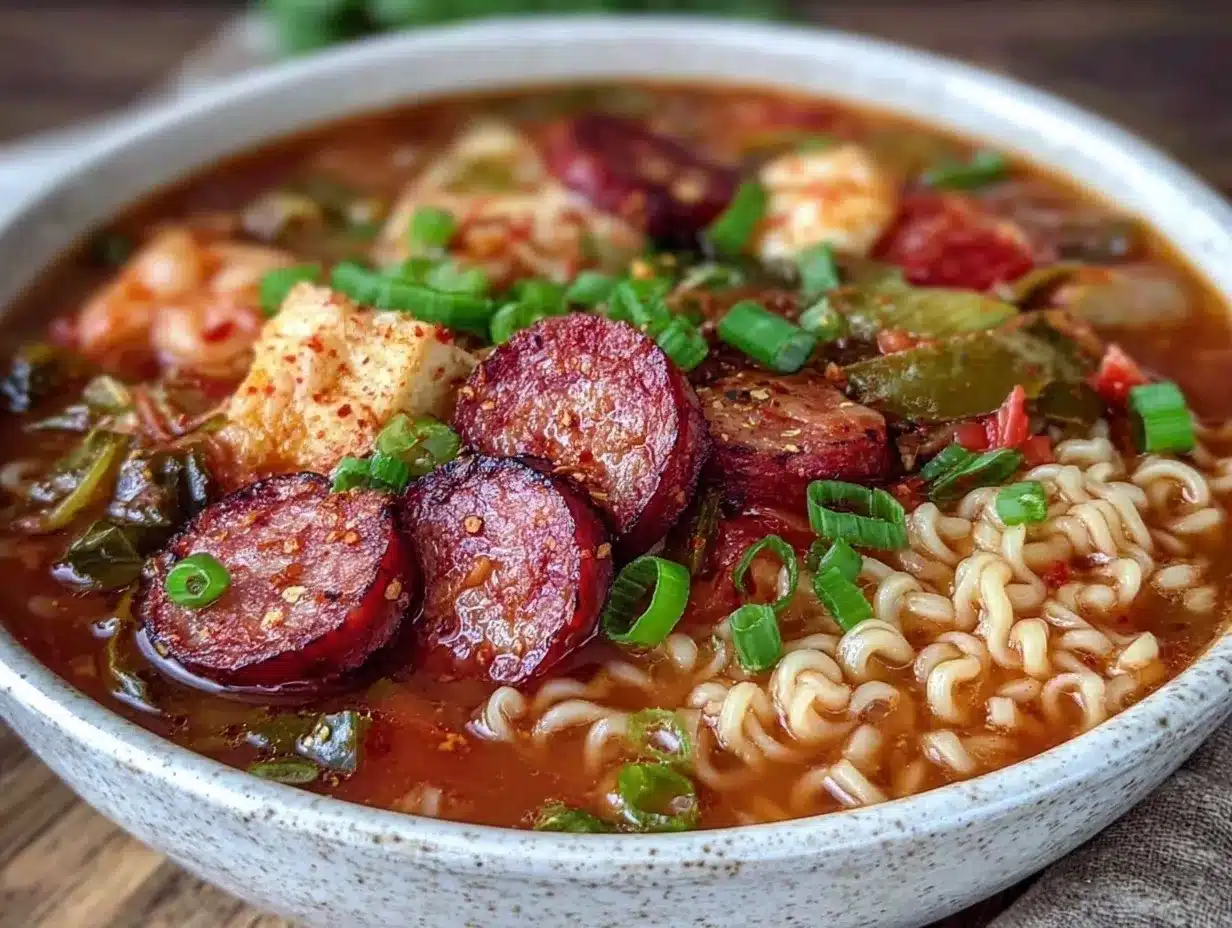
- Prepare the ingredients: Slice Spam and hot dogs into bite-sized pieces. Chop kimchi, cabbage, carrots, mushrooms, and onions. Mince garlic and chop green onions. Cube tofu if using. This prep should take about 15 minutes.
- Make the broth: In your pot, combine chicken broth, gochujang, soy sauce, sugar, and minced garlic. Whisk gently over medium heat until the gochujang dissolves completely, about 3-4 minutes. The broth should smell spicy and slightly sweet.
- Add vegetables and protein: Add kimchi, onions, carrots, mushrooms, cabbage, baked beans (if using), Spam, hot dogs, and tofu to the pot. Stir gently. Let it simmer for 10 minutes, uncovered, so the flavors meld and the vegetables soften.
- Add noodles: Break ramen noodles into thirds and add to the pot. Let them cook for 3-4 minutes until tender but still springy.
- Top with cheese: Turn off the heat and sprinkle shredded mozzarella and American cheese slices on top. Cover the pot with a lid and allow the residual heat to melt the cheese for 3-5 minutes. You’ll get that gooey, melty goodness that makes this stew stand out.
- Finish and garnish: Drizzle sesame oil over the stew and sprinkle chopped green onions. Give it a final gentle stir, being careful not to break the noodles too much.
- Serve immediately: Ladle the hot stew into bowls, making sure each serving has a bit of everything—broth, noodles, meat, and veggies. Expect some bubbling and steam, perfect for chilly nights.
Pro tip: If the broth is too spicy, add a splash of water or extra broth. Forgot the garlic once, and the stew tasted flat—don’t skip it! If you want a smoky flavor, lightly pan-fry the Spam before adding.
Cooking Tips & Techniques
Making Korean Army Stew can seem a bit wild with all its ingredients, but a few tricks make it manageable and delicious every time.
- Layer flavors carefully: Add kimchi and Spam early to build the base, but add delicate veggies like cabbage last to keep some crunch.
- Don’t overcook noodles: They soak up broth fast. Remove from heat as soon as they’re tender but still firm to avoid mushiness.
- Balance heat and sweetness: Gochujang brings spice, but a touch of sugar or baked beans tempers it nicely. Taste as you go!
- Use fresh garlic: It’s easy to forget but critical for that punch of flavor.
- Multitask: Prep veggies while broth simmers to save time. Keep all ingredients within reach.
- Cheese topping: Adds creaminess and mellows the spice. Don’t rush melting it; let residual heat do its job.
- Beware of salty Spam: Reduce added salt in broth accordingly.
When I first made this, I accidentally added too much gochujang and nearly set off the smoke alarm—lesson learned: start small and adjust. Also, stirring gently keeps noodles intact. You’ll get the hang of it quickly!
Variations & Adaptations
Korean Army Stew is versatile, so you can tweak it based on what you have or your dietary needs.
- Vegetarian version: Swap Spam and hot dogs for firm tofu, mushrooms, and extra kimchi. Use vegetable broth instead of chicken.
- Low-carb adaptation: Replace instant noodles with shirataki noodles or zucchini noodles for a lighter meal.
- Spice level adjustment: Use less gochujang or add a splash of cream or cheese to tone down the heat.
- Seafood twist: Add canned tuna or cooked shrimp for a different protein punch.
- My personal twist: Once, I tossed in leftover roasted potatoes—it soaked up the broth beautifully and added a nice texture contrast.
Feel free to experiment with whatever you have—this stew welcomes creativity. Just remember to keep the balance between salty, spicy, and savory!
Serving & Storage Suggestions
Serve this Korean Army Stew piping hot, straight from the pot, with plenty of steam rising—a feast for the senses. It pairs well with steamed rice or crispy kimchi pancakes for a full Korean-inspired meal. A cold glass of barley tea or a light lager complements the spicy broth nicely.
Leftovers keep surprisingly well. Store in an airtight container in the refrigerator for up to 3 days. When reheating, add a splash of water or broth to loosen the noodles and prevent dryness. Reheat gently on the stove over medium-low heat, stirring occasionally.
Flavors tend to deepen after a day, making leftovers even tastier. Just beware that noodles might become softer over time, so if you plan to store often, consider cooking noodles separately next time and adding them fresh when serving.
Nutritional Information & Benefits
This flavorful Korean Army Stew is a satisfying mix of protein, vegetables, and carbohydrates, offering a balanced meal. An average serving (about 2 cups/480 ml) contains approximately:
| Nutrient | Amount |
|---|---|
| Calories | 450-500 kcal |
| Protein | 20-25 g |
| Carbohydrates | 40-45 g |
| Fat | 18-22 g |
| Sodium | Moderate to high (from Spam and broth) |
The kimchi adds probiotics good for digestion, while garlic and gochujang offer antioxidants and immune support. For gluten-free eaters, swap soy sauce and noodles as noted. Be mindful of sodium levels due to processed meats; balancing with fresh vegetables helps.
From a wellness perspective, this stew offers comfort without heavy cream or deep frying—plus, it’s a great way to enjoy a spicy, flavorful meal that feels indulgent but doesn’t weigh you down.
Conclusion
Flavorful Korean Army Stew with Spam and noodles is one of those dishes that surprises you with its depth and heartiness. It’s not just about the ingredients but how they come together in a spicy, savory broth that warms you from the inside out. Whether you’re new to Korean cuisine or looking for a cozy, fuss-free meal, this recipe fits the bill.
Feel free to make it your own—add your favorite veggies, adjust the heat, or try different proteins. I love making this stew on weekends when I want something comforting and a bit nostalgic, reminding me of that snowy afternoon and the laughter shared over a steaming bowl.
Give it a go, and let me know how it turns out! Share your twists or questions in the comments—I’m always excited to hear about your kitchen adventures. Here’s to many cozy nights filled with hearty bowls of Budae Jjigae!
FAQs
What is Korean Army Stew (Budae Jjigae)?
Budae Jjigae is a spicy Korean stew that originated after the Korean War, combining traditional Korean flavors with surplus processed foods like Spam, hot dogs, and instant noodles. It’s known for its hearty, comforting taste.
Can I make this stew vegetarian?
Yes! Simply replace Spam and hot dogs with tofu and extra mushrooms, and use vegetable broth instead of chicken broth. The kimchi and gochujang provide plenty of flavor.
What noodles work best in this recipe?
Instant ramen noodles are traditional and cook quickly, but you can use udon, soba, or even glass noodles depending on your preference.
How spicy is this stew?
The heat level depends on how much gochujang you use. Start with 1-2 tablespoons and adjust to your taste. Adding cheese helps mellow the spice.
Can I prepare this stew in advance?
You can prep ingredients ahead of time, but it’s best to cook and serve the stew fresh. Leftovers keep well refrigerated and reheat nicely with a bit of added broth.
Pin This Recipe!
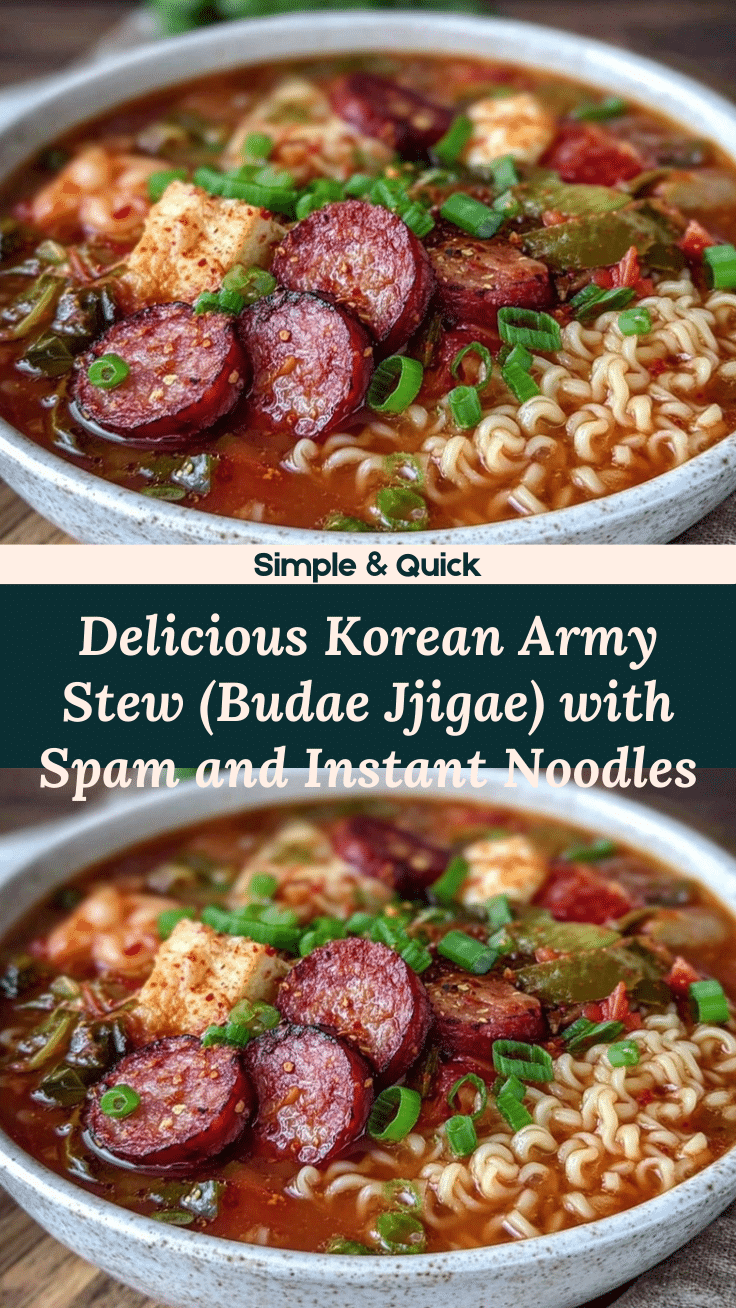
Flavorful Korean Army Stew Budae Jjigae Recipe Easy with Spam and Noodles

A hearty and spicy Korean Army Stew combining savory Spam, instant noodles, and vibrant vegetables in a flavorful broth, perfect for cozy dinners and quick weeknight meals.
- Prep Time: 15 minutes
- Cook Time: 25 minutes
- Total Time: 40 minutes
- Yield: 4 servings 1x
- Category: Main Course
- Cuisine: Korean
Ingredients
- 4 cups (1 liter) chicken or vegetable broth (preferably low sodium)
- 2 tablespoons gochujang (Korean chili paste)
- 1 tablespoon soy sauce (use tamari for gluten-free)
- 1 teaspoon sugar
- 3 cloves garlic, minced
- 1 teaspoon sesame oil
- 1 can (12 oz / 340 g) Spam, sliced into bite-sized pieces
- 2 hot dogs, sliced diagonally (optional)
- 100 g firm tofu, cut into cubes (optional)
- 1 cup kimchi, chopped
- 1/2 onion, thinly sliced
- 2 green onions, chopped
- 1 small carrot, julienned
- 1 cup mushrooms (shiitake or button), sliced
- 1 cup cabbage, chopped
- 1 cup cooked baked beans (optional)
- 1 package instant ramen noodles (discard seasoning packet)
- 1/2 cup shredded mozzarella cheese
- 1 slice American cheese (optional)
Instructions
- Slice Spam and hot dogs into bite-sized pieces. Chop kimchi, cabbage, carrots, mushrooms, and onions. Mince garlic and chop green onions. Cube tofu if using. This prep should take about 15 minutes.
- In your pot, combine chicken broth, gochujang, soy sauce, sugar, and minced garlic. Whisk gently over medium heat until the gochujang dissolves completely, about 3-4 minutes. The broth should smell spicy and slightly sweet.
- Add kimchi, onions, carrots, mushrooms, cabbage, baked beans (if using), Spam, hot dogs, and tofu to the pot. Stir gently. Let it simmer for 10 minutes, uncovered, so the flavors meld and the vegetables soften.
- Break ramen noodles into thirds and add to the pot. Let them cook for 3-4 minutes until tender but still springy.
- Turn off the heat and sprinkle shredded mozzarella and American cheese slices on top. Cover the pot with a lid and allow the residual heat to melt the cheese for 3-5 minutes.
- Drizzle sesame oil over the stew and sprinkle chopped green onions. Give it a final gentle stir, being careful not to break the noodles too much.
- Ladle the hot stew into bowls, making sure each serving has a bit of everything—broth, noodles, meat, and veggies. Serve immediately.
Notes
If the broth is too spicy, add a splash of water or extra broth. For smoky flavor, lightly pan-fry the Spam before adding. Avoid overcooking noodles to keep them springy. Use fresh garlic for best flavor. Reduce added salt due to salty Spam. Cheese topping mellows spice and adds creaminess.
Nutrition
- Serving Size: About 2 cups (480 ml
- Calories: 475
- Sugar: 5
- Fat: 20
- Saturated Fat: 7
- Carbohydrates: 43
- Fiber: 4
- Protein: 22
Keywords: Korean Army Stew, Budae Jjigae, Spam stew, Korean stew, spicy stew, instant noodles, comfort food, easy Korean recipe