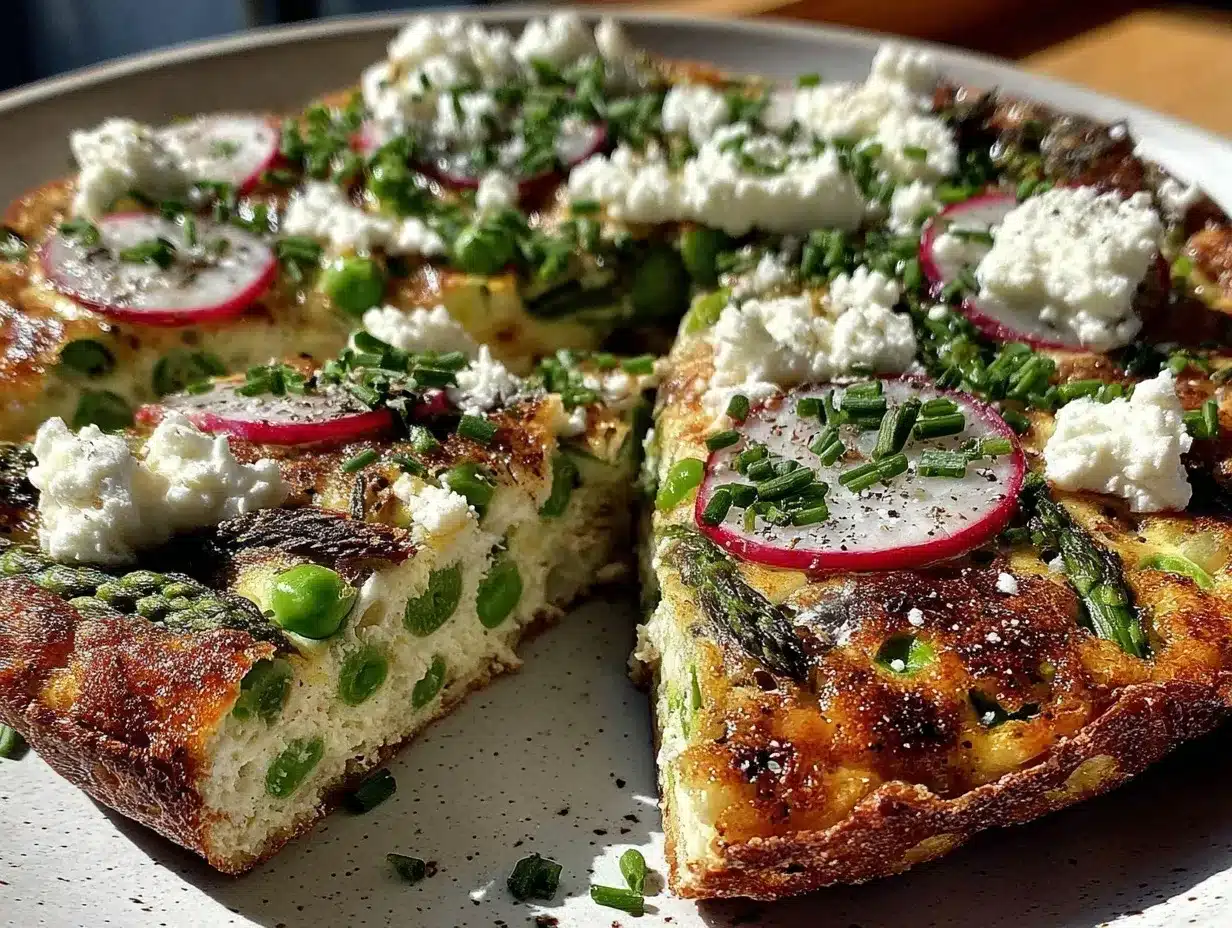
“You know that sound when fresh vegetables hit a hot pan? That crisp sizzle that promises something good is coming? I remember the first time I stumbled upon this fresh spring vegetable frittata with goat cheese and herbs—it wasn’t in a fancy kitchen or a trendy café, but rather in my neighbor Lisa’s humble little apartment on a bright Saturday morning. I was there to borrow a cup of sugar and got pulled into her cooking instead. She wasn’t trying to impress anyone, just tossing together whatever spring veggies she had picked up from the farmer’s market the day before. Honestly, I thought it would be just okay, but the way the tangy goat cheese melted into the fluffy eggs and the burst of herbs made me pause mid-bite.
That morning, with the sunlight pouring through the kitchen window and a slightly cracked ceramic skillet on the stove, I realized how simple ingredients can come together to create magic. I mean, who knew that a few fresh peas, asparagus tips, and a handful of herbs could make a frittata feel like a celebration? Maybe you’ve had those rushed mornings where breakfast feels like a chore, or weekends when you want something light but satisfying. This recipe has quietly become my go-to, especially when I want to feel connected to the season and savor flavors that feel alive. Oh, and the goat cheese? Let’s just say it adds that perfect little zing that makes you want another slice before you’re even done with the first.
So if you’re someone who loves meals that are easy, fresh, and packed with personality, this fresh spring vegetable frittata with goat cheese and herbs might just become your new favorite. It’s honest, homey, and honestly a bit addictive once you taste it.
Why You’ll Love This Recipe
There’s something truly special about a frittata that’s loaded with fresh spring vegetables, creamy goat cheese, and fragrant herbs. I’ve tested this recipe more times than I can count, tweaking it until the balance was just right—and trust me, it’s worth the effort. Here’s why this one stands out:
- Quick & Easy: Ready in under 30 minutes, perfect for busy mornings or a light dinner after a long day.
- Simple Ingredients: No need for fancy or hard-to-find items—just fresh veggies you can grab at any local market and pantry staples.
- Perfect for Spring: This recipe captures the bright, fresh flavors of the season, making it ideal for brunches, picnics, or an effortless weekend meal.
- Crowd-Pleaser: Friends, family, and even picky eaters tend to ask for seconds—something about the creamy goat cheese and herbs is just irresistible.
- Unbelievably Delicious: The creamy, tangy goat cheese melts into the eggs, while the fresh herbs add bursts of fragrance that make every bite exciting.
What really sets this frittata apart is the way the goat cheese and herbs combine to lift the fresh vegetables to another level. It’s not just a veggie scramble; it’s a dish that feels thoughtfully put together yet effortless. The secret is in using a mix of tender spring veggies like peas, asparagus, and green onions, plus a handful of fresh herbs that you can adjust to your taste. Honestly, this recipe feels like a warm hug from the season itself.
What Ingredients You Will Need
This fresh spring vegetable frittata uses simple, wholesome ingredients that bring bold flavor and satisfying texture without fuss. Here’s what you’ll grab from your kitchen or market:
- Eggs – 8 large (room temperature for best fluffiness)
- Goat Cheese – 4 ounces, crumbled (I like using chèvre from Vermont Creamery for a creamy, tangy punch)
- Asparagus – 1 cup, trimmed and cut into 1-inch pieces (choose bright green stalks for a tender bite)
- Fresh Peas – 1/2 cup (you can use frozen if fresh aren’t available, just thawed)
- Green Onions – 3, sliced thinly (white and green parts both)
- Fresh Herbs – 1/4 cup chopped mixed herbs like parsley, chives, and tarragon (adds freshness and aroma)
- Olive Oil – 2 tablespoons (use extra virgin for better flavor)
- Garlic – 1 clove, minced (optional, for a subtle depth)
- Salt and Freshly Ground Black Pepper – to taste
- Whole Milk or Cream – 1/4 cup (adds richness to the eggs; swap with almond milk for dairy-free)
If you’d like, you can swap asparagus for zucchini or add baby spinach for an extra green punch. The beauty here is that most ingredients are pantry staples or seasonal finds, so it’s easy to make this recipe all spring long.
Equipment Needed
- Oven-Safe Skillet (about 10-inch/25 cm) – I prefer cast iron for even heat distribution, but a non-stick skillet works too.
- Mixing Bowl – medium size for whisking eggs and milk.
- Whisk or Fork – to beat eggs smoothly.
- Measuring Cups and Spoons – for precise ingredient amounts.
- Spatula – to gently stir and transfer the frittata when done.
- Knife and Cutting Board – for prepping vegetables and herbs.
If you don’t have an oven-safe skillet, you can cook the frittata fully on the stovetop over low heat, but the broiling step helps achieve that golden top. For budget-friendly options, a good-quality non-stick skillet will do just fine. Just make sure it can go under the broiler if you want that perfect finish. Also, cast iron gets better with use—season it well to avoid sticking.
Preparation Method
- Preheat your oven’s broiler and position the rack about 6 inches (15 cm) from the heat source. This will help brown the frittata’s top later.
- Prepare the vegetables: Rinse the asparagus and peas. Trim and chop asparagus into 1-inch pieces. Thinly slice the green onions, including the white and green parts. Mince the garlic if using.
- Heat 1 tablespoon of olive oil in your oven-safe skillet over medium heat. Add the asparagus and peas, sautéing for about 4-5 minutes until tender but still vibrant green. Toss in the green onions and garlic, cooking an additional 1-2 minutes until fragrant. Season lightly with salt and pepper. Remove skillet from heat.
- In a mixing bowl, whisk together the eggs, milk, salt (about 1/2 teaspoon), and freshly ground pepper. Beat until the mixture is smooth and slightly frothy—this helps create a fluffy texture.
- Pour the egg mixture evenly over the sautéed vegetables in the skillet. Tilt the pan gently to spread the eggs. Sprinkle the crumbled goat cheese and chopped fresh herbs evenly on top.
- Return the skillet to medium-low heat and cook for about 6-8 minutes without stirring. You want the edges to set while the center remains slightly loose. If the edges brown too quickly, lower the heat to avoid burning.
- Transfer the skillet to the preheated broiler. Broil for 2-4 minutes, watching closely, until the top is puffed up and golden brown. The goat cheese should be slightly melted and creamy.
- Remove from oven and let the frittata rest for 5 minutes before slicing. This helps it set further and makes serving easier.
- Slice into wedges and serve warm. Garnish with extra fresh herbs or a drizzle of olive oil if desired.
Note: If your skillet isn’t oven-safe, you can cover the pan with a lid and cook on low heat until set, then finish under a grill pan lid for a minute or two for some color.
Cooking Tips & Techniques
One of the trickiest parts of making a frittata is getting that tender, fluffy texture without a rubbery bite. Here’s what I’ve learned over many attempts:
- Use room temperature eggs: Cold eggs can cause the frittata to cook unevenly, so crack them out a bit before cooking.
- Don’t over-stir once eggs hit the pan: Let the edges set naturally. Stirring too much can make the texture dense.
- Medium-low heat is your friend: Cooking too fast burns the bottom before the center cooks. Patience pays off!
- Broil carefully: The broiler can go from perfect to burnt in seconds, so keep a close eye—this step is about adding color and finishing the top.
- Choose tender vegetables: Overly fibrous or large-cut veggies take longer to cook and can dry out the eggs.
- Goat cheese quality matters: Creamy, fresh chèvre melts beautifully; avoid crumbly, dry goat cheese for the best texture.
Honestly, the first time I tried skipping the broiler step, the frittata was just… okay. Adding that quick blast under the broiler changed everything, giving it a lovely golden top and a slight crunch that contrasts the creamy interior.
Variations & Adaptations
This fresh spring vegetable frittata is incredibly flexible, which makes it a kitchen favorite. Here are some variations you might enjoy:
- Vegetarian swap: Add sautéed mushrooms or roasted red peppers for a heartier version without changing the core flavors.
- Dairy-free option: Replace goat cheese with a vegan soft cheese or omit cheese entirely, adding nutritional yeast for a cheesy note.
- Protein boost: Toss in cooked, diced chicken breast or crispy bacon pieces to add more substance.
- Seasonal changes: In early summer, swap peas for fresh baby zucchini or snap peas; in fall, try using sautéed kale and sweet potatoes.
- Herb twists: Experiment with basil, dill, or tarragon depending on your mood — each herb brings a unique fragrance.
One time, I tried adding a pinch of smoked paprika and a few cherry tomatoes on top before broiling, which gave the frittata a slightly smoky and sweet pop. It was surprisingly good and made for a colorful presentation.
Serving & Storage Suggestions
This frittata is best served warm, straight from the pan or after a brief rest, when the flavors are at their peak. For a casual brunch, pair it with a crisp green salad dressed in lemon vinaigrette or some crusty bread to soak up any lingering eggy goodness.
If you’re serving it for a crowd, slice it into small wedges and arrange on a platter with fresh herb sprigs for a pretty presentation. It also pairs beautifully with a light white wine or a fresh mimosa if you’re feeling festive.
To store leftovers, let the frittata cool completely, then cover tightly with plastic wrap or place in an airtight container. It keeps well in the refrigerator for up to 3 days. Reheat gently in a microwave or oven at 325°F (160°C) until warmed through—avoid overheating to keep it tender.
It also freezes well—wrap individual slices in parchment and foil, then pop them into a freezer bag. Thaw overnight in the fridge before reheating. The flavors tend to mellow and deepen after a day, so some people prefer it cold or at room temperature the next day, which is totally fine too!
Nutritional Information & Benefits
This fresh spring vegetable frittata is a light but nourishing dish that fits well into many diets. Each serving (about one-sixth of the frittata) roughly contains:
| Calories | 220 |
|---|---|
| Protein | 15g |
| Fat | 16g (mostly from healthy fats in olive oil and goat cheese) |
| Carbohydrates | 6g (mostly from vegetables) |
| Fiber | 2g |
Eggs provide high-quality protein and essential nutrients like choline, while the fresh vegetables add fiber, vitamins A and C, and antioxidants. Goat cheese contributes calcium and probiotics for gut health, and the olive oil brings in heart-healthy monounsaturated fats.
This recipe is naturally gluten-free and can be adapted to be dairy-free if needed. It’s a balanced, nutrient-rich option that feels indulgent without being heavy.
Conclusion
This fresh spring vegetable frittata with goat cheese and herbs is one of those recipes that somehow feels both special and effortlessly simple. It’s a dish you can pull together on a whim but one that tastes like you spent hours fussing over it. Whether you’re welcoming spring, craving something light yet filling, or want to impress guests without breaking a sweat, this frittata fits the bill.
I love how it’s endlessly adaptable and forgiving—there’s room to make it your own with whatever veggies or herbs you have on hand. Give it a try, and let me know how you customize it. Do you add a secret ingredient? Swap the herbs? I’d love to hear your twists!
Go ahead, slice yourself a piece, savor the tang of goat cheese, and enjoy a little taste of spring anytime you want.
FAQs
Can I make this frittata ahead of time?
Absolutely! You can prepare the frittata fully, then reheat it gently when ready to serve. It also keeps well refrigerated for up to 3 days.
What if I don’t have goat cheese? Can I substitute something else?
Yes, feta or ricotta can work nicely as substitutes. For a milder taste, cream cheese or mozzarella can also be used, though the tangy punch will be less pronounced.
Can I add other vegetables to this frittata?
Definitely! Zucchini, mushrooms, spinach, or bell peppers are great additions. Just adjust cooking times so all veggies are tender before adding eggs.
Is this recipe suitable for a gluten-free diet?
Yes, this frittata is naturally gluten-free as it contains no flour or gluten-containing ingredients.
How do I know when the frittata is fully cooked?
The edges should be set and starting to pull away from the pan, while the center is just slightly jiggly before broiling. After broiling, the top should be golden and the eggs fully set.
Pin This Recipe!
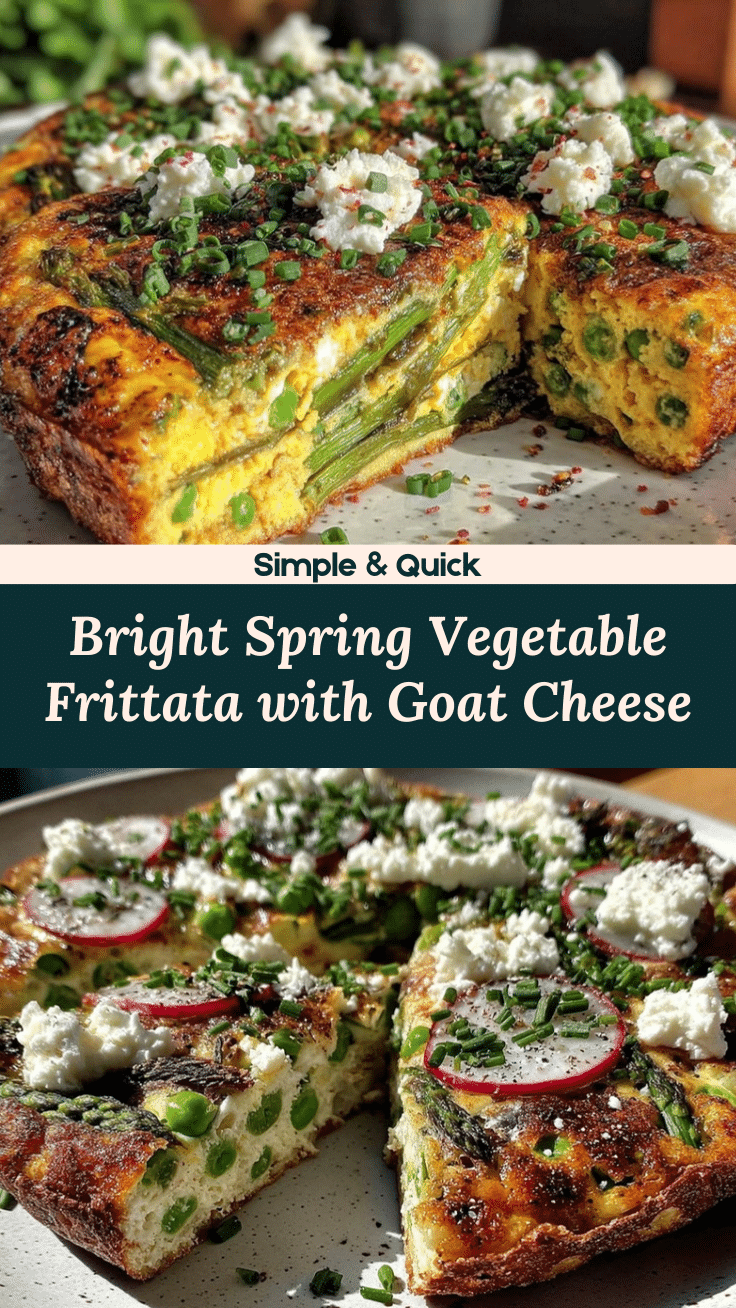
Fresh Spring Vegetable Frittata with Goat Cheese

A quick and easy frittata loaded with fresh spring vegetables, creamy goat cheese, and fragrant herbs, perfect for a light and satisfying meal.
- Prep Time: 10 minutes
- Cook Time: 15 minutes
- Total Time: 25 minutes
- Yield: 6 servings 1x
- Category: Main Course
- Cuisine: American
Ingredients
- 8 large eggs (room temperature)
- 4 ounces goat cheese, crumbled
- 1 cup asparagus, trimmed and cut into 1-inch pieces
- 1/2 cup fresh peas (thawed if frozen)
- 3 green onions, thinly sliced (white and green parts)
- 1/4 cup chopped fresh herbs (parsley, chives, tarragon)
- 2 tablespoons extra virgin olive oil
- 1 clove garlic, minced (optional)
- Salt and freshly ground black pepper, to taste
- 1/4 cup whole milk or cream (can substitute almond milk for dairy-free)
Instructions
- Preheat your oven’s broiler and position the rack about 6 inches from the heat source.
- Rinse the asparagus and peas. Trim and chop asparagus into 1-inch pieces. Thinly slice the green onions, including white and green parts. Mince the garlic if using.
- Heat 1 tablespoon of olive oil in an oven-safe skillet over medium heat. Add asparagus and peas, sauté for 4-5 minutes until tender but vibrant green. Add green onions and garlic, cook 1-2 minutes until fragrant. Season lightly with salt and pepper. Remove skillet from heat.
- In a mixing bowl, whisk together eggs, milk, salt (about 1/2 teaspoon), and freshly ground pepper until smooth and slightly frothy.
- Pour the egg mixture evenly over the sautéed vegetables in the skillet. Tilt pan to spread eggs evenly. Sprinkle crumbled goat cheese and chopped fresh herbs on top.
- Return skillet to medium-low heat and cook for 6-8 minutes without stirring until edges set and center is slightly loose. Lower heat if edges brown too quickly.
- Transfer skillet to the preheated broiler and broil for 2-4 minutes until top is puffed and golden brown and goat cheese is melted.
- Remove from oven and let rest for 5 minutes to set further.
- Slice into wedges and serve warm. Garnish with extra fresh herbs or a drizzle of olive oil if desired.
Notes
Use room temperature eggs for fluffier texture. Avoid over-stirring once eggs hit the pan. Cook on medium-low heat to prevent burning. Watch broiler closely to avoid burning the top. Substitute vegetables and herbs as desired. For dairy-free, replace goat cheese with vegan cheese or omit and add nutritional yeast.
Nutrition
- Serving Size: 1/6 of the frittata
- Calories: 220
- Fat: 16
- Carbohydrates: 6
- Fiber: 2
- Protein: 15
Keywords: frittata, spring vegetables, goat cheese, easy breakfast, brunch, healthy, gluten-free, vegetarian