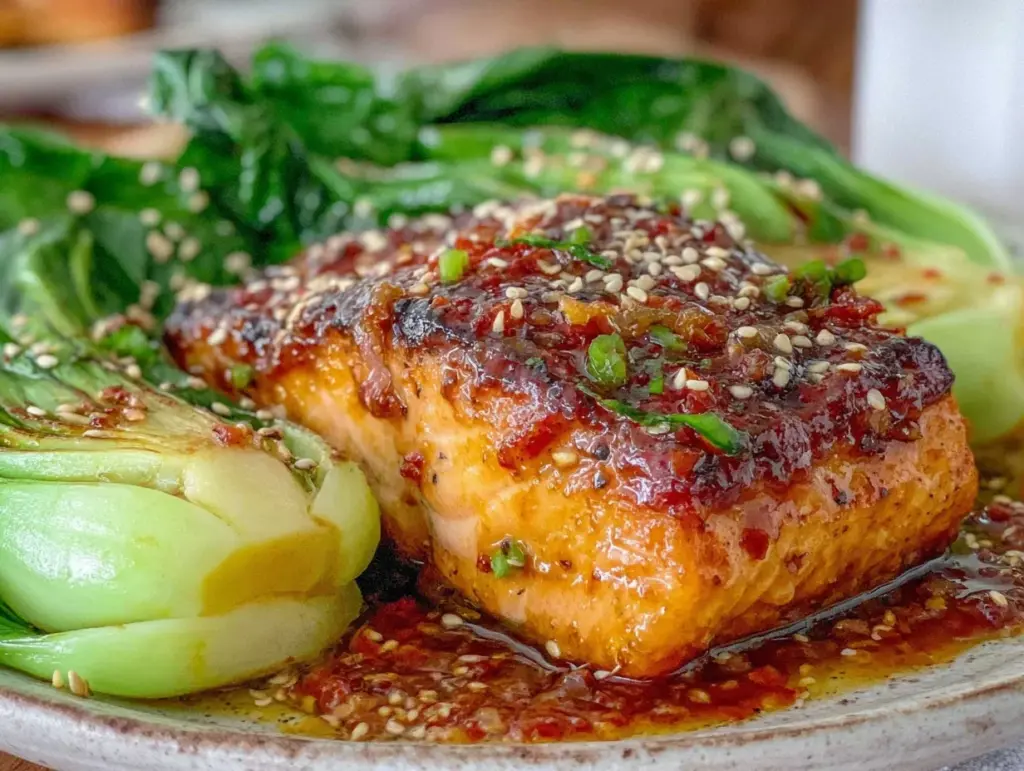
“I wasn’t expecting culinary wisdom from my local barista, but there I was, stirring my coffee while she casually mentioned her grandmother’s miso glazed salmon. It sounded simple enough, but honestly, I was skeptical—miso seemed like one of those ingredients you’d only find in fancy restaurants or specialty shops. Fast forward a week, armed with a jar of miso paste from the Asian market and a slightly cracked baking dish (don’t ask), I gave it a whirl. The kitchen smelled like a cozy Japanese eatery, and the salmon? Let me tell you, that first bite was an unexpected harmony of sweet, salty, and umami that I didn’t know I needed.
You know that feeling when a meal just clicks and sticks with you? This flavorful miso glazed baked salmon with sesame bok choy does exactly that. It’s not overly complicated, but it has this quiet confidence on the plate, like it’s saying, “Yeah, I’m special.” Maybe you’ve been there—wanting something impressive but doable after a long day. This recipe fits that bill perfectly, and I’m happy to share why it’s become a staple in my weeknight rotation.
Why You’ll Love This Recipe
- Quick & Easy: Ready in just about 30 minutes, making it perfect for busy weeknights or last-minute dinner plans.
- Simple Ingredients: Uses pantry staples like miso paste and soy sauce, plus fresh salmon and bok choy that you can find in most grocery stores.
- Perfect for Cozy Dinners: The warm, savory flavors hit the spot on chilly evenings or when you need a comforting meal.
- Crowd-Pleaser: Always gets compliments—friends who usually shy away from fish end up asking for seconds.
- Unbelievably Delicious: The glaze caramelizes beautifully in the oven, while the sesame bok choy adds a fresh, crunchy contrast that keeps things lively.
This isn’t just another baked salmon recipe; the secret lies in the glaze’s balance. The miso’s earthiness blends with honey’s subtle sweetness and a splash of rice vinegar that wakes up your palate. Plus, the sesame bok choy isn’t an afterthought—it’s my favorite way to sneak in greens without fuss. Honestly, it’s that little twist that makes the whole meal feel thoughtfully put together without slaving over the stove. Trust me, once you try this, it’s the kind of dish you’ll want to make again and again.
What Ingredients You Will Need
This recipe uses simple, wholesome ingredients to deliver bold flavor and satisfying texture without the fuss. Most are pantry staples, with fresh salmon and bok choy as the stars. Here’s what you’ll need:
- For the Miso Glaze:
- 2 tablespoons white miso paste (I like using Hikari brand for its smoothness)
- 1 tablespoon honey or maple syrup (adds a lovely caramelized sweetness)
- 1 tablespoon soy sauce (for that salty depth)
- 1 tablespoon rice vinegar (brightens the glaze)
- 1 teaspoon toasted sesame oil (a little goes a long way)
- 1 garlic clove, minced (fresh is best for punchy flavor)
- 1 teaspoon grated fresh ginger (adds zing)
- For the Salmon:
- 4 salmon fillets, skin-on, about 6 ounces (170 grams) each (wild-caught recommended if possible)
- Salt and pepper, to taste
- Lemon wedges, for serving (optional but highly recommended)
- For the Sesame Bok Choy:
- 1 pound (450 grams) baby bok choy, halved lengthwise
- 1 tablespoon vegetable or canola oil
- 1 tablespoon soy sauce
- 1 teaspoon toasted sesame seeds
- 1 garlic clove, minced
- Pinch of red pepper flakes (optional, for a subtle kick)
If you can’t find baby bok choy, regular bok choy works just fine—just chop it into smaller pieces. For a gluten-free version, swap soy sauce with tamari. And if miso paste is new territory, try to pick white miso for milder taste; it blends beautifully without overpowering the fish. I always keep a jar in my fridge because it’s surprisingly versatile beyond this recipe.
Equipment Needed
- Baking sheet or oven-safe dish (a rimmed baking sheet works well to catch drips)
- Mixing bowl (for the miso glaze)
- Measuring spoons and cups
- Small whisk or fork (to blend the glaze smoothly)
- Non-stick skillet or cast-iron pan (for sautéing bok choy)
- Tongs or spatula (to turn bok choy easily)
- Sharp knife and cutting board
If you don’t have a whisk, a fork is just fine—honestly, I’ve mixed this glaze with whatever was at hand. For sautéing, a cast-iron pan gives a nice sear on the bok choy edges, but a good non-stick skillet works just as well and is easier to clean. I recommend investing in a rimmed baking sheet because salmon juices love to escape, and it makes cleanup much less of a chore.
Preparation Method
- Preheat your oven to 400°F (200°C). Line your baking sheet with parchment paper or lightly oil it to prevent sticking. This step usually takes about 10 minutes.
- Prepare the miso glaze: In a mixing bowl, combine 2 tablespoons white miso paste, 1 tablespoon honey, 1 tablespoon soy sauce, 1 tablespoon rice vinegar, 1 teaspoon toasted sesame oil, minced garlic, and grated ginger. Whisk until smooth and well combined. The glaze should be thick but spreadable. If it feels too stiff, add a tiny splash of water.
- Season the salmon fillets: Pat dry with paper towels, then lightly season both sides with salt and pepper. Place them skin-side down on the prepared baking sheet.
- Glaze the salmon: Using a spoon or brush, generously spread the miso glaze over the top of each fillet. Don’t skimp—this is the flavor powerhouse!
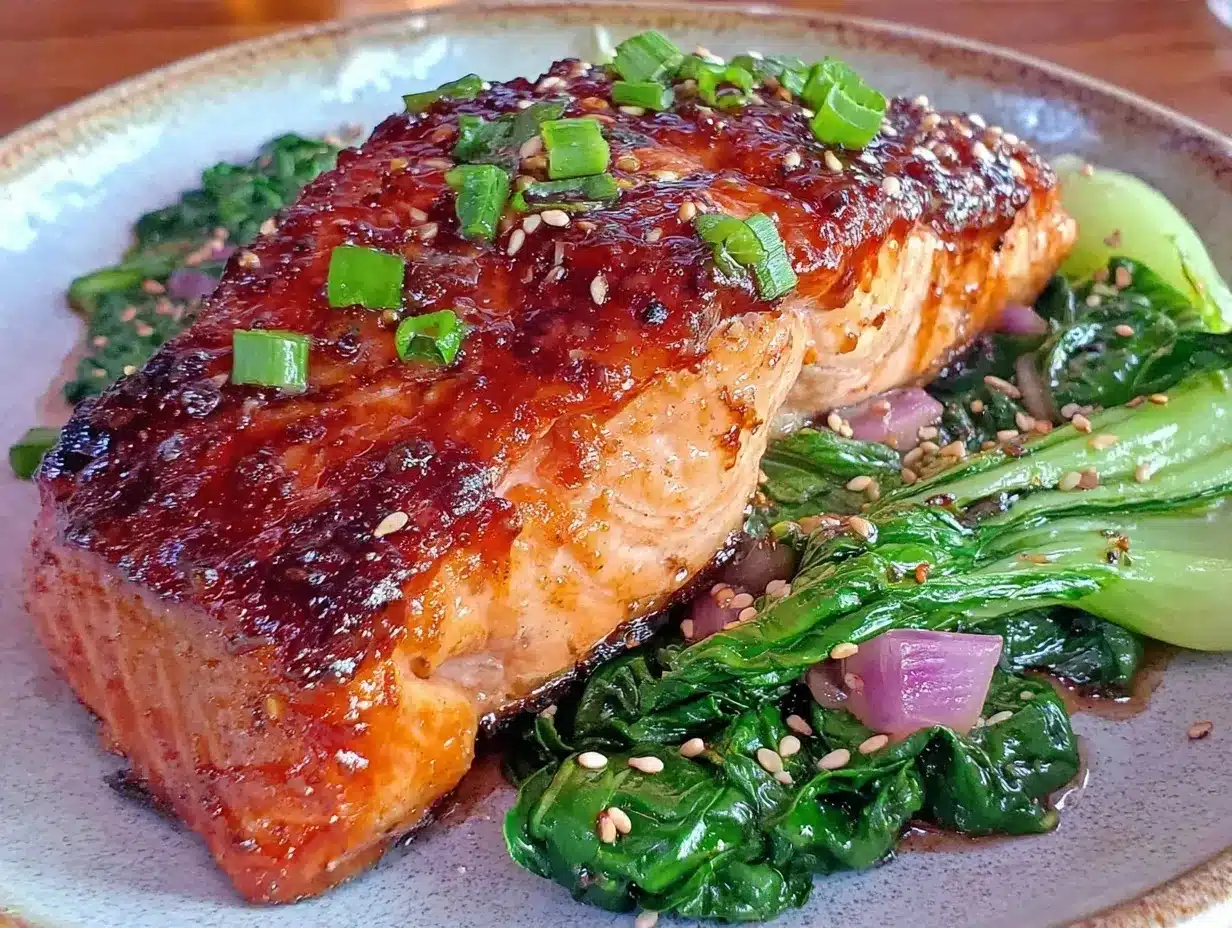
- Bake the salmon: Place the baking sheet in the oven and bake for 12-15 minutes, depending on thickness. The glaze should bubble slightly and develop a golden hue, while the salmon flakes easily when tested with a fork. (Pro tip: If you want a crispier top, switch the oven to broil for the last 1-2 minutes—but watch carefully!)
- While the salmon bakes, prepare the sesame bok choy: Heat 1 tablespoon vegetable oil in a skillet over medium-high heat. Add minced garlic and red pepper flakes if using, sauté for 30 seconds until fragrant.
- Add the bok choy halves: Place cut-side down in the skillet and cook without moving for 2-3 minutes until slightly charred and tender. Flip and cook the other side for another 2 minutes.
- Finish the bok choy: Drizzle with 1 tablespoon soy sauce and toss to coat. Sprinkle toasted sesame seeds on top and remove from heat.
- Serve immediately: Plate the salmon fillets alongside the sesame bok choy. Add lemon wedges to squeeze over the top for a fresh burst. Enjoy!
Sometimes I accidentally over-glaze the salmon (too eager, you know), which can cause the top to get a bit too dark—still tasty, but keep an eye on it. Also, the bok choy cooks fast, so multitasking helps—start it just as your salmon goes in the oven to make the most of your time.
Cooking Tips & Techniques
Miso glazed salmon can be very forgiving, but a few tips can make it shine every time. First off, always pat your salmon dry before applying the glaze; moisture is the enemy of a nice caramelized finish. I learned this the hard way when my first attempt was more steamed than baked.
When mixing your miso glaze, taste it before applying. It should be a balanced blend of salty, sweet, and tangy—adjust honey or soy sauce to suit your taste buds. Remember, miso varies in saltiness depending on the brand.
For the bok choy, don’t rush the searing step. That slight char adds smoky depth and texture contrast. Resist the urge to stir too much; let it sit to get those beautiful golden spots.
Timing is everything here. Try to prep everything before preheating the oven so you’re not scrambling when it’s time to bake. And if you’re cooking for more than four, you can bake multiple sheets at once—just rotate halfway through.
Variations & Adaptations
- Dietary Swap: Use tamari instead of soy sauce for gluten-free needs. Swap honey for maple syrup to keep it vegan-friendly, and replace salmon with firm tofu for a plant-based alternative.
- Seasonal Twist: In warmer months, add thinly sliced scallions and fresh cilantro to the bok choy for a bright finish. During colder months, incorporate roasted shiitake mushrooms alongside the bok choy for earthiness.
- Flavor Boost: Add a teaspoon of chili garlic sauce to the miso glaze for a spicy kick. Alternatively, sprinkle toasted nori flakes over the finished salmon for a subtle oceanic note.
Once, on a whim, I swapped bok choy for tender kale and tossed it with lemon zest and pine nuts—it was surprisingly good and gave me a new favorite take on the side dish.
Serving & Storage Suggestions
Serve the miso glazed salmon hot, straight from the oven, alongside the sesame bok choy. A simple bowl of steamed jasmine rice or quinoa pairs perfectly, soaking up the delicious glaze drippings. For drinks, a crisp white wine or green tea complements the umami flavors well.
If you have leftovers, store the salmon and bok choy separately in airtight containers in the refrigerator for up to two days. Reheat gently in a low oven or microwave on medium power to avoid drying out the fish. The flavors mellow a bit overnight, so it’s great for next-day lunches, too.
Pro tip: If you plan to eat leftovers cold, the salmon still holds up well in salads or rice bowls—just add a squeeze of fresh lemon or a drizzle of soy sauce to brighten it back up.
Nutritional Information & Benefits
This flavorful miso glazed baked salmon is a powerhouse of nutrition. A typical serving offers around 350 calories, with about 25 grams of protein and healthy omega-3 fatty acids essential for heart and brain health. Miso paste brings probiotics that support digestion, while bok choy provides a boost of vitamins A, C, and K along with fiber.
Because this recipe uses fresh ingredients and minimal added sugars, it fits well into balanced diets, including low-carb and gluten-free lifestyles. Just be mindful if you’re watching sodium intake—opt for low-sodium soy sauce if needed. Personally, I appreciate how this meal feels nourishing without being heavy or complicated.
Conclusion
All in all, this flavorful miso glazed baked salmon with sesame bok choy is one of those recipes that feels special but is surprisingly straightforward to make. The balance of sweet, salty, and umami flavors combined with the fresh crunch of bok choy makes it a satisfying meal any night of the week. I love how it lets me enjoy a restaurant-quality dish at home without hours in the kitchen.
Feel free to tweak the glaze or sides to match your taste—this recipe welcomes your personal touch. If you try it out, I’d love to hear how you made it your own! Don’t forget to leave a comment or share your photos. Happy cooking, and may your kitchen be filled with delicious moments!
FAQs
Can I use frozen salmon for this recipe?
Yes, but be sure to thaw it completely and pat it dry before applying the glaze to avoid excess moisture that can prevent caramelization.
What type of miso paste is best for the glaze?
White miso paste is ideal because it has a mild, slightly sweet flavor that balances well with the honey and soy sauce. Avoid darker misos unless you want a stronger, saltier taste.
Can I prepare the miso glaze ahead of time?
Absolutely! The glaze can be made up to two days in advance and stored in the refrigerator. Give it a quick stir before using.
How do I know when the salmon is perfectly cooked?
The salmon should flake easily with a fork and have an internal temperature around 145°F (63°C). The glaze should be bubbly and slightly browned on top.
Is sesame bok choy gluten-free?
Yes, but double-check your soy sauce or tamari to ensure it’s gluten-free if that’s a dietary concern.
Pin This Recipe!
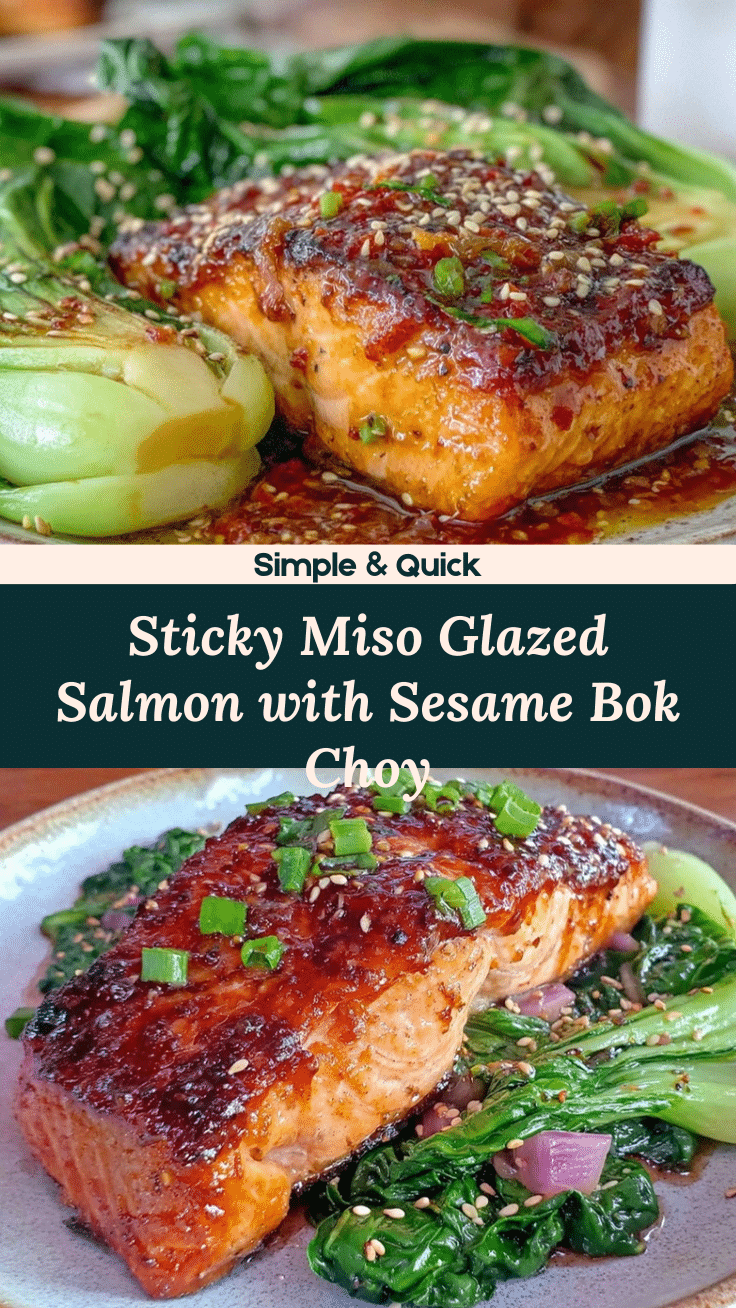
Flavorful Miso Glazed Baked Salmon Recipe with Easy Sesame Bok Choy Sides
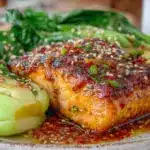
A quick and easy miso glazed baked salmon paired with sesame bok choy, delivering a perfect balance of sweet, salty, and umami flavors for a cozy and impressive weeknight dinner.
- Prep Time: 10 minutes
- Cook Time: 15 minutes
- Total Time: 25 minutes
- Yield: 4 servings 1x
- Category: Main Course
- Cuisine: Japanese
Ingredients
- 2 tablespoons white miso paste
- 1 tablespoon honey or maple syrup
- 1 tablespoon soy sauce
- 1 tablespoon rice vinegar
- 1 teaspoon toasted sesame oil
- 1 garlic clove, minced
- 1 teaspoon grated fresh ginger
- 4 salmon fillets, skin-on, about 6 ounces each
- Salt and pepper, to taste
- Lemon wedges, for serving (optional)
- 1 pound baby bok choy, halved lengthwise
- 1 tablespoon vegetable or canola oil
- 1 tablespoon soy sauce
- 1 teaspoon toasted sesame seeds
- 1 garlic clove, minced
- Pinch of red pepper flakes (optional)
Instructions
- Preheat your oven to 400°F (200°C). Line your baking sheet with parchment paper or lightly oil it to prevent sticking.
- In a mixing bowl, combine 2 tablespoons white miso paste, 1 tablespoon honey, 1 tablespoon soy sauce, 1 tablespoon rice vinegar, 1 teaspoon toasted sesame oil, minced garlic, and grated ginger. Whisk until smooth and well combined. Add a tiny splash of water if the glaze is too stiff.
- Pat dry the salmon fillets with paper towels, then lightly season both sides with salt and pepper. Place them skin-side down on the prepared baking sheet.
- Generously spread the miso glaze over the top of each fillet using a spoon or brush.
- Bake the salmon for 12-15 minutes, depending on thickness, until the glaze bubbles and develops a golden hue and the salmon flakes easily with a fork. For a crispier top, broil for the last 1-2 minutes, watching carefully.
- While the salmon bakes, heat 1 tablespoon vegetable oil in a skillet over medium-high heat. Add minced garlic and red pepper flakes if using, sauté for 30 seconds until fragrant.
- Place bok choy halves cut-side down in the skillet and cook without moving for 2-3 minutes until slightly charred and tender. Flip and cook the other side for another 2 minutes.
- Drizzle bok choy with 1 tablespoon soy sauce, toss to coat, sprinkle toasted sesame seeds on top, and remove from heat.
- Serve the salmon fillets alongside the sesame bok choy with lemon wedges to squeeze over the top.
Notes
Pat salmon dry before glazing to ensure caramelization. Adjust honey or soy sauce in glaze to taste. For gluten-free, use tamari instead of soy sauce. Start cooking bok choy as salmon goes into the oven to save time. Broil salmon for last 1-2 minutes for a crispier top but watch carefully to avoid burning.
Nutrition
- Serving Size: 1 salmon fillet with
- Calories: 350
- Sugar: 7
- Sodium: 600
- Fat: 18
- Saturated Fat: 3
- Carbohydrates: 12
- Fiber: 2
- Protein: 25
Keywords: miso glazed salmon, baked salmon, sesame bok choy, easy salmon recipe, Japanese salmon, healthy dinner, weeknight dinner, umami salmon