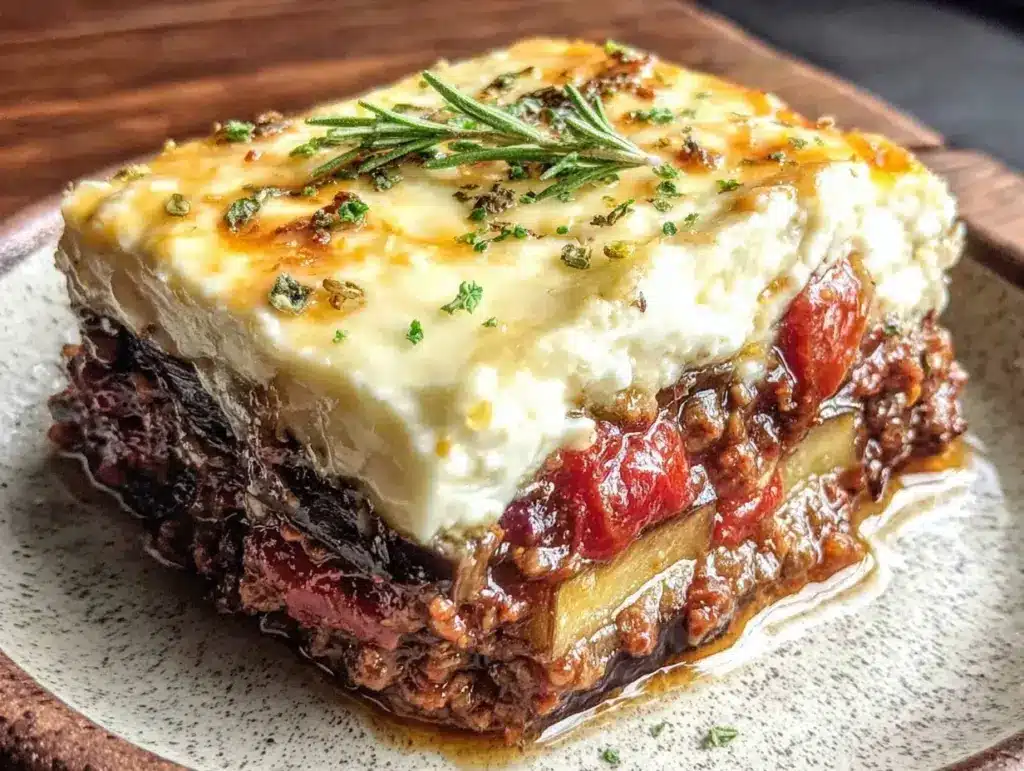
“You won’t believe this came from a tiny kitchen in Athens,” my friend Giorgos chuckled as he stirred his pot, the aroma of spices and roasting eggplant filling the air. It was a chilly Wednesday evening, and I had stopped by unexpectedly, hoping for a quick bite. Instead, I found myself mesmerized by the layers of his classic Greek moussaka simmering on the stove. Honestly, I wasn’t expecting much—moussaka always sounded like one of those dishes that’s too fancy to make at home. But the way Giorgos talked about his mother’s recipe, the careful layering of eggplants, the rich meat sauce, and that dreamy creamy béchamel made me rethink everything.
Now, I’m not usually one to drop everything and start cooking midweek, but this recipe had me hooked. I mean, the way the béchamel gently blankets the dish, thick and silky, with just the right hint of nutmeg? Pure magic. It reminds me a bit of the time I tried recreating a lasagna and ended up with a kitchen disaster—burnt sauce everywhere and an overcooked mess. But moussaka? It’s different. It’s comforting, yet sophisticated; a dish that tells a story with every bite. Maybe you’ve been there—craving something hearty that feels like a warm hug but also tastes like a celebration. That’s exactly what classic Greek moussaka with creamy béchamel layers brings to the table, and I can’t wait to share it with you.
Why You’ll Love This Recipe
After testing this classic Greek moussaka recipe multiple times, I can say with confidence it’s a keeper. What makes it stand out isn’t just the layers—it’s the balance of flavors and textures that sing together perfectly. Here’s why this recipe will become your new favorite:
- Quick & Easy: While it might look fancy, it comes together in about 90 minutes, making it manageable for a weekend cook-up or a special weeknight treat.
- Simple Ingredients: You won’t need to hunt for exotic stuff; most ingredients are pantry staples or easy to find at your local market.
- Perfect for Cozy Dinners: Whether you’re impressing guests or indulging yourself, it’s a dish that feels like a celebration without the fuss.
- Crowd-Pleaser: It’s a hit with both kids and adults—trust me, I’ve seen picky eaters go back for seconds.
- Unbelievably Delicious: The creamy béchamel topping adds a luxurious touch that melts in your mouth, contrasting beautifully with the savory meat and tender eggplant layers.
This isn’t just any moussaka—it’s the version I perfected after learning a few tricks from a Greek friend and a couple of kitchen blunders. The béchamel is smooth and not too thick or gloopy, thanks to a quick whisking technique I picked up. And the meat sauce? Well-seasoned with cinnamon and herbs, it’s a subtle nod to the traditional flavors without overwhelming the palate. Honestly, it’s the kind of dish that invites you to slow down and savor every bite.
What Ingredients You Will Need
This classic Greek moussaka recipe relies on simple, wholesome ingredients that work in harmony to deliver rich flavor and luscious texture. Most of these are things you probably have on hand, but if you’re missing something, I’ve included some handy substitutions below.
- Eggplants – 3 medium, sliced into ¼-inch thick rounds (choose firm, glossy eggplants for less bitterness)
- Olive oil – ⅓ cup (use extra virgin for the best flavor in roasting)
- Ground beef or lamb – 1 lb (450 g) (lamb adds authenticity; beef works well too)
- Onion – 1 large, finely chopped
- Garlic – 3 cloves, minced
- Tomato paste – 2 tablespoons (adds depth and richness)
- Crushed tomatoes – 1 cup (240 ml)
- Red wine – ½ cup (120 ml) (optional but recommended for a deeper flavor)
- Cinnamon – 1 teaspoon (ground, for that signature warm note)
- Allspice – ½ teaspoon
- Fresh parsley – 2 tablespoons, chopped (adds brightness)
- Salt and black pepper – to taste
- For the Béchamel Sauce:
- Unsalted butter – 6 tablespoons (85 g), softened (I like Kerrygold for creaminess)
- All-purpose flour – ⅓ cup (40 g)
- Whole milk – 3 cups (720 ml), warmed
- Grated Parmesan cheese – ½ cup (50 g) (gives a lovely savory finish)
- Egg yolks – 2 large (room temperature)
- Nutmeg – ¼ teaspoon, freshly grated if possible
- Salt and white pepper – to taste
Ingredient Tips: If you need a dairy-free option, swap milk with unsweetened almond or oat milk and use a vegan butter substitute. For a gluten-free version, use a gluten-free all-purpose flour blend in the béchamel. In summer, I sometimes add thinly sliced zucchini layers for extra freshness.
Equipment Needed
- Large skillet or sauté pan: For browning the meat and cooking the sauce. A heavy-bottomed pan works best to avoid hot spots.
- Roasting pan or baking sheet: To roast or sauté the eggplant slices.
- Medium saucepan: For preparing the béchamel sauce.
- Whisk: Essential for making a smooth béchamel without lumps.
- Sharp knife and cutting board: For prepping vegetables.
- 9×13 inch (23×33 cm) baking dish: To assemble and bake the moussaka.
- Measuring cups and spoons: For precise ingredient amounts.
If you don’t have a whisk, a fork can work in a pinch, but I find a balloon whisk makes the béchamel silky and lump-free. For roasting eggplants, you might also use a grill pan if you want that charred flavor, though plain roasting works just fine. I keep a silicone spatula handy for scraping the béchamel pot—it’s a small thing but makes a difference in cleanup.
Preparation Method
- Prepare the Eggplants: Preheat your oven to 400°F (200°C). Slice the eggplants into ¼-inch (0.6 cm) rounds. Lay them out on baking sheets, brush both sides lightly with olive oil, and sprinkle with a pinch of salt. Roast for about 25 minutes, flipping halfway, until golden and tender. This removes bitterness and moisture. If you’re pressed for time, you can sauté them in a skillet instead—just watch for even cooking.
- Make the Meat Sauce: While eggplants roast, heat 2 tablespoons of olive oil in a large skillet over medium heat. Add the chopped onion and cook until translucent, about 5 minutes. Toss in the minced garlic and cook for another minute until fragrant. Add the ground beef or lamb, breaking it apart with a wooden spoon. Cook until browned and no longer pink, about 7-8 minutes. Stir in tomato paste, crushed tomatoes, red wine (if using), cinnamon, allspice, salt, and pepper. Reduce heat to low and simmer gently for 20 minutes until sauce thickens. Stir in fresh parsley at the end. If the sauce gets too thick, add a splash of water.
- Prepare the Béchamel Sauce: In a medium saucepan, melt the butter over medium heat. Once melted, whisk in the flour and cook for 2-3 minutes, stirring constantly, until it forms a pale, bubbly paste (roux). Slowly add the warm milk, whisking continuously to avoid lumps. Continue cooking and whisking until the sauce thickens and coats the back of a spoon, about 8-10 minutes. Remove from heat and stir in grated Parmesan, nutmeg, salt, and white pepper. Let cool slightly, then whisk in the egg yolks one at a time. This will give the béchamel that silky, rich texture.
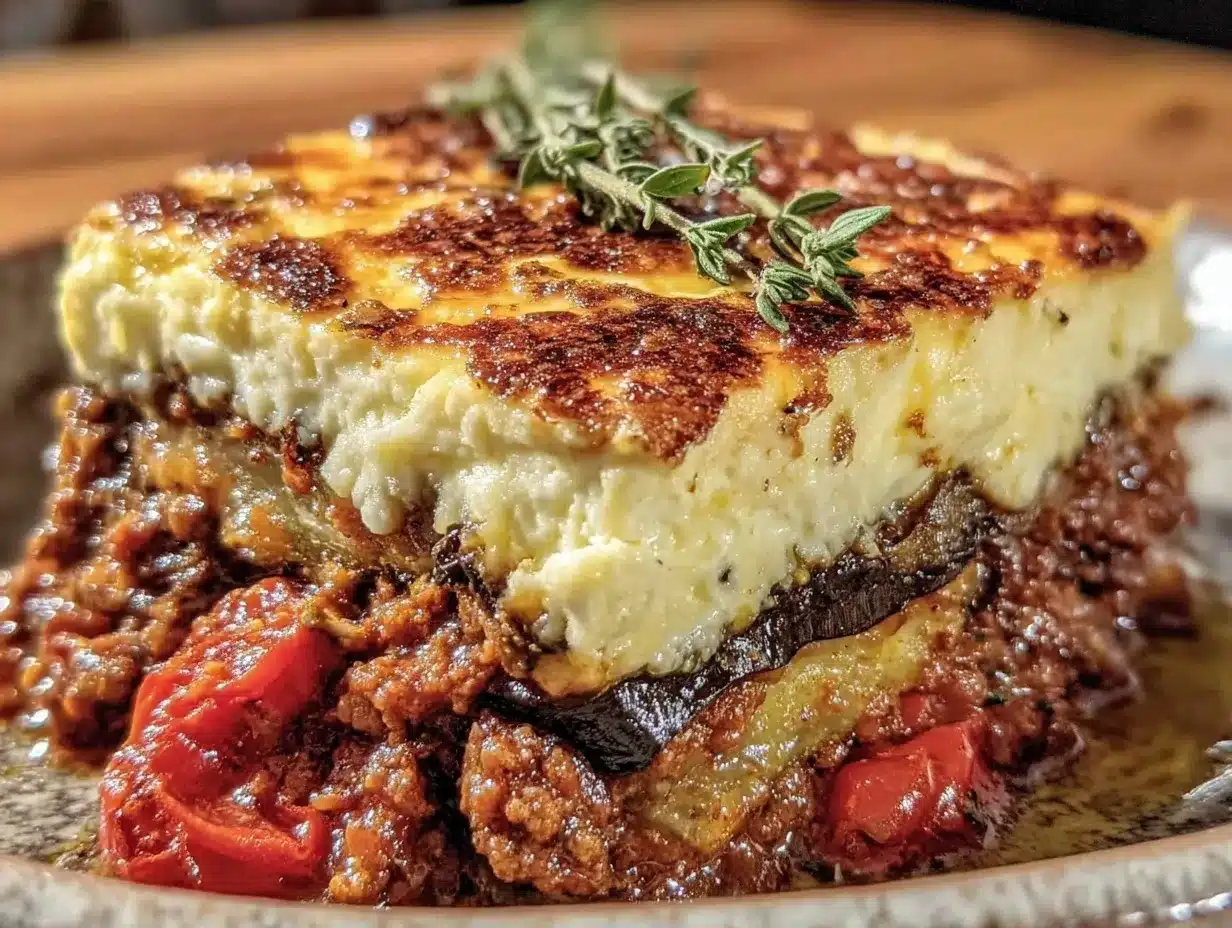
- Assemble the Moussaka: Lower oven temperature to 350°F (175°C). In your baking dish, layer half the roasted eggplants evenly on the bottom. Spread the meat sauce over the eggplants in an even layer. Add the remaining eggplant slices on top of the meat sauce. Pour the béchamel sauce over the entire dish, smoothing the top with a spatula. You want a nice, thick layer of béchamel — it’s what makes this dish extra special.
- Bake: Place the dish in the oven and bake for 45-50 minutes, or until the top is golden brown and bubbling. Keep an eye toward the end to prevent over-browning; if it’s getting too dark, loosely cover with foil.
- Rest and Serve: Let the moussaka cool for at least 20 minutes before slicing. This resting period helps the layers set, making it easier to serve. I know it’s tempting to dig right in, but patience here really pays off.
Cooking Tips & Techniques
Making authentic Greek moussaka can seem intimidating, but a few insider tips make all the difference. First off, roasting the eggplants instead of frying cuts down on oil and bitterness, plus it’s less messy (trust me, I learned that the hard way!). Make sure to slice them evenly so they cook uniformly.
When it comes to the béchamel, patience is key. Whisk constantly when adding milk to the roux—lumps are the enemy here! If lumps sneak in, a quick blitz with an immersion blender helps smooth things out. Also, don’t skip letting the béchamel cool a bit before adding egg yolks; adding them too soon can scramble the eggs.
The meat sauce should simmer low and slow. Rushing it often results in a watery sauce or bland flavor. I like to add a splash of red wine—not just for flavor but it helps break down the meat fats, creating a richer sauce. If you’re short on time, use a good quality canned crushed tomato, but fresh always wins if you have it.
When assembling, be generous with the béchamel—it’s the signature creamy layer that ties everything together. And don’t forget the resting time after baking; it’s tempting to dive in but slicing too soon can make a mess.
Variations & Adaptations
- Vegetarian Moussaka: Swap the meat sauce for a hearty lentil tomato sauce or sautéed mushrooms and walnuts seasoned with herbs. The béchamel remains the same, keeping that creamy texture.
- Low-Carb Version: Replace the eggplant layers with thinly sliced zucchini or even roasted cauliflower slices. Use almond flour in the béchamel for a gluten-free twist.
- Spicy Twist: Add a pinch of red pepper flakes to the meat sauce for heat, or mix some smoked paprika for a smoky flavor.
- Different Cheeses: Experiment with kefalotyri or pecorino instead of Parmesan in the béchamel for a sharper, saltier finish.
- Personal Experiment: I once added a thin layer of sautéed spinach between the meat and eggplant layers, which gave a lovely fresh bite and a pop of color. Definitely worth a try if you want to sneak in some greens!
Serving & Storage Suggestions
Classic Greek moussaka is best served warm, ideally with a simple green salad dressed in lemon and olive oil. A glass of crisp white wine or a chilled retsina complements the flavors beautifully. Leftovers? They’re fantastic the next day—flavors deepen after sitting overnight.
To store, cover the baking dish tightly with foil or plastic wrap and refrigerate for up to 3 days. For longer storage, slice into portions and freeze in airtight containers for up to 2 months. Reheat gently in the oven at 325°F (160°C) until warmed through to keep the béchamel creamy and avoid drying out.
Pro tip: Flavors tend to mellow and marry after resting, so if you can, make it a day ahead—your future self will thank you!
Nutritional Information & Benefits
This classic Greek moussaka is a balanced dish, rich in protein from the meat and eggs, and packed with vitamins and fiber from the eggplants. The olive oil provides heart-healthy fats, and the béchamel adds calcium and vitamin D from the milk.
Approximate nutritional values per serving (based on 6 servings):
| Calories | Protein | Fat | Carbohydrates | Fiber |
|---|---|---|---|---|
| 450 kcal | 28 g | 30 g | 18 g | 5 g |
If you need gluten-free or dairy-free options, the substitutions mentioned earlier keep this dish accessible without sacrificing the soul of the recipe. Personally, I find this dish comforting yet nourishing—perfect for a meal that fills you up without feeling heavy.
Conclusion
If you’re looking to try a recipe that’s rich in flavor, steeped in tradition, and surprisingly doable in a home kitchen, this classic Greek moussaka with creamy béchamel layers should be on your list. It’s a dish that invites you to slow down, savor layers of taste, and maybe even share a story or two while you eat.
Feel free to tweak the spices, switch up the veggies, or experiment with cheeses—this recipe is your canvas. I love making this moussaka because it reminds me of cozy evenings with friends, laughter, and unexpected moments of kitchen chaos that somehow turn into something truly special.
Give it a try, and please come back to share your twists or questions—I’d love to hear how your version turns out!
Frequently Asked Questions
Can I prepare moussaka a day ahead?
Absolutely! Moussaka tastes even better the next day as the flavors meld. Just cover and refrigerate overnight, then reheat gently before serving.
Is there a vegan version of moussaka?
Yes, you can make a vegan version by replacing meat with lentils or mushrooms and using a plant-based béchamel made with non-dairy milk and vegan butter.
How do I prevent the béchamel from curdling?
Make sure to let the béchamel cool slightly before stirring in the egg yolks, and whisk constantly. Avoid high heat when adding the yolks to prevent scrambling.
Can I freeze leftovers?
Yes, slice moussaka into portions and freeze in airtight containers for up to 2 months. Thaw overnight in the fridge and reheat in the oven.
What’s the best way to cook eggplants for moussaka?
Roasting the eggplants is a cleaner, less oily method that removes bitterness and softens them nicely. You can also pan-fry if you prefer a richer flavor but watch the oil closely.
Pin This Recipe!
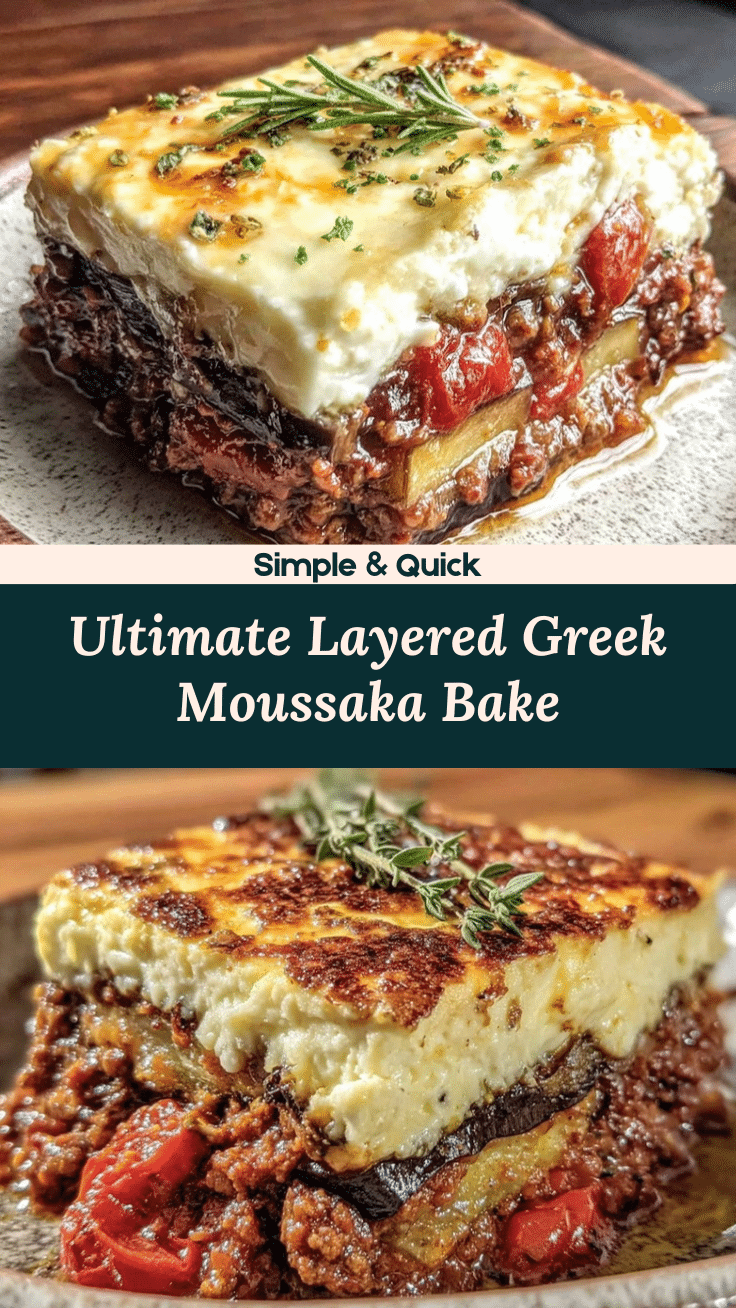
Classic Greek Moussaka Recipe Easy Homemade with Creamy Béchamel Layers
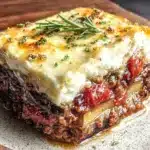
A comforting and sophisticated classic Greek moussaka featuring layers of roasted eggplant, well-seasoned meat sauce, and a silky creamy béchamel topping. Perfect for cozy dinners and special occasions.
- Prep Time: 30 minutes
- Cook Time: 1 hour
- Total Time: 1 hour 30 minutes
- Yield: 6 servings 1x
- Category: Main Course
- Cuisine: Greek
Ingredients
- 3 medium eggplants, sliced into 1/4-inch thick rounds
- 1/3 cup olive oil (extra virgin recommended)
- 1 lb ground beef or lamb
- 1 large onion, finely chopped
- 3 cloves garlic, minced
- 2 tablespoons tomato paste
- 1 cup crushed tomatoes
- 1/2 cup red wine (optional)
- 1 teaspoon ground cinnamon
- 1/2 teaspoon allspice
- 2 tablespoons fresh parsley, chopped
- Salt and black pepper to taste
- For the Béchamel Sauce:
- 6 tablespoons unsalted butter, softened
- 1/3 cup all-purpose flour
- 3 cups whole milk, warmed
- 1/2 cup grated Parmesan cheese
- 2 large egg yolks, room temperature
- 1/4 teaspoon freshly grated nutmeg
- Salt and white pepper to taste
Instructions
- Preheat oven to 400°F (200°C). Slice eggplants into 1/4-inch rounds. Lay on baking sheets, brush both sides with olive oil, sprinkle with salt. Roast for 25 minutes, flipping halfway, until golden and tender. Alternatively, sauté in a skillet for quicker cooking.
- Heat 2 tablespoons olive oil in a large skillet over medium heat. Cook chopped onion until translucent, about 5 minutes. Add minced garlic and cook 1 minute until fragrant. Add ground beef or lamb, breaking apart, cook until browned, about 7-8 minutes.
- Stir in tomato paste, crushed tomatoes, red wine (if using), cinnamon, allspice, salt, and pepper. Reduce heat to low and simmer gently for 20 minutes until sauce thickens. Stir in fresh parsley at the end. Add water if sauce becomes too thick.
- Prepare béchamel sauce: Melt butter in medium saucepan over medium heat. Whisk in flour and cook 2-3 minutes until pale and bubbly (roux). Slowly add warm milk, whisking constantly to avoid lumps. Cook and whisk until sauce thickens and coats back of spoon, about 8-10 minutes.
- Remove from heat, stir in Parmesan, nutmeg, salt, and white pepper. Let cool slightly, then whisk in egg yolks one at a time for silky texture.
- Lower oven temperature to 350°F (175°C). In a 9×13 inch baking dish, layer half the roasted eggplants evenly. Spread meat sauce over eggplants. Add remaining eggplant slices on top. Pour béchamel sauce over entire dish, smoothing the top.
- Bake for 45-50 minutes until top is golden brown and bubbling. Cover loosely with foil if browning too quickly.
- Let moussaka rest for at least 20 minutes before slicing and serving.
Notes
Roast eggplants to reduce bitterness and moisture. Whisk béchamel constantly to avoid lumps and add egg yolks after cooling slightly to prevent curdling. Let moussaka rest before slicing for better layering. Variations include vegetarian, low-carb, and spicy versions.
Nutrition
- Serving Size: 1 slice (1/6 of the
- Calories: 450
- Fat: 30
- Carbohydrates: 18
- Fiber: 5
- Protein: 28
Keywords: Greek moussaka, classic moussaka, béchamel sauce, eggplant casserole, traditional Greek recipe, easy moussaka, homemade moussaka