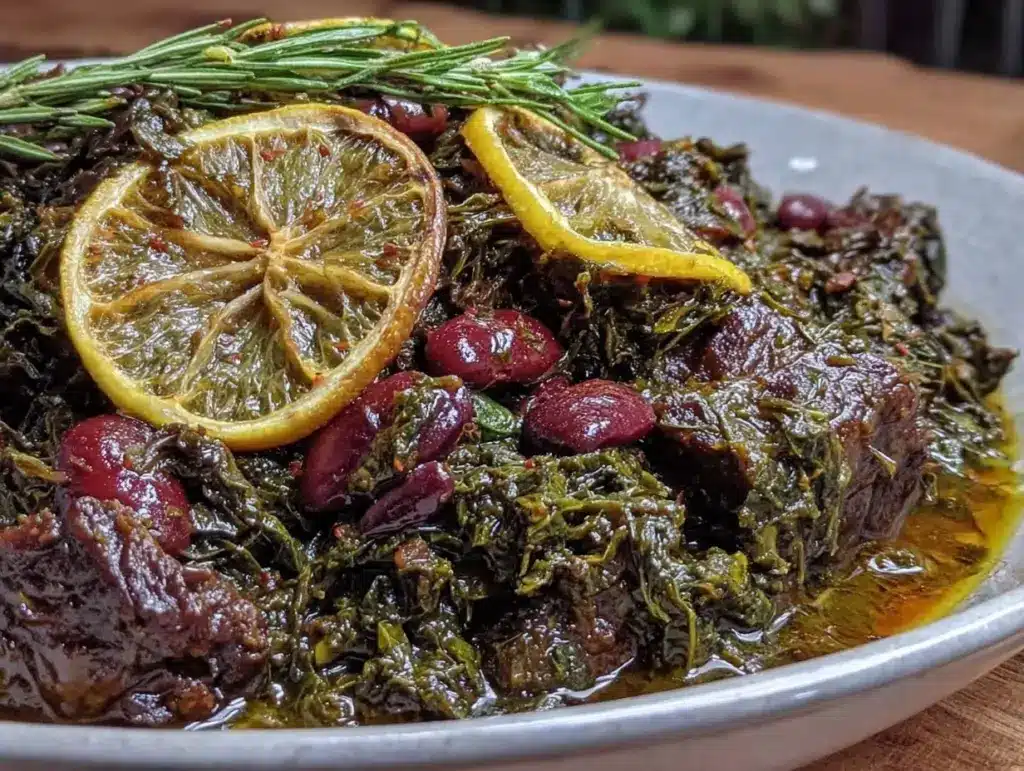
“You won’t believe this, but I first caught the scent of this Iranian herb stew while waiting in line at a tiny grocery store on a chilly Thursday afternoon.” That’s how the story began—an unexpected whiff of something deeply fragrant, mysterious, and inviting. The aroma pulled me closer to the counter, where an elderly woman was buying a bunch of fresh herbs. She smiled, noticing my curiosity, and mentioned “Ghormeh Sabzi,” a classic Iranian stew that’s all about herbs, kidney beans, and slow-cooked comfort.
Honestly, I wasn’t expecting to fall head over heels for a dish so green and herbaceous. But that day marked the start of a little obsession with Ghormeh Sabzi. You know that feeling when a meal just wraps around you like a warm blanket on a cold night? That’s exactly what this stew does. It’s hearty, vibrant, and packed with flavors that somehow feel both exotic and familiar at the same time.
My first attempt at making this stew was a bit of a mess—a missing herb here, a too-long simmer there—but the soulful taste kept me coming back. I even made a mess in the kitchen one evening, forgetting to soak the kidney beans overnight (rookie move!) and ended up improvising with canned beans. The result? Still delicious, just a touch less traditional. Maybe you’ve been there—rushing to make something authentic but discovering your own twist along the way.
The combination of tender meat, the tang from dried limes, and the earthy richness of the herbs is unlike anything else I’ve tasted. Plus, it’s surprisingly easy to make once you get the hang of it. Whether you’re a curious beginner or a seasoned stew lover, this comforting Iranian Ghormeh Sabzi herb stew with kidney beans is a recipe that stays with you and invites you to make it again and again.
Why You’ll Love This Recipe
Cooking Ghormeh Sabzi might sound intimidating, but honestly, it’s one of those dishes that rewards patience and care with incredible flavor. After multiple trials in my kitchen (and a few “oops” moments), I can confidently say this recipe is a keeper. Here’s why this comforting Iranian Ghormeh Sabzi herb stew with kidney beans will quickly become your go-to:
- Quick & Easy: Comes together in about 2 hours, including simmering time—mostly hands-off, perfect for busy days when you want something nourishing without constant attention.
- Simple Ingredients: Most are pantry staples or easy-to-find at any well-stocked grocery store. No need for specialty markets unless you want to be extra authentic!
- Perfect for Cozy Dinners: This stew is the ultimate comfort food on a chilly evening or when you need a soul-soothing meal that feeds the whole family.
- Crowd-Pleaser: Guests always ask for seconds. The balance of fresh herbs, tangy dried limes, and tender kidney beans makes it appealing to a wide range of palates.
- Unbelievably Delicious: The layered flavors create a stew that’s hearty, fragrant, and just the right bit tangy—comfort food that doesn’t feel heavy but leaves you content.
What sets this recipe apart is the way the herbs are treated—fresh and finely chopped, then sautéed until fragrant, which brings out their best qualities without overwhelming the stew. Plus, I add kidney beans for extra texture and protein, which makes the dish even more satisfying and vegetarian-friendly if you skip the meat.
This isn’t just another stew recipe; it’s a warm invitation to experience a taste of Persian culture with every spoonful. Trust me, once you’ve had a bowl, you’ll understand why it’s a national favorite.
What Ingredients You Will Need
This comforting Iranian Ghormeh Sabzi herb stew with kidney beans relies on fresh, wholesome ingredients that work together to create a rich and vibrant dish. Most of these are pantry staples or easy to find in any supermarket, with a few special touches that bring authenticity.
- For the Herb Mixture:
- 2 cups fresh parsley, finely chopped (adds freshness and color)
- 1 cup fresh cilantro, finely chopped (balances the herbs with a hint of earthiness)
- 1 cup fresh chives or green onions, chopped (for mild oniony notes)
- 1 cup fresh fenugreek leaves (or 1 tablespoon dried fenugreek if fresh unavailable – adds signature flavor)
- 2 tablespoons vegetable oil (for sautéing the herbs)
- For the Stew Base:
- 1 lb (450 g) beef stew meat, cut into 1-inch cubes (you can swap for lamb or go vegetarian)
- 1 large onion, finely chopped (adds sweetness and depth)
- 3 cloves garlic, minced (for savory aroma)
- 1 cup dried kidney beans, soaked overnight or 2 cans kidney beans, drained and rinsed (adds hearty texture and protein)
- 2 dried Persian limes (limoo amani), pierced with a fork (for the distinct tangy flavor)
- 1 teaspoon turmeric powder (adds warmth and color)
- Salt and freshly ground black pepper to taste
- 4 cups water or beef broth (for simmering)
- Optional Flavor Boosters:
- 1 tablespoon tomato paste (for subtle sweetness and color)
- Fresh lemon juice, to brighten before serving
Ingredient Tips: I tend to use organic herbs whenever possible because their flavor is noticeably brighter, especially in a herb-heavy stew like this. For the kidney beans, I like Goya brand canned beans for convenience—just rinse well to reduce sodium. If you can find dried Persian limes, they’re worth the trip to an international market, but dried regular limes or lemon zest can work in a pinch.
Equipment Needed
Making Ghormeh Sabzi doesn’t require fancy kitchen gadgets—just simple tools you probably already own:
- A large heavy-bottomed pot or Dutch oven (ideal for even heat and slow simmering)
- Cutting board and sharp chef’s knife (herbs need fine chopping)
- Measuring cups and spoons (for accuracy in spices and liquids)
- Wooden spoon or heatproof spatula (for sautéing herbs and stirring stew)
- Colander or strainer (to rinse kidney beans)
- Optional: garlic press (for easier mincing)
If you don’t have a Dutch oven, a heavy saucepan with a tight-fitting lid works just fine. I remember once using my largest ceramic pot—it held the stew beautifully but required careful temperature control to avoid scorching. Also, keep your knives sharp; chopping fresh herbs is way easier and safer with a keen blade.
For those on a budget, you can find great quality heavy pots at thrift stores or discount kitchen shops. Just make sure the lid fits well to keep the stew moist during cooking.
Preparation Method
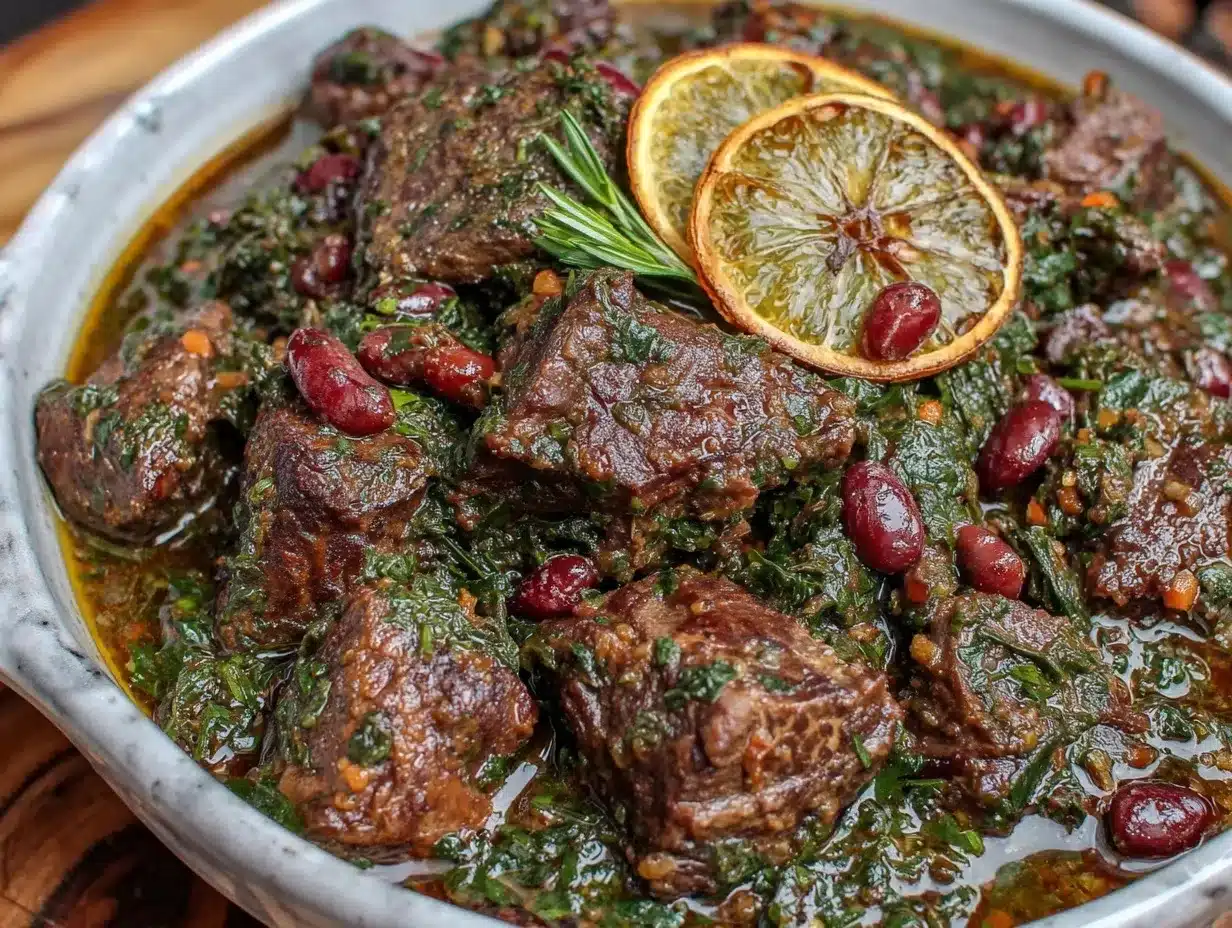
- Prepare the Kidney Beans: If using dried beans, soak them overnight in plenty of cold water. Drain and rinse before cooking. If using canned, rinse and drain thoroughly to remove excess salt.
- Sauté the Onion and Meat: Heat 2 tablespoons vegetable oil in your pot over medium heat. Add the chopped onion and sauté for about 5-7 minutes until translucent and slightly golden. Add the cubed beef, sprinkle 1 teaspoon turmeric, and cook until the meat is browned on all sides (about 8-10 minutes). This seals in flavor.
- Cook the Kidney Beans: Add the soaked (or canned) kidney beans to the pot along with 4 cups water or beef broth. Bring to a boil, then reduce heat to a gentle simmer. Cover and cook for 60 minutes or until beans and meat are tender. Stir occasionally to prevent sticking.
- Prepare the Herb Mixture: While the stew simmers, finely chop parsley, cilantro, chives, and fenugreek. Heat 2 tablespoons vegetable oil in a separate pan over medium heat. Add the herbs and sauté gently for about 10 minutes until fragrant and slightly darkened but not burnt. This step brings out the signature flavor of the stew.
- Add Herbs and Dried Limes: Stir the sautéed herbs into the stew. Pierce dried limes a few times with a fork and add them to the pot. This adds a complex, tangy depth. If you like, add 1 tablespoon tomato paste now for subtle sweetness and richer color.
- Simmer the Stew: Cover and simmer gently for another 45 minutes to 1 hour, stirring occasionally. The stew should thicken, and flavors will meld beautifully. Add salt and pepper to taste near the end of cooking.
- Final Touches: Just before serving, squeeze a little fresh lemon juice over the stew for brightness. Remove the dried limes or leave them in for extra flavor, depending on your preference.
Pro tip: If your stew feels too thick, add a splash of water or broth. If too thin, simmer uncovered for a few minutes to reduce. Also, patience is key—this stew tastes better the longer it simmers, so don’t rush!
Cooking Tips & Techniques
Making Ghormeh Sabzi is about layering flavors and balancing textures. Here are some tips I’ve picked up from numerous kitchen experiments:
- Herb Prep: Chop herbs finely but avoid pulping them. The texture adds personality to the stew. Sautéing herbs separately intensifies their flavor and prevents them from turning bitter.
- Timing the Beans: Using dried beans soaked overnight gives a better texture, but canned beans save time. Just add canned beans later in cooking to avoid mushiness.
- Don’t Skip the Dried Limes: They’re the soul of Ghormeh Sabzi’s flavor. Piercing them lets the tang seep out slowly. If you can’t find them, lemon zest plus a splash of lime juice is a fair substitute.
- Watch the Heat: Keep your simmer low and slow to tenderize meat and meld flavors without drying out or scorching the herbs.
- Adjusting Salt: Add salt near the end to avoid toughening beans or meat. Taste as you go.
One time, I forgot to pierce the dried limes, and the stew lacked that signature tang—it was a good reminder that little details matter. Also, multitasking by prepping herbs while the beans cook keeps things moving smoothly.
Variations & Adaptations
This comforting Iranian Ghormeh Sabzi herb stew with kidney beans is flexible for different tastes and dietary needs. Here’s how you can switch it up:
- Vegetarian Version: Skip the meat and use vegetable broth. Add extra kidney beans or chickpeas for protein. You can also toss in sautéed mushrooms for a meaty texture.
- Gluten-Free Option: Naturally gluten-free, just double-check your broth and tomato paste for hidden gluten.
- Herb Variations: If you can’t find fenugreek, increase parsley and cilantro, or add a pinch of dried thyme for a slightly different herbal note.
- Cooking Methods: This stew can be adapted for the slow cooker—brown the meat and sauté herbs first, then combine everything and cook on low for 6-8 hours.
- Spicy Twist: Add a pinch of cayenne or chili flakes if you like a little heat. It pairs surprisingly well with the tangy dried limes.
I once made a version with lamb and swapped kidney beans for black-eyed peas, which gave it a creamier texture and was a hit with friends. Feel free to experiment—the stew’s forgiving nature welcomes your personal touch.
Serving & Storage Suggestions
Ghormeh Sabzi is best enjoyed warm, ideally served over fluffy basmati or Persian rice to soak up the rich sauce. Garnish with a wedge of lemon or a sprinkle of fresh herbs for a fresh pop. Pair it with a simple cucumber and yogurt salad (mast-o-khiar) to balance the herbaceous stew.
To store leftovers, let the stew cool completely, then transfer to airtight containers. It keeps well in the refrigerator for up to 4 days and freezes beautifully for up to 3 months. When reheating, do so gently on the stove over low heat, adding a splash of water or broth if needed to loosen the sauce.
Flavors deepen after a day or two, so if you can wait, you’re in for an even more soulful meal. Just be warned—sometimes the leftovers disappear faster than the fresh batch!
Nutritional Information & Benefits
This Iranian Ghormeh Sabzi herb stew with kidney beans offers a nutritious balance of protein, fiber, and vitamins. The kidney beans provide plant-based protein and fiber, promoting digestive health and steady energy. The fresh herbs pack antioxidants and essential vitamins like vitamin K and C.
Fenugreek adds anti-inflammatory benefits and may help regulate blood sugar. Using lean beef keeps the meat content moderate and rich in iron and B vitamins. The stew is naturally gluten-free and can be adapted for low-carb diets by serving over cauliflower rice.
One bowl of this stew is a comforting way to nourish your body and soul without feeling heavy or greasy. It’s wholesome, satisfying, and a delicious way to add more greens and legumes to your diet.
Conclusion
So, why try this comforting Iranian Ghormeh Sabzi herb stew with kidney beans? Because it’s a dish that tells a story with every bite—a story of fresh herbs, tangy limes, tender meat, and hearty beans simmered to perfection. It’s not just about feeding your hunger but about savoring a moment of warmth and tradition.
Feel free to make it your own—swap herbs, adjust seasoning, or try it vegetarian. The beauty of this stew is in its flexibility and depth. Personally, I love making a big batch on weekends, knowing that it’ll taste even better the next day.
Give it a try, and don’t be shy to share your own twists or questions. I’d love to hear how this recipe finds a spot in your kitchen and on your table. Happy cooking and enjoy every comforting spoonful!
FAQs
Can I make Ghormeh Sabzi without the dried limes?
Yes, but dried limes add a unique tang and aroma. If you can’t find them, use lemon zest and a squeeze of fresh lime or lemon juice to mimic the flavor.
Is it necessary to soak kidney beans overnight?
Soaking helps soften beans and reduces cooking time. If short on time, canned beans are a great shortcut—just add them later in the cooking process.
Can I prepare this stew in a slow cooker?
Absolutely! Brown the meat and sauté herbs first, then combine all ingredients in the slow cooker and cook on low for 6-8 hours.
What can I use if I can’t find fresh fenugreek leaves?
Dried fenugreek works, but use sparingly (about 1 tablespoon). If unavailable, increase parsley and cilantro or add a pinch of dried thyme for a similar herbal note.
How should I serve Ghormeh Sabzi?
Serve hot over basmati or Persian-style rice, with optional lemon wedges and a side of yogurt-cucumber salad for a balanced meal.
Pin This Recipe!
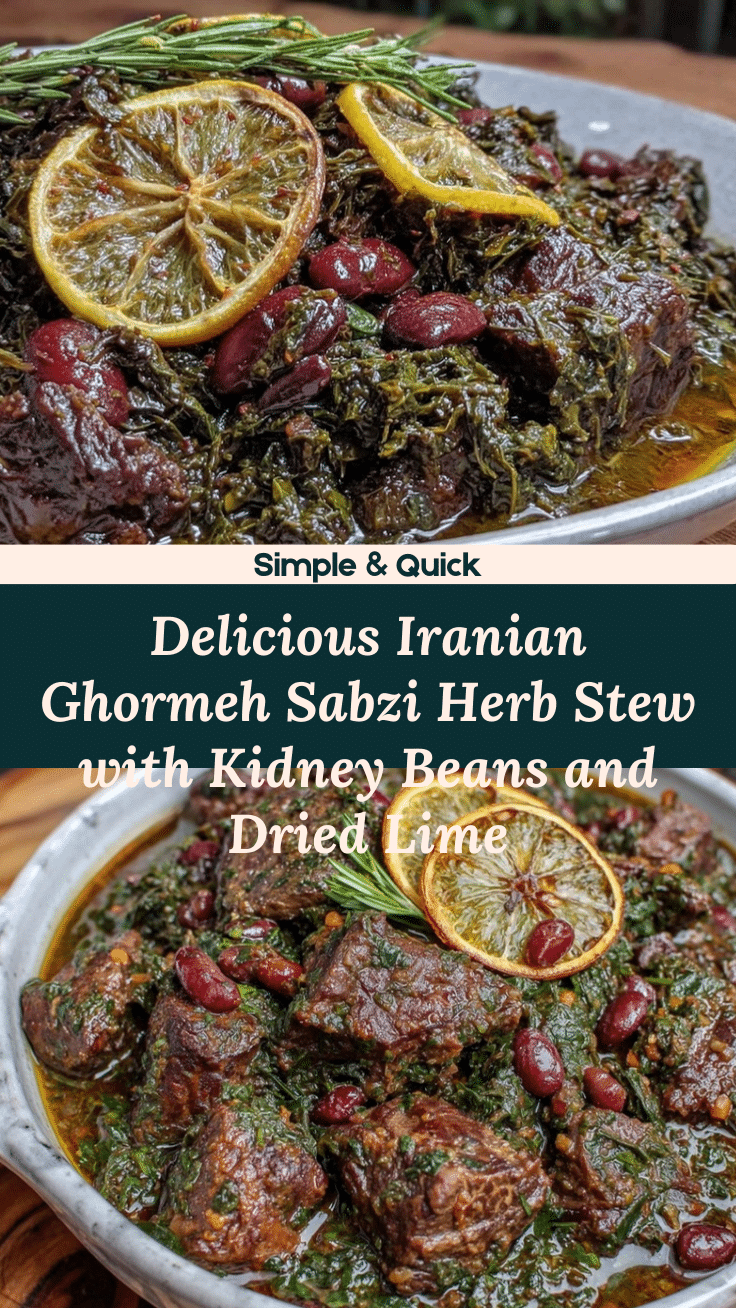
Comforting Iranian Ghormeh Sabzi Herb Stew Recipe with Kidney Beans
A hearty and vibrant Iranian herb stew featuring tender meat, kidney beans, and a fragrant blend of fresh herbs, perfect for cozy dinners and beginners.
- Prep Time: 15 minutes
- Cook Time: 2 hours
- Total Time: 2 hours 15 minutes
- Yield: 6 servings 1x
- Category: Main Course
- Cuisine: Iranian
Ingredients
- 2 cups fresh parsley, finely chopped
- 1 cup fresh cilantro, finely chopped
- 1 cup fresh chives or green onions, chopped
- 1 cup fresh fenugreek leaves (or 1 tablespoon dried fenugreek)
- 2 tablespoons vegetable oil
- 1 lb beef stew meat, cut into 1-inch cubes
- 1 large onion, finely chopped
- 3 cloves garlic, minced
- 1 cup dried kidney beans, soaked overnight or 2 cans kidney beans, drained and rinsed
- 2 dried Persian limes (limoo amani), pierced with a fork
- 1 teaspoon turmeric powder
- Salt and freshly ground black pepper to taste
- 4 cups water or beef broth
- Optional: 1 tablespoon tomato paste
- Optional: fresh lemon juice to brighten before serving
Instructions
- If using dried beans, soak them overnight in plenty of cold water. Drain and rinse before cooking. If using canned, rinse and drain thoroughly to remove excess salt.
- Heat 2 tablespoons vegetable oil in a large heavy-bottomed pot over medium heat. Add the chopped onion and sauté for about 5-7 minutes until translucent and slightly golden.
- Add the cubed beef, sprinkle 1 teaspoon turmeric, and cook until the meat is browned on all sides, about 8-10 minutes.
- Add the soaked (or canned) kidney beans to the pot along with 4 cups water or beef broth. Bring to a boil, then reduce heat to a gentle simmer. Cover and cook for 60 minutes or until beans and meat are tender, stirring occasionally.
- While the stew simmers, finely chop parsley, cilantro, chives, and fenugreek. Heat 2 tablespoons vegetable oil in a separate pan over medium heat. Add the herbs and sauté gently for about 10 minutes until fragrant and slightly darkened but not burnt.
- Stir the sautéed herbs into the stew. Pierce dried limes a few times with a fork and add them to the pot. Add 1 tablespoon tomato paste now if using.
- Cover and simmer gently for another 45 minutes to 1 hour, stirring occasionally. The stew should thicken and flavors meld. Add salt and pepper to taste near the end of cooking.
- Just before serving, squeeze fresh lemon juice over the stew for brightness. Remove dried limes or leave them in for extra flavor, as preferred.
Notes
Use organic herbs for brighter flavor. Soak dried kidney beans overnight for best texture or use canned beans for convenience. Piercing dried limes is essential for their tangy flavor. Adjust salt near the end to avoid toughening beans or meat. The stew tastes better the longer it simmers. Can be adapted for slow cooker by browning meat and sautéing herbs first, then cooking on low for 6-8 hours.
Nutrition
- Serving Size: 1 bowl (approximatel
- Calories: 350
- Sugar: 4
- Sodium: 450
- Fat: 12
- Saturated Fat: 3
- Carbohydrates: 30
- Fiber: 9
- Protein: 28
Keywords: Ghormeh Sabzi, Iranian stew, kidney beans, herb stew, Persian recipe, comfort food, slow-cooked stew