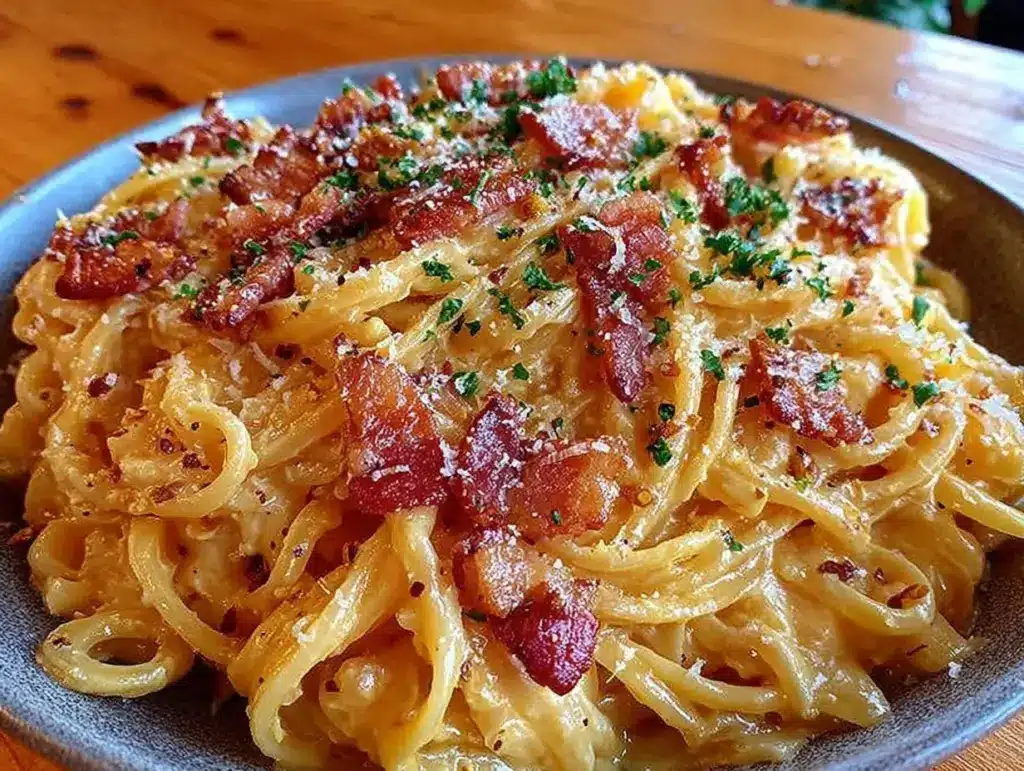
“Hand me that bowl,” my neighbor Luca said last autumn afternoon as we stood in his cozy kitchen, the late sun filtering through the window. Luca isn’t a professional chef—just your regular guy with a passion for old-school Italian cooking. He was preparing his famous creamy carbonara with crispy guanciale and Pecorino Romano. Honestly, I wasn’t expecting much beyond a quick weeknight pasta, but that first bite? It transported me right to Rome’s bustling trattorias. The richness of the sauce, the salty crunch of guanciale, and that sharp, nutty Pecorino hit all the right notes. I forgot to take notes at first, distracted by the way the sauce clung perfectly to each strand of spaghetti.
Maybe you’ve been there—the craving for something comforting yet fancy, simple but special. Carbonara, when done right, is exactly that. And let me tell you, this recipe isn’t your run-of-the-mill pasta tossed with cream. No, this is the real deal, where creamy means silky eggs and cheese emulsified into a luscious sauce, and crispy guanciale adds that irresistible texture. Luca’s kitchen did get a little messy (he dropped a cracked bowl, and we laughed it off), but the recipe stuck with me. Since then, I’ve made it countless times—each time with a little twist, but always with the same soul-soothing satisfaction that keeps me coming back. If you love pasta with personality and a bit of crunch, this creamy carbonara recipe with crispy guanciale and Pecorino Romano will probably become your go-to, too.
Why You’ll Love This Recipe
This creamy carbonara recipe with crispy guanciale and Pecorino Romano has been my favorite for good reasons. It’s simple enough for a weekday meal but impressive enough to serve guests without stress.
- Quick & Easy: Ready in under 30 minutes, making it perfect for busy evenings or last-minute dinner plans.
- Simple Ingredients: You don’t need a fancy shopping list—just quality guanciale, Pecorino Romano, eggs, and pantry staples.
- Perfect for Any Occasion: From casual dinners to cozy date nights, this dish fits right in.
- Crowd-Pleaser: Even pasta skeptics fall for the creamy texture and crispy bits.
- Unbelievably Delicious: The balance of salty, creamy, and crunchy makes each bite unforgettable.
What sets this recipe apart is the attention to technique: gently warming the eggs off the heat to avoid scrambling, using guanciale for authentic pork flavor instead of bacon, and grating fresh Pecorino Romano for that sharp, tangy punch. It’s not just pasta with sauce; it’s an experience. The kind that makes you close your eyes and savor every forkful. Honestly, it’s comfort food reimagined with respect to tradition and a pinch of modern ease. Whether you’re impressing friends or treating yourself, this carbonara hits the right spot every time.
What Ingredients You Will Need
This recipe uses simple, wholesome ingredients to deliver bold flavor and a satisfying texture without fuss. Most are pantry staples, with a couple of Italian essentials that really make the dish sing.
- Guanciale: 4 oz (115 g), diced (look for cured pork cheek at Italian markets; it crisps beautifully and offers a rich flavor)
- Spaghetti: 12 oz (340 g), preferably a high-quality durum wheat pasta like De Cecco or Barilla
- Egg Yolks: 4 large, room temperature (the base for the creamy sauce)
- Whole Eggs: 1 large, room temperature (adds silkiness)
- Pecorino Romano Cheese: 1 cup (about 100 g), finely grated (freshly grated is key for flavor and texture)
- Freshly Ground Black Pepper: To taste (the pepper is essential for the classic bite)
- Salt: For pasta water (be generous to season the pasta properly)
If you can’t find guanciale, pancetta is a decent substitute, though less fatty and slightly different in taste. I recommend using whole Pecorino Romano wheels if possible, like the brand Locatelli, for the best sharpness. Avoid pre-grated cheese here—it won’t melt properly. For a dairy-free twist (though less traditional), swap Pecorino with a hard vegan cheese and use olive oil instead of guanciale fat.
Equipment Needed
To make this creamy carbonara with crispy guanciale and Pecorino Romano, here’s what you’ll want on hand:
- Large pot: For boiling pasta (a 6-quart/5.7-liter pot works well)
- Large skillet or frying pan: To cook the guanciale until crispy (preferably non-stick or cast iron)
- Mixing bowl: Medium size, for whisking eggs and cheese together
- Tongs or pasta fork: For transferring and tossing pasta
- Fine grater: For grating Pecorino Romano freshly
- Cooking thermometer (optional): Helpful to keep the sauce at the right temperature, but not necessary if you watch carefully
If you don’t have a cast iron skillet, a heavy-bottomed non-stick pan works fine. For budget-friendly options, a simple stainless steel pan will do, but watch the guanciale closely to avoid sticking. I’ve tried different graters; a microplane zester is my favorite for cheese because it creates fine, fluffy shreds that melt beautifully. Also, keep a clean bowl handy for any last-minute whisking or sauce adjustments.
Preparation Method
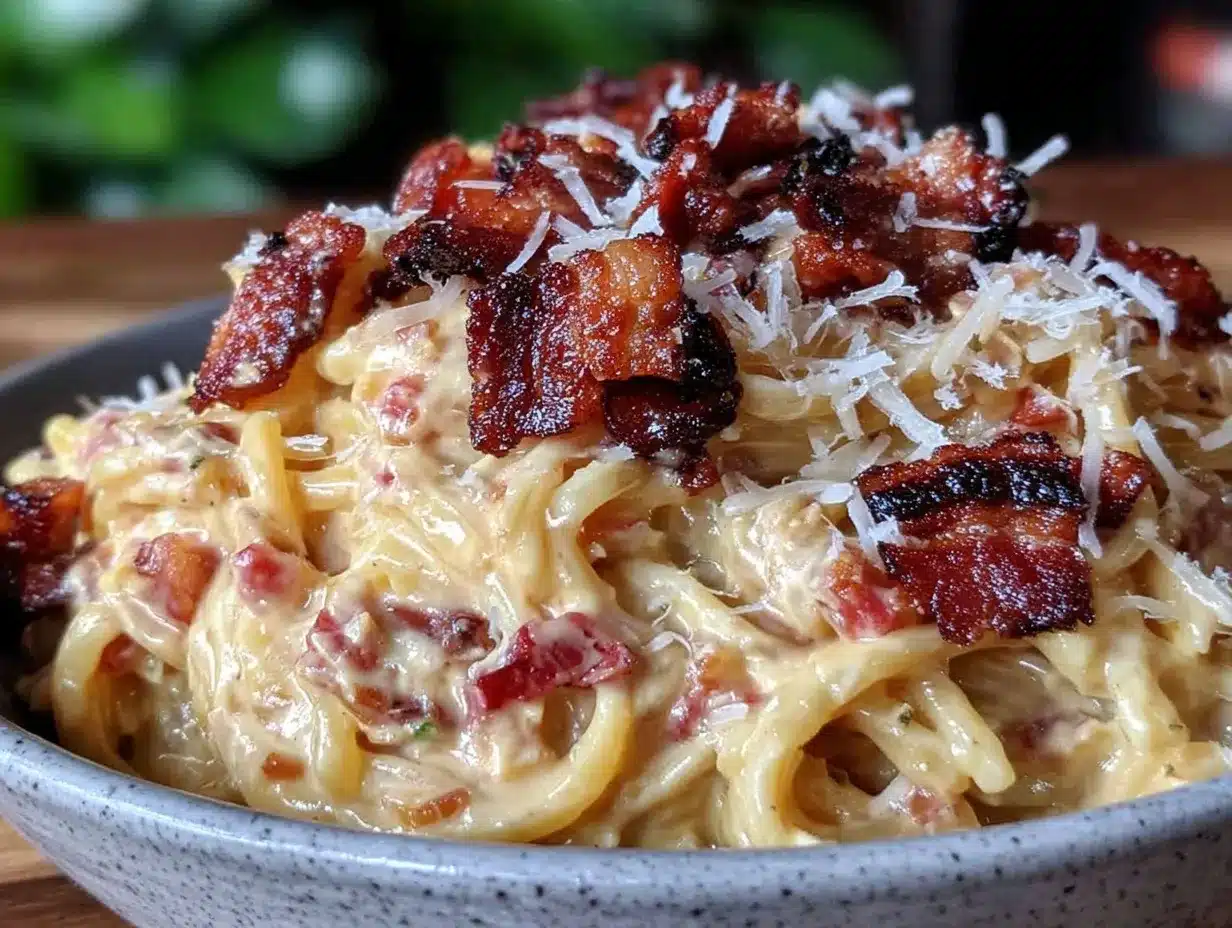
- Bring a large pot of salted water to a boil. Add about 1 tablespoon (15 g) of salt per 4 quarts (4 liters) of water. This seasons the pasta inside and out. Start heating this early to save time. (Prep time: 5 minutes)
- Prepare the guanciale. While waiting for water to boil, dice 4 oz (115 g) of guanciale into small pieces about 1/4 inch (0.6 cm). Heat a large skillet over medium heat. Add guanciale and cook until golden and crispy, about 6–8 minutes, stirring occasionally. The fat will render out—keep it in the pan for flavor. Remove from heat but leave the guanciale and fat in the pan. (Prep + cook time: 10 minutes)
- Cook the spaghetti. Add 12 oz (340 g) of spaghetti to the boiling water and cook until al dente, about 8–9 minutes or per package instructions. Reserve 1 cup (240 ml) of pasta cooking water before draining. (Cook time: 8–9 minutes)
- Whisk the sauce mixture. In a medium bowl, combine 4 large egg yolks and 1 whole large egg with 1 cup (100 g) finely grated Pecorino Romano cheese. Add a generous amount of freshly ground black pepper (about 1 teaspoon). Whisk until smooth and creamy. The mixture should be thick but pourable. (Prep time: 5 minutes)
- Toss pasta with guanciale and fat. Add the drained spaghetti to the skillet with the guanciale over very low heat or off the heat entirely to prevent scrambling. Quickly pour in the egg and cheese mixture while tossing or stirring vigorously with tongs to coat every strand. Add reserved pasta water a few tablespoons at a time to loosen the sauce and create a silky texture. The residual heat will cook the eggs gently, forming a creamy sauce. (Cook + toss time: 3–4 minutes)
- Adjust seasoning and serve. Taste for salt and pepper—Pecorino is salty, so add salt sparingly. Plate immediately, topping with extra grated Pecorino and a crack of black pepper. Serve warm. (Plating time: 2 minutes)
Tip: If the sauce looks too thick or starts to clump, add a bit more reserved pasta water off heat and stir briskly. Avoid direct heat at this stage to prevent scrambled eggs. I once accidentally left the pan on medium, and the sauce scrambled into eggy bits—not the creamy luxury we want!
Cooking Tips & Techniques
Getting this creamy carbonara with crispy guanciale and Pecorino Romano just right is about respecting a few key techniques.
- Temperature control is everything. The eggs must cook gently with residual heat to create a silky sauce, not scramble. Turn off the heat before adding the egg mixture and toss quickly.
- Use freshly grated Pecorino Romano. Pre-grated cheese won’t melt properly and can make the sauce grainy. Trust me, a quick grating makes a world of difference.
- Don’t rinse your pasta. The starch helps thicken the sauce. That reserved pasta water is your secret weapon to adjust consistency.
- Cook guanciale slowly. Low and slow renders the fat and crisps the meat without burning. This fat flavors the whole dish.
- Timing matters. Have everything ready before draining pasta so you can toss immediately. Pasta cools fast, and the creamy sauce depends on warm pasta.
- Black pepper isn’t optional. It adds the classic carbonara bite. Grind fresh for best aroma.
Trust me, I’ve had my share of scrambled egg disasters and rubbery pasta. The key is to stay attentive and work quickly once the pasta is out. You’ll get the hang of it fast, and it almost feels like second nature after a few tries.
Variations & Adaptations
While this recipe honors the classic Roman carbonara, there’s always room for a little twist or accommodation:
- Vegetarian version: Swap guanciale for smoked mushrooms or roasted eggplant cubes to mimic that smoky, crispy texture. Use a touch of smoked paprika in the sauce for added depth.
- Gluten-free: Use gluten-free spaghetti or another pasta made from rice or chickpeas. The sauce remains the same, just adjust cooking times according to pasta type.
- Low-fat adaptation: Use turkey bacon instead of guanciale and reduce cheese to 1/2 cup (50 g). Add a splash of pasta water or a teaspoon of olive oil for creaminess.
- Seasonal twist: Add fresh peas or asparagus tips for springtime freshness. Toss them in with the pasta for a pop of color and flavor.
Personally, I once tried adding a small amount of cream to help beginners avoid scrambling eggs, but honestly, it’s not authentic and dilutes the flavor. Better to practice the technique and enjoy the real creamy magic!
Serving & Storage Suggestions
Serve this creamy carbonara immediately while warm and silky. It pairs beautifully with a crisp green salad and a glass of dry Italian white wine like Verdicchio or Pinot Grigio.
If you have leftovers (and sometimes there are few!), store them in an airtight container in the refrigerator for up to 2 days. Reheat gently in a skillet over low heat, adding a splash of water or broth to loosen the sauce. Avoid microwaving directly to keep the sauce creamy and prevent egg curdling.
Interestingly, the flavors deepen after resting overnight, but the sauce thickens and may lose its silkiness, so fresh is best. A sprinkle of extra Pecorino and black pepper right before serving freshens the dish beautifully.
Nutritional Information & Benefits
Per serving (serves 4): approximately 550 calories, 22g protein, 18g fat, and 65g carbohydrates. This creamy carbonara provides a good balance of macronutrients with protein from eggs and guanciale, and energy from pasta.
Pecorino Romano is rich in calcium and protein, while guanciale, though fatty, adds unique flavors and some B vitamins. Eggs contribute essential nutrients like vitamin D and choline.
This recipe is naturally gluten-free if made with gluten-free pasta and free from added sugars. It’s not low-fat but offers satisfying, traditional comfort food with real ingredients. Just keep portion sizes in mind if you’re watching calories.
Personally, I find carbonara a wonderful occasional treat that feels indulgent but not overly processed—perfect for enjoying authentic flavors without fuss.
Conclusion
This creamy carbonara with crispy guanciale and Pecorino Romano is a recipe that feels both fancy and approachable. It’s a dish that rewards your attention and love for good ingredients with every bite. Whether you’re making it for a busy weeknight or a special dinner, it’s sure to impress without the stress.
Don’t hesitate to tweak it to your taste—maybe more pepper, a bit less cheese, or a seasonal veggie added in. The joy is in making it your own while respecting the simple beauty of this classic pasta.
I keep coming back to this recipe because it reminds me of that sunny afternoon in Luca’s kitchen, with laughter, little messes, and the pure satisfaction of a plate well made. Give it a try, and please share how it turns out or any tasty twists you come up with—I’d love to hear!
Happy cooking and buon appetito!
FAQs
What makes guanciale different from pancetta or bacon?
Guanciale is cured pork cheek with a richer, fattier texture than pancetta or bacon, offering a deeper flavor and crispier bite when cooked. It’s essential for authentic carbonara.
Can I use cream in carbonara?
Traditional carbonara does not use cream; the creamy texture comes from eggs and cheese emulsified with pasta water. Adding cream changes the flavor and texture, making it less authentic.
How do I avoid scrambling the eggs in the sauce?
Remove the pan from direct heat before adding the egg mixture. Toss the pasta quickly and add reserved pasta water little by little to create a smooth, silky sauce without cooking the eggs too fast.
Is Pecorino Romano necessary, or can I use Parmesan?
Pecorino Romano provides a sharper, saltier flavor unique to carbonara. Parmesan works in a pinch but changes the taste profile to a milder, nuttier one.
Can I prepare carbonara ahead of time?
It’s best served fresh, but you can cook the pasta and guanciale ahead. When ready, warm the pasta gently and toss with the egg mixture quickly to keep the sauce creamy.
Pin This Recipe!
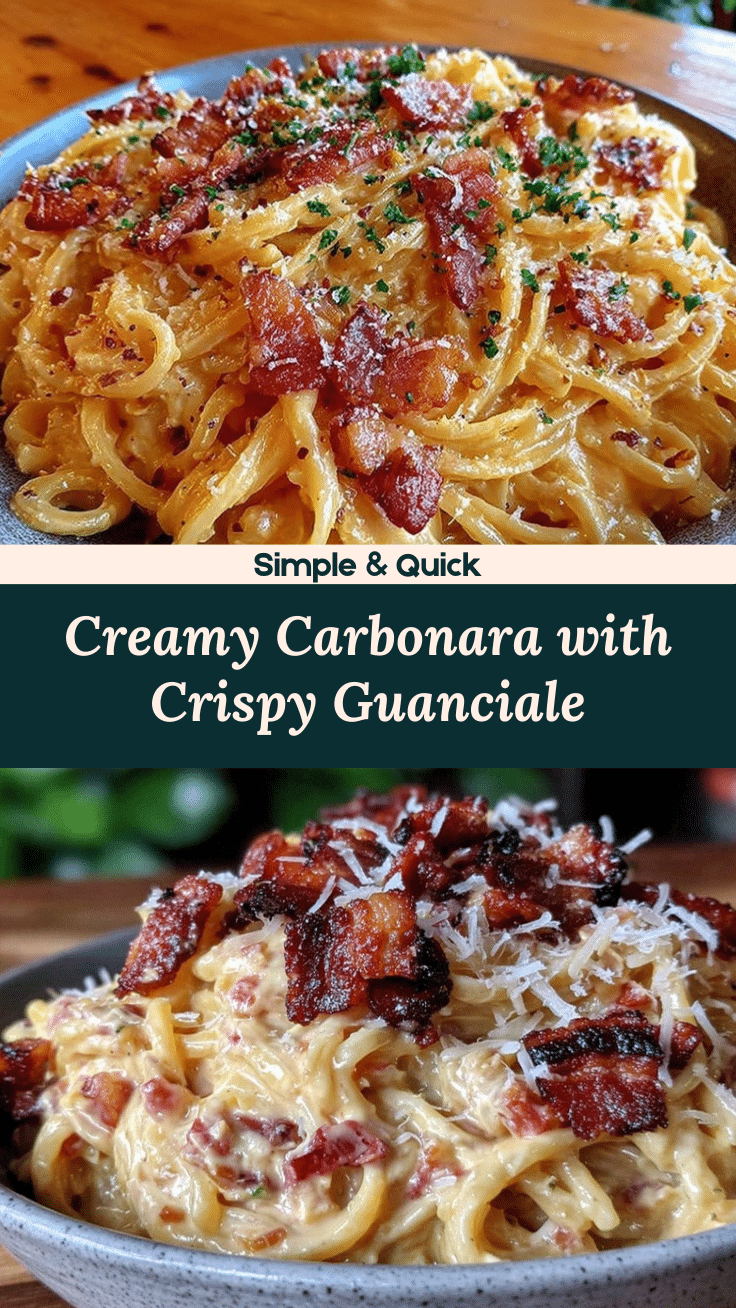
Creamy Carbonara Recipe with Crispy Guanciale and Pecorino Romano
A classic Roman carbonara featuring silky eggs and cheese sauce emulsified with pasta water, crispy guanciale, and sharp Pecorino Romano cheese for a rich, comforting pasta dish.
- Prep Time: 10 minutes
- Cook Time: 15 minutes
- Total Time: 25 minutes
- Yield: 4 servings 1x
- Category: Main Course
- Cuisine: Italian
Ingredients
- 4 oz (115 g) guanciale, diced
- 12 oz (340 g) spaghetti
- 4 large egg yolks, room temperature
- 1 large whole egg, room temperature
- 1 cup (about 100 g) Pecorino Romano cheese, finely grated
- Freshly ground black pepper, to taste
- Salt, for pasta water
Instructions
- Bring a large pot of salted water to a boil. Add about 1 tablespoon (15 g) of salt per 4 quarts (4 liters) of water.
- Dice the guanciale into small pieces about 1/4 inch (0.6 cm). Heat a large skillet over medium heat. Add guanciale and cook until golden and crispy, about 6–8 minutes, stirring occasionally. Remove from heat but leave guanciale and fat in the pan.
- Cook the spaghetti in the boiling water until al dente, about 8–9 minutes or per package instructions. Reserve 1 cup (240 ml) of pasta cooking water before draining.
- In a medium bowl, whisk together 4 egg yolks, 1 whole egg, 1 cup finely grated Pecorino Romano, and about 1 teaspoon freshly ground black pepper until smooth and creamy.
- Add the drained spaghetti to the skillet with guanciale over very low heat or off heat. Quickly pour in the egg and cheese mixture while tossing vigorously with tongs to coat every strand. Add reserved pasta water a few tablespoons at a time to loosen the sauce and create a silky texture.
- Taste and adjust seasoning with salt and pepper sparingly. Plate immediately, topping with extra grated Pecorino and black pepper. Serve warm.
Notes
Use freshly grated Pecorino Romano for best flavor and texture. Avoid pre-grated cheese. Remove pan from heat before adding egg mixture to prevent scrambling. Reserve pasta water to adjust sauce consistency. Serve immediately for best texture. Leftovers keep up to 2 days refrigerated; reheat gently with added water or broth.
Nutrition
- Serving Size: 1 serving (about 1/4
- Calories: 550
- Fat: 18
- Carbohydrates: 65
- Protein: 22
Keywords: carbonara, creamy carbonara, guanciale, Pecorino Romano, Italian pasta, authentic carbonara, easy pasta recipe