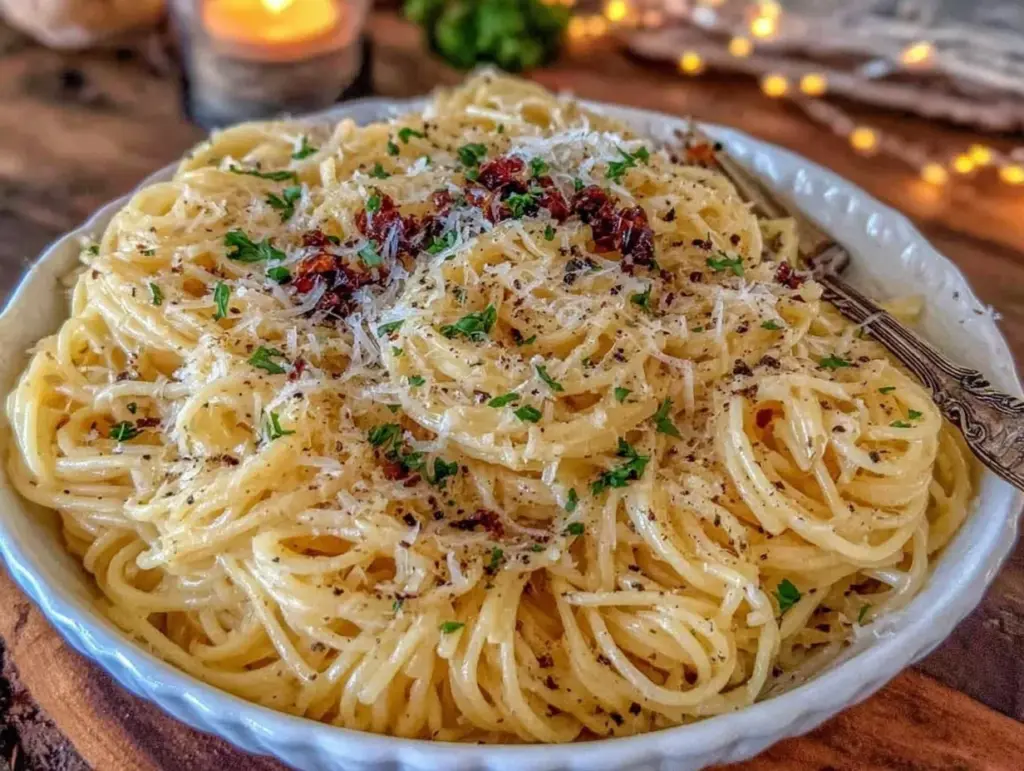
“You know that moment when the kitchen fills with the unmistakable aroma of freshly cracked black pepper and melting cheese? That’s exactly what happened one Thursday evening when my old college roommate Luca dropped by unannounced. He wasn’t just any visitor—he’s the guy who swore pasta was too simple to get excited about, but had somehow perfected the art of Roman cacio e pepe. Honestly, I thought it was just another cheesy pasta until I watched him toss the spaghetti, cheese, and pepper with such care that it felt like a performance. The cracked bowl slipped from my hands (classic me), but Luca laughed it off, insisting the secret was in the pepper’s boldness and the creamy texture of the sauce that clings to every strand.”
That evening, this creamy Roman cacio e pepe with bold black pepper wasn’t just food; it was a little slice of Roman street food magic right in my cluttered city kitchen. Maybe you’ve been there—craving something simple yet packed with flavor, and this recipe fits that craving perfectly. It’s the kind of dish you want to keep making, even if you swear off cooking for a night. What caught me off guard was how a few humble ingredients could come together to create such a satisfying, silky texture that’s both comforting and surprisingly elegant. And let me tell you, the pepper isn’t shy here—it brings a kick that wakes up your taste buds without overpowering the cheese’s creamy embrace. This recipe stuck with me, not just because it’s delicious, but because it’s a reminder that sometimes, the simplest meals carry the most soul.”
Why You’ll Love This Recipe
From my many attempts to nail the perfect cacio e pepe, this recipe stands out because it balances creaminess and bold pepperiness without fuss. It’s been tested in my kitchen (and happily devoured by friends), so I feel confident this version delivers every time.
- Quick & Easy: Ready in about 20 minutes, perfect for those nights when you want something satisfying but don’t want to slave over the stove.
- Simple Ingredients: No exotic items here—just pantry staples like Pecorino Romano, spaghetti, and black pepper.
- Perfect for Cozy Dinners: Whether you’re solo or feeding a small crowd, it hits the spot with minimal effort.
- Crowd-Pleaser: The creamy, cheesy texture combined with that punchy pepper flavor means even picky eaters ask for seconds.
- Unbelievably Delicious: The sauce is luscious without cream, relying on technique and cheese emulsion to create its silky coat.
What sets this recipe apart? The secret is in the pepper—using freshly cracked black pepper that’s toasted gently brings out a deep, smoky aroma that elevates the entire dish. Plus, the way the Pecorino Romano is carefully blended in ensures a smooth, creamy sauce instead of clumpy cheese bits. Honestly, this isn’t just another cacio e pepe—it’s my best version, perfected through trial, error, and a few kitchen mishaps (including a memorable cheese spill on my counter!). It’s comfort food that feels fancy enough for company but easy enough to whip up on a weeknight. I know you’ll find yourself coming back to this recipe—and maybe even surprising a few guests with how simple yet impressive it is.”
What Ingredients You Will Need
This recipe uses simple, wholesome ingredients to deliver bold flavor and satisfying texture without any complicated steps. Most are pantry staples, and the cheese and pepper do all the heavy lifting for flavor. You might already have everything on hand!
- Spaghetti: 12 ounces (340 grams), preferably a good-quality brand like Barilla or De Cecco for that perfect al dente bite.
- Pecorino Romano cheese: 1 ½ cups, finely grated (about 5 ounces or 140 grams). Look for a firm, aged Pecorino Romano for sharpness and the best melting quality.
- Black peppercorns: 2 tablespoons, freshly cracked. I use a pepper mill and crack the pepper coarsely for maximum aroma and bite.
- Salt: For pasta water, about 1 tablespoon. Use kosher salt or sea salt for cleaner flavor.
- Butter: 2 tablespoons (optional, but adds extra creaminess and richness). Use unsalted and softened.
- Pasta cooking water: Reserved about 1 cup (240 ml), helps create the silky sauce.
Substitution Tips: For a gluten-free option, swap spaghetti for your favorite gluten-free pasta. If you want a dairy-free twist, try nutritional yeast in place of Pecorino (though the flavor will differ). For a vegan version, omit the cheese and butter and add a splash of olive oil and extra black pepper for punch.
Equipment Needed
- Large pot: For boiling pasta. A wide pot helps pasta cook evenly without sticking.
- Large skillet or sauté pan: To toast the pepper and finish the sauce. Non-stick works great to prevent cheese from sticking.
- Fine grater or microplane: For grating Pecorino Romano finely, which is key to a smooth sauce.
- Black pepper mill or mortar and pestle: To freshly crack the peppercorns. Freshly cracked pepper is essential here.
- Ladle or large spoon: To scoop pasta water gradually into the sauce.
- Tongs or pasta fork: For tossing the pasta in the sauce evenly.
If you don’t have a pepper mill, a mortar and pestle works beautifully to control the size of the pepper bits. And if your skillet tends to stick, a well-seasoned cast iron pan is a fantastic alternative. Personally, I keep a silicone spatula handy—it helps scrape every last bit of cheesy goodness from the pan.
Preparation Method
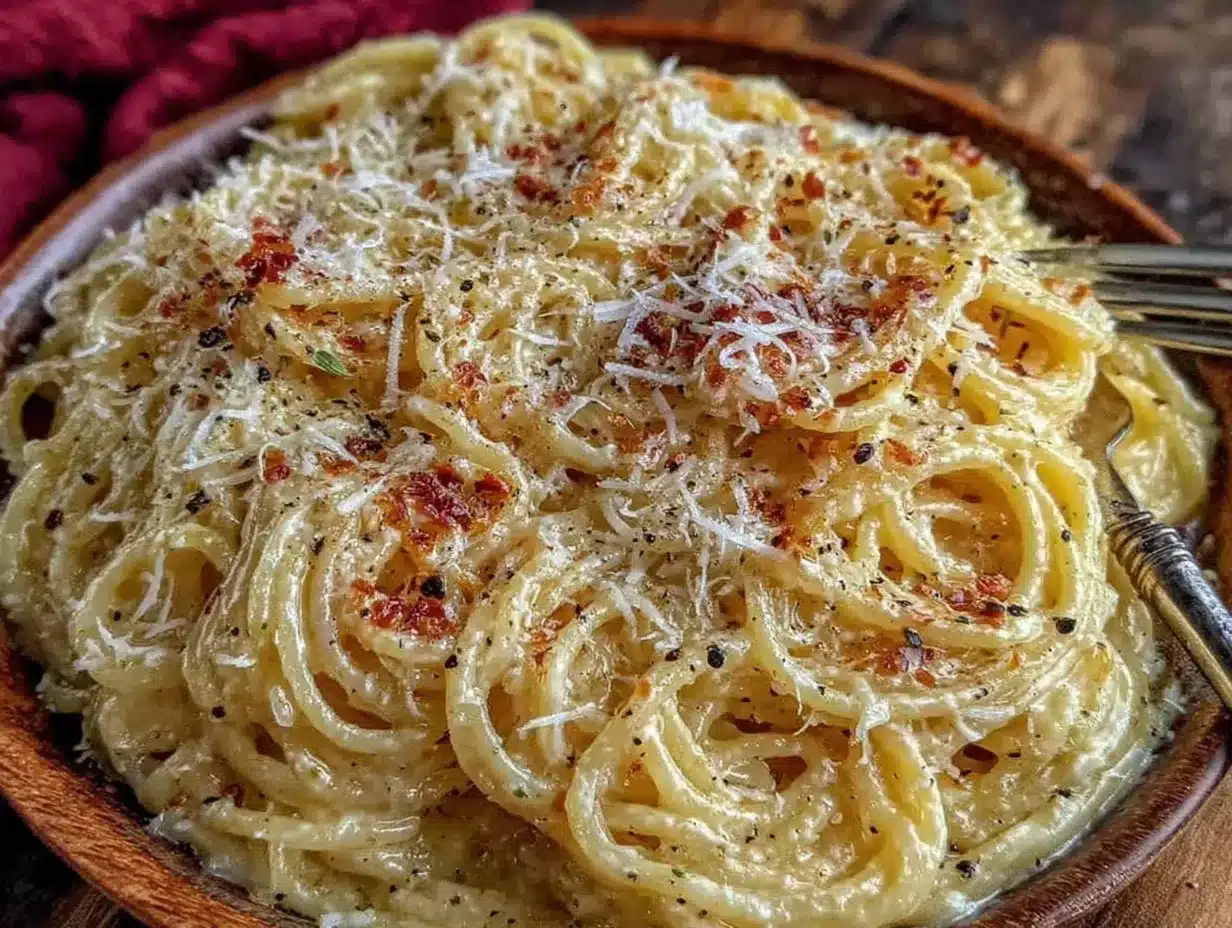
- Bring a large pot of salted water to a boil. Use about 4 quarts (3.8 liters) of water and 1 tablespoon of salt. Add the spaghetti and cook until just shy of al dente—about 8-9 minutes (check package instructions).
- While the pasta cooks, toast the black pepper. Heat a large skillet over medium heat. Add the freshly cracked black pepper and toast it for about 1-2 minutes, stirring constantly. You’ll notice a fragrant, slightly smoky aroma—that’s the sign you’re ready to build the sauce.
- Reserve about 1 cup (240 ml) of pasta cooking water. Before draining the pasta, scoop out the water and set it aside. This starchy water is the magic ingredient that helps the cheese and pepper emulsify into a creamy sauce.
- Drain the pasta quickly but don’t rinse it. You want that starch to cling to the noodles and help the sauce stick.
- Add the drained pasta to the skillet with toasted pepper. Toss to coat the noodles in the pepper’s fragrant oil.
- Reduce heat to low and sprinkle in the grated Pecorino Romano gradually. Toss continuously while adding pasta water a little at a time—about ¼ cup (60 ml)—until the cheese melts and the sauce becomes silky and creamy. This step takes patience! If the sauce looks clumpy, add more pasta water and keep tossing. The sauce should coat each strand evenly without clumps or dryness.
- Optional: Stir in softened butter (2 tablespoons) for extra richness. It melts into the sauce, making it luxuriously creamy without cream.
- Give everything a final toss and taste. Add a pinch of salt if needed (usually the Pecorino and pasta water handle this well). Serve immediately while warm and saucy.
Pro tip: If the sauce thickens too much before serving, add a splash of warm pasta water to loosen it. The key to success here is timing and gentle tossing—too much heat or rushing can cause the cheese to clump or separate. Don’t rush the emulsification! Also, a quick tip from experience: stirring with tongs while adding water helps keep the sauce silky.
Cooking Tips & Techniques
One of the trickiest parts of making cacio e pepe is getting that perfectly smooth, creamy sauce without any lumps. Here’s what I’ve learned from many kitchen trials:
- Use freshly cracked black pepper. Pre-ground pepper just doesn’t have the same punch or aroma. Toasting it gently unlocks those essential oils, which is a total game-changer.
- Grate the Pecorino Romano finely. Coarse shreds take longer to melt and can clump. Finely grated cheese blends better and melts more evenly.
- Reserve pasta water carefully. The starch in the water helps emulsify the sauce. Adding it gradually while tossing is crucial to avoid clumps.
- Keep the heat low when combining cheese and pasta. Too high, and the cheese can separate or become grainy.
- Don’t rinse the pasta. Those sticky starches are your best friend here.
- Multitask by prepping your cheese and pepper while pasta cooks. Timing is everything, so getting your ingredients ready ahead saves stress.
From a personal fail: once I added the cheese too fast and the sauce seized up in weird clumps. I had to add more pasta water and keep tossing vigorously to fix it. Lesson? Patience and gentle tossing will save you! Also, if you’re short on time, using a non-stick pan helps prevent the cheese from sticking while you work the sauce.
Variations & Adaptations
This cacio e pepe recipe is super flexible, so here are some ways to make it your own:
- Spicy Kick: Add a pinch of red pepper flakes when toasting the black pepper for a subtle heat boost.
- Gluten-Free: Swap spaghetti for gluten-free pasta made from rice or corn. Just watch cooking times as they vary.
- Herb Infusion: Toss in some finely chopped fresh parsley or basil right before serving for a fresh, green note.
- Vegan Adaptation: Use nutritional yeast instead of Pecorino and olive oil in place of butter. It won’t be quite the same but still tasty.
- Cheese Swap: Try combining Pecorino with Parmigiano-Reggiano for a slightly different flavor depth.
One time, I tried stirring in a splash of cream for an ultra-rich version (hey, we all cheat sometimes!). It was delicious but not traditional—great for when you want something extra indulgent. Remember, this dish is all about simple ingredients, so small tweaks can make it your own without losing its soul.
Serving & Storage Suggestions
Cacio e pepe is best enjoyed hot, right off the stove. The sauce thickens as it cools, so if you’re serving guests, have everything ready to plate quickly.
- Serving: Garnish with a little extra cracked black pepper and a sprinkle of Pecorino for a pretty finish. Pair it with a crisp green salad or roasted vegetables to balance richness.
- Beverages: A chilled glass of dry white wine or sparkling water with lemon complements the bold pepper and salty cheese beautifully.
- Storage: Store leftovers in an airtight container in the refrigerator for up to 2 days. The sauce will thicken significantly.
- Reheating: Reheat gently in a skillet over low heat with a splash of water or broth to loosen the sauce. Avoid microwave reheating if possible to keep the texture smooth.
- Flavor Development: While it’s best fresh, the flavors meld nicely if you let it rest for 10 minutes before serving, allowing the pepper to infuse even more.
Nutritional Information & Benefits
This luscious creamy Roman cacio e pepe recipe packs flavor without heavy cream, making it lighter than many cream-based pasta dishes. Here’s a rough breakdown per serving (makes about 4 servings):
- Calories: ~450
- Protein: 18 grams
- Fat: 15 grams (mostly from cheese and butter)
- Carbohydrates: 60 grams
- Fiber: 2 grams
Key ingredients like Pecorino Romano provide a solid dose of calcium and protein. Black pepper adds antioxidants and supports digestion, plus it’s a metabolism booster. For those watching sodium intake, be mindful since Pecorino is naturally salty. Gluten-free pasta options make this recipe accessible for those with gluten sensitivities. From a wellness standpoint, this dish balances indulgence with wholesome ingredients, perfect for a nourishing comfort meal.
Conclusion
This creamy Roman cacio e pepe with bold black pepper isn’t just a pasta recipe—it’s a little celebration of simplicity and flavor that proves you don’t need a laundry list of ingredients to make something memorable. Whether you’re a long-time pasta fan or trying this classic for the first time, I encourage you to experiment with the pepper and cheese ratios to suit your taste.
Personally, I love how this dish brings a bit of Italy into my kitchen with minimal effort and maximum satisfaction. If you try it, I’d love to hear your twists or tips—drop a comment below or share your photos! Cooking is all about sharing stories and flavors, after all. So grab your pepper mill, your favorite cheese, and give this recipe a go. Trust me, it’s worth every creamy, peppery bite.
FAQs
What makes cacio e pepe creamy without cream?
The creaminess comes from emulsifying finely grated Pecorino Romano with starchy pasta water. The starch helps the cheese melt smoothly, creating a silky sauce.
Can I use Parmesan instead of Pecorino Romano?
You can, but Pecorino Romano has a sharper, saltier flavor essential to authentic cacio e pepe. Mixing both cheeses is also a tasty option.
How do I prevent the cheese from clumping?
Gradually add pasta water while tossing the pasta and cheese over low heat. Avoid high heat and adding cheese too quickly to keep the sauce smooth.
Is it okay to use pre-ground black pepper?
Freshly cracked black pepper is best because it has more aroma and flavor. Pre-ground pepper tends to be less pungent and can make the dish less vibrant.
Can I prepare this recipe ahead of time?
Cacio e pepe is best served immediately. You can cook the pasta in advance but toss with cheese and pepper right before serving for the best texture and flavor.
Pin This Recipe!
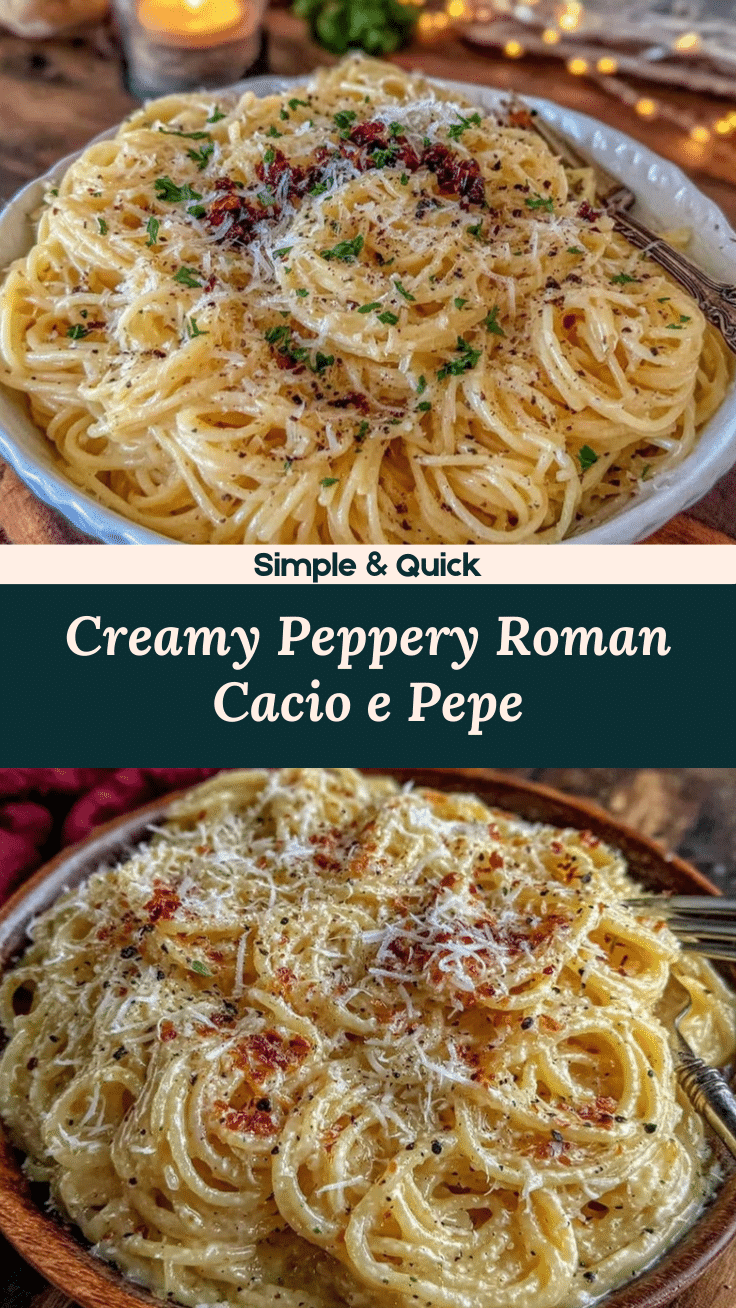
Creamy Roman Cacio e Pepe Recipe with Bold Black Pepper

A simple yet elegant Roman pasta dish featuring creamy Pecorino Romano cheese and bold freshly cracked black pepper, emulsified with starchy pasta water for a silky sauce.
- Prep Time: 5 minutes
- Cook Time: 15 minutes
- Total Time: 20 minutes
- Yield: 4 servings 1x
- Category: Main Course
- Cuisine: Italian
Ingredients
- 12 ounces spaghetti (preferably Barilla or De Cecco)
- 1 ½ cups finely grated Pecorino Romano cheese (about 5 ounces or 140 grams)
- 2 tablespoons freshly cracked black peppercorns
- 1 tablespoon kosher salt or sea salt (for pasta water)
- 2 tablespoons unsalted softened butter (optional)
- About 1 cup reserved pasta cooking water (240 ml)
Instructions
- Bring a large pot of salted water (about 4 quarts) to a boil.
- Add spaghetti and cook until just shy of al dente, about 8-9 minutes.
- While pasta cooks, toast the freshly cracked black pepper in a large skillet over medium heat for 1-2 minutes, stirring constantly until fragrant and slightly smoky.
- Reserve about 1 cup of pasta cooking water before draining the pasta.
- Drain the pasta quickly without rinsing to keep starch on noodles.
- Add drained pasta to the skillet with toasted pepper and toss to coat.
- Reduce heat to low and gradually sprinkle in grated Pecorino Romano while continuously tossing.
- Add pasta water gradually, about ¼ cup at a time, tossing until the cheese melts and sauce becomes silky and creamy.
- If sauce looks clumpy, add more pasta water and keep tossing until smooth.
- Optional: Stir in softened butter for extra richness.
- Give everything a final toss, taste, and add a pinch of salt if needed.
- Serve immediately while warm and saucy.
Notes
Use freshly cracked black pepper and toast it gently to unlock essential oils. Grate Pecorino Romano finely for a smooth sauce. Add pasta water gradually while tossing to avoid clumps. Keep heat low when combining cheese and pasta to prevent graininess. Do not rinse pasta after draining to retain starch. If sauce thickens before serving, add a splash of warm pasta water to loosen it.
Nutrition
- Serving Size: 1 serving (about 1/4
- Calories: 450
- Fat: 15
- Carbohydrates: 60
- Fiber: 2
- Protein: 18
Keywords: cacio e pepe, creamy pasta, Roman pasta, Pecorino Romano, black pepper pasta, easy pasta recipe, Italian comfort food