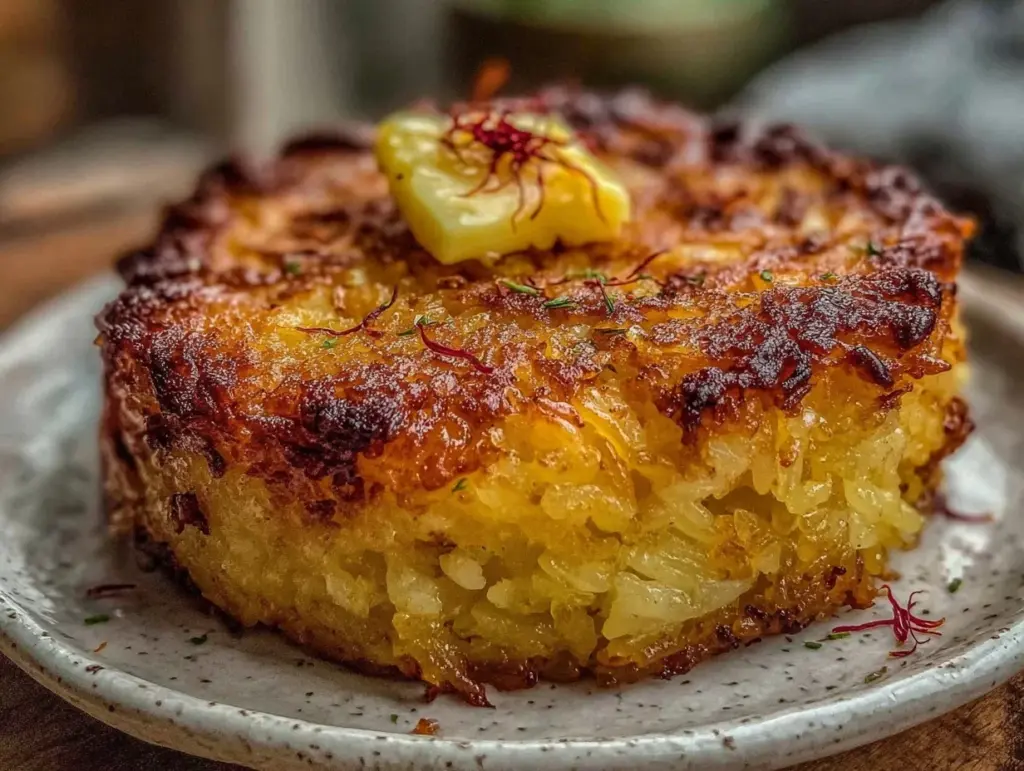
“You know that moment when the power flickers and you just hope dinner doesn’t turn into a disaster?” That was me last Thursday night, standing in my cramped kitchen, halfway through making what I thought would be a simple pot of rice. The power cut left me scrambling, and honestly, I was worried the whole batch was ruined. But then, when the lights flicked back on, I uncovered a glorious golden crust at the bottom of my pot—the crispy Persian tahdig rice with saffron and butter that I hadn’t even planned to make! It was a happy accident, the kind of kitchen surprise that makes you rethink every rice recipe you’ve ever used.
That crunch, that rich aroma of saffron mingling with butter—it all transported me right to a cozy Tehran eatery, even though I was miles away. I’d never thought making perfect tahdig rice could be this easy, especially without fancy equipment or hours of prepping. Maybe you’ve been there too: staring at a pot of rice, wondering if the crispy bottom is a fluke or fate. This recipe is my go-to now because it’s straightforward, forgiving, and delivers that much-coveted golden crust every single time. Plus, I learned it’s all about patience and a little bit of love (and butter!).
Honestly, the best part? Despite the chaos of that evening—juggling a toddler’s tantrum, a ringing phone, and a knocked-over spice jar—this tahdig rice came out tasting like it had hours of careful attention behind it. So if you think making Persian rice with that perfect crunch is out of reach, let me tell you, it’s not. And once you try this version, you might just find yourself making it on the regular, like me.
Why You’ll Love This Crispy Persian Tahdig Rice with Saffron and Butter
After lots of trial, error, and happy kitchen accidents, I can confidently say this tahdig rice recipe stands out for all the right reasons:
- Quick & Easy: Takes about 45 minutes from start to finish, perfect for weeknight dinners when time is tight.
- Simple Ingredients: Uses pantry staples like basmati rice, butter, and saffron—no exotic items needed.
- Perfect for Family Meals: A crowd-pleaser that works great for both casual dinners and special occasions.
- Crowd-Pleaser: Friends and family always comment on the irresistible crispy crust—and no one believes it’s homemade!
- Unbelievably Delicious: The buttery, saffron-infused crunch contrasts beautifully with fluffy rice, creating a texture combo that’s seriously addictive.
What makes my version different? Well, I blend a pinch of crushed saffron directly into warm butter before adding it to the pot, which gives the tahdig that vibrant golden color and deep aroma without overpowering the rice. Plus, I’ve perfected the heat management to avoid burning while still achieving that signature crispiness. This isn’t just any tahdig rice; it’s the one I trust when I want that authentic Persian experience at home, with zero stress.
And let’s be honest: there’s something deeply comforting about that first crack into the golden crust, the satisfying crunch, and the rich scent filling your kitchen. It’s simple, soulful cooking that feels like a warm hug on a plate.
What Ingredients You Will Need
This recipe uses simple, wholesome ingredients to deliver bold flavor and that satisfying crispy texture without fuss. Most are pantry staples, and the saffron adds that special Persian touch you’ll appreciate.
- Basmati rice – 2 cups (about 400 grams), rinsed and soaked for at least 30 minutes (for fluffy, separate grains)
- Water – 8 cups (1.9 liters), for boiling the rice
- Salt – 1 tablespoon (for seasoning the boiling water)
- Unsalted butter – 4 tablespoons (about 60 grams), melted (I prefer Kerrygold for richness)
- Saffron threads – a generous pinch (about 20-30 strands), soaked in 2 tablespoons hot water to release aroma and color
- Vegetable oil – 2 tablespoons (for greasing the pot and helping the crust formation)
- Optional: yogurt – 2 tablespoons (helps create a tangy crust if you want to try a different take)
Ingredient tips: Look for long-grain basmati rice—it’s the key to fluffy rice with that perfect texture. For saffron, buying a small jar of high-quality threads (like from Iran or Spain) makes a huge difference. If you’re out of saffron, you could substitute a tiny pinch of turmeric for color, but the flavor won’t be quite the same.
Substitutions: Butter can be swapped for ghee if you want a nuttier flavor or a dairy-free margarine for a vegan twist. For gluten-free diets, this recipe is naturally safe since it uses just rice and spices.
Equipment Needed
- Large pot for boiling the rice (with a lid to trap steam)
- Non-stick or heavy-bottomed saucepan for cooking the tahdig crust (a 3-quart pot works well)
- Fine mesh sieve or colander to rinse and drain the rice
- Measuring cups and spoons for precision
- Small bowl for saffron soaking
- Wooden spatula or rubber spatula for gently fluffing the rice
If you don’t have a non-stick pot, a heavy-bottomed stainless steel one works fine, but be sure to adjust the heat carefully to avoid sticking. Personally, I like using a traditional Persian rice pot if you can find one, but any good-quality saucepan will do. Also, keeping a kitchen towel handy helps absorb any steam escaping from the lid, preventing water drops from ruining the crust.
Preparation Method
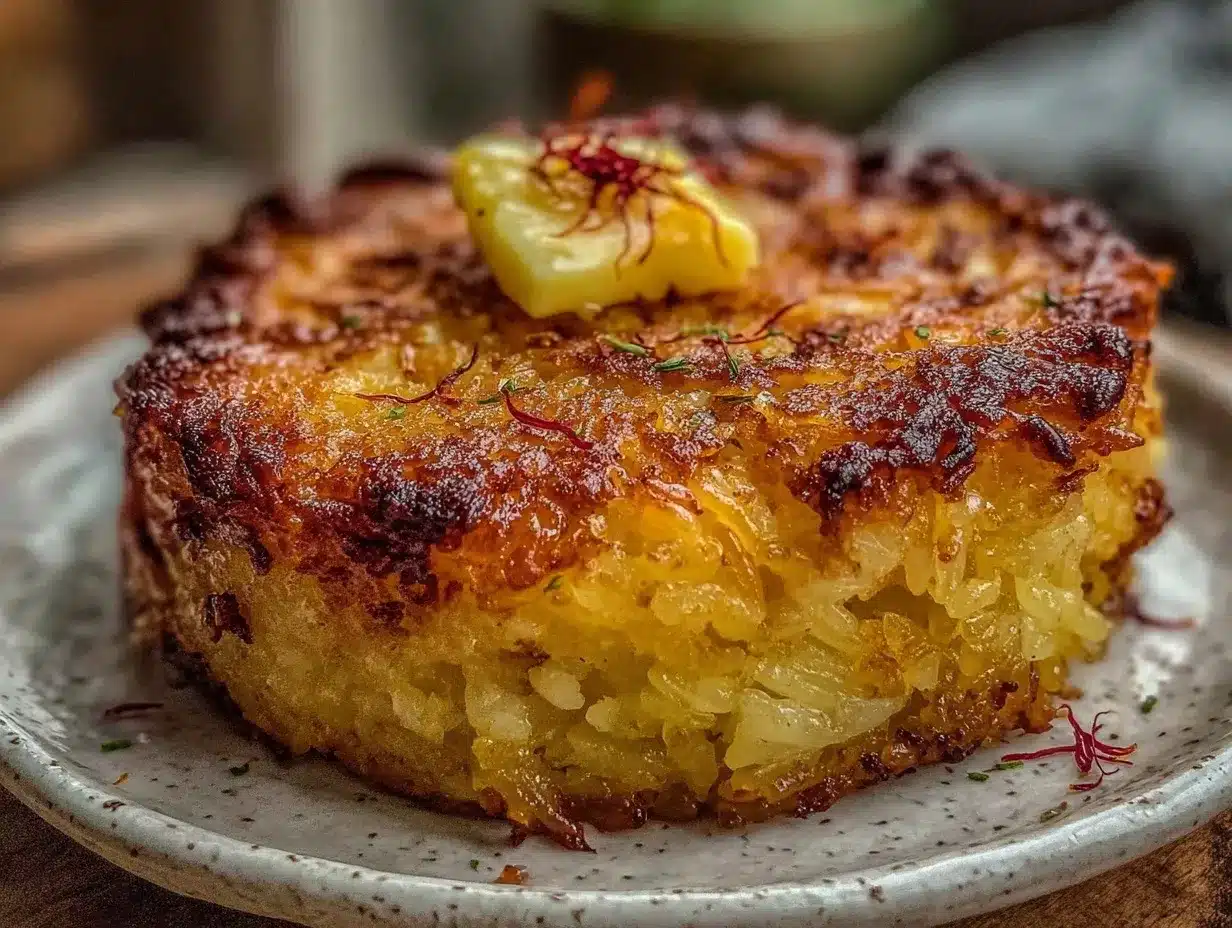
- Rinse and soak the rice: Rinse 2 cups (400 grams) of basmati rice under cold water until it runs clear to remove excess starch. Soak the rice in cold water for at least 30 minutes, then drain thoroughly. This step helps the grains stay separate and fluffy.
- Boil the rice: Bring 8 cups (1.9 liters) of water to a rolling boil in a large pot. Add 1 tablespoon salt and the soaked, drained rice. Boil uncovered for about 6-8 minutes, stirring occasionally, until the grains are soft on the outside but still firm in the center (al dente). Drain the rice immediately in a fine mesh sieve and rinse briefly with warm water to stop cooking.
- Prepare saffron butter: While the rice is boiling, soak a generous pinch of saffron threads in 2 tablespoons hot water for 10 minutes. Then mix this saffron water with 4 tablespoons melted unsalted butter. This mixture will give your tahdig that beautiful color and flavor.
- Heat oil in the pot: In a clean, non-stick or heavy-bottomed pot, heat 2 tablespoons vegetable oil over medium heat. Swirl to coat the bottom evenly. This prevents sticking and helps form the crust.
- Add saffron butter: Pour the saffron butter mixture into the hot oil and spread it evenly across the bottom of the pot. The pot should be hot but not smoking.
- Layer the rice: Using a large spoon, gently pile the drained rice into the pot over the saffron butter layer, mounding it slightly in the center. This creates air pockets and helps steam circulate.
- Create steam vents: Using the handle of a wooden spoon, poke 6-8 holes through the rice mound to let steam escape. This is key to preventing sogginess.
- Steam the rice: Wrap the lid of the pot in a clean kitchen towel to catch condensation (avoid wetting the towel). Cover the pot tightly and reduce heat to low. Cook for 30-40 minutes, during which the tahdig crust forms and the rice finishes steaming.
- Check and serve: After cooking, turn off the heat and let the pot sit covered for 10 minutes. To serve, place a large plate over the pot and carefully invert it to release the tahdig rice. The crust should be golden, fragrant, and crisp.
Tip: If you notice sticking or burning smells during cooking, slightly lower the heat and add a teaspoon of water around the edges to create steam. Patience is key to a perfect tahdig.
Cooking Tips & Techniques
Cooking the perfect Persian tahdig rice is about mastering a few key techniques and avoiding common pitfalls. Here’s what I’ve learned over the years:
- Don’t rush rinsing: Washing the rice thoroughly removes surface starch, preventing gummy rice and helping the grains stay separate.
- Timing the boil: It’s tempting to overcook the rice in boiling water, but stopping when grains are just al dente ensures they hold up during steaming and crisp nicely.
- Heat control is crucial: Too high and the tahdig burns; too low and it never crisps. Medium-low heat after layering the rice is your sweet spot.
- Use a heavy-bottomed pot: This spreads heat evenly and prevents hot spots that cause burning.
- Steam vent holes rock: Poking holes in the rice lets steam escape and avoids sogginess or clumping.
- Butter and saffron combo: Mixing saffron into warm butter before adding it to the pot distributes flavor evenly and colors the crust beautifully.
- Wrap the lid: Using a clean kitchen towel around the lid absorbs steam droplets, keeping the crust crisp rather than soggy.
Once, I forgot to soak the saffron and ended up with a pale crust that tasted fine but lacked the signature aroma and color. Lesson learned: don’t skip that step! Also, I recommend resisting the urge to peek during steaming—lifting the lid lets out precious steam and messes with cooking times.
Variations & Adaptations
While this recipe nails classic Persian tahdig rice, it’s also versatile enough to adapt:
- Yogurt tahdig: Mix 2 tablespoons plain yogurt into the saffron butter before layering rice for a tangy, golden crust with a slightly different texture.
- Potato tahdig: Thinly slice potatoes and arrange them in the bottom of the pot before adding rice and saffron butter. This gives a crispy potato crust instead of the traditional rice crust.
- Vegan option: Swap butter for coconut oil or vegan margarine and use olive oil to achieve a similar crispy crust without dairy.
- Herb-infused tahdig: Add a tablespoon of chopped fresh dill or parsley into the saffron butter for a bright, herbal note.
Personally, I’ve tried the potato tahdig version for a cozy winter meal, and it was a big hit with my family—especially with a side of grilled vegetables. It’s fun to experiment, but the saffron and butter version remains my favorite for its authentic aroma and buttery crunch.
Serving & Storage Suggestions
Serve your crispy Persian tahdig rice immediately after flipping for the best texture and aroma. The contrast between the golden crust and fluffy rice is delightful when warm, and it pairs beautifully with Persian stews (khoresht), grilled meats, or vegetable dishes.
For presentation, garnish with a sprinkle of chopped fresh herbs or a few extra saffron threads. A side of tangy yogurt or Shirazi salad brightens the meal.
If you have leftovers, store them in an airtight container in the refrigerator for up to 3 days. To reheat, sprinkle a few drops of water on top and cover with a microwave-safe lid or plate to soften the rice, then heat gently to revive the crust. Alternatively, reheat in a non-stick pan over low heat to crisp the tahdig again.
Flavors tend to deepen overnight, so leftovers can be even more satisfying. Just beware the rice crust softening after reheating—crisp it up again if you can!
Nutritional Information & Benefits
This tahdig rice is not only delicious but also a source of energy and nutrients. A typical serving (about 1 cup cooked) contains roughly:
| Calories | 280-320 kcal |
|---|---|
| Carbohydrates | 55 grams |
| Fat | 8-10 grams (from butter and oil) |
| Protein | 5-6 grams |
Key benefits come from saffron, which has antioxidant properties and is known to support mood and digestion. Butter provides fat-soluble vitamins and adds richness, while basmati rice offers a lower glycemic index compared to other rices, helping with steady energy release.
This recipe is naturally gluten-free and can be adapted for vegan diets. Just swap butter for plant-based fats. Just a note: those sensitive to dairy or high-fat meals should enjoy in moderation, but honestly, the occasional indulgence in this comfort food feels worth it.
Conclusion
If you’ve ever hesitated to try making Persian tahdig rice at home because it seemed complicated or intimidating, I hope this recipe changes your mind. It’s surprisingly simple, forgiving, and results in that magical crispy crust that’s the pride of Persian cooking. Customize it with herbs, yogurt, or even potatoes to suit your mood and occasion.
For me, this recipe is a reminder that even kitchen mishaps can lead to something wonderful. I love how it brings a little bit of Persian warmth and flavor to my dinner table, making every meal feel special without hours of fuss.
Give it a whirl, share how it worked for you, or tell me your favorite tahdig twist in the comments—let’s keep the delicious tradition alive!
FAQs About Crispy Persian Tahdig Rice with Saffron and Butter
How do I prevent the tahdig from burning?
Use medium-low heat and make sure to spread the saffron butter evenly. Wrapping the lid with a kitchen towel helps control moisture and prevents burning. If you smell burning, reduce heat immediately and add a teaspoon of water around the edges.
Can I use other types of rice for tahdig?
Basmati rice is ideal for its long grains and fluffy texture. Other long-grain rice varieties may work but might not give the same light, separate grains or crispy crust.
Is soaking saffron necessary?
Yes, soaking saffron threads in hot water releases their color and aroma, which is essential for that signature golden hue and flavor in your tahdig.
Can I make tahdig without butter?
Butter adds richness and helps with browning but you can substitute with ghee, vegetable oil, or vegan margarine. The texture and flavor might vary slightly.
How do I reheat tahdig rice without losing the crunch?
Reheat gently in a non-stick pan over low heat to crisp up the crust again. Avoid microwaving alone, as it can make the crust soggy.
Pin This Recipe!
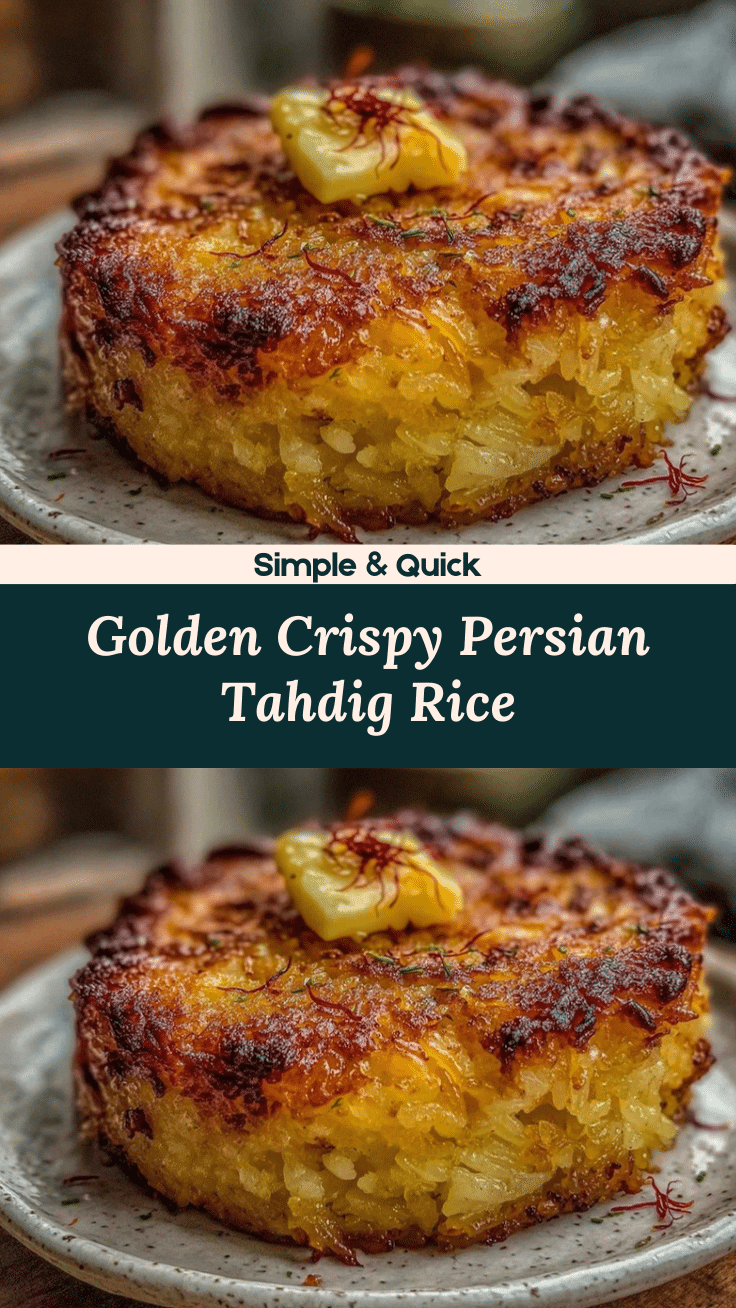
Crispy Persian Tahdig Rice with Saffron and Butter

A simple and forgiving recipe for perfect Persian tahdig rice featuring a golden, crispy saffron and butter crust with fluffy basmati rice.
- Prep Time: 40 minutes
- Cook Time: 40 minutes
- Total Time: 1 hour 20 minutes
- Yield: 4 servings 1x
- Category: Main Course
- Cuisine: Persian
Ingredients
- 2 cups basmati rice (about 400 grams), rinsed and soaked for at least 30 minutes
- 8 cups water (1.9 liters), for boiling the rice
- 1 tablespoon salt, for seasoning the boiling water
- 4 tablespoons unsalted butter (about 60 grams), melted
- A generous pinch of saffron threads (about 20-30 strands), soaked in 2 tablespoons hot water
- 2 tablespoons vegetable oil, for greasing the pot
- Optional: 2 tablespoons plain yogurt (for a tangy crust)
Instructions
- Rinse 2 cups (400 grams) of basmati rice under cold water until it runs clear to remove excess starch. Soak the rice in cold water for at least 30 minutes, then drain thoroughly.
- Bring 8 cups (1.9 liters) of water to a rolling boil in a large pot. Add 1 tablespoon salt and the soaked, drained rice. Boil uncovered for about 6-8 minutes, stirring occasionally, until grains are soft on the outside but still firm in the center (al dente). Drain the rice immediately in a fine mesh sieve and rinse briefly with warm water to stop cooking.
- While the rice is boiling, soak a generous pinch of saffron threads in 2 tablespoons hot water for 10 minutes. Mix this saffron water with 4 tablespoons melted unsalted butter.
- In a clean, non-stick or heavy-bottomed pot, heat 2 tablespoons vegetable oil over medium heat. Swirl to coat the bottom evenly.
- Pour the saffron butter mixture into the hot oil and spread it evenly across the bottom of the pot.
- Using a large spoon, gently pile the drained rice into the pot over the saffron butter layer, mounding it slightly in the center.
- Using the handle of a wooden spoon, poke 6-8 holes through the rice mound to let steam escape.
- Wrap the lid of the pot in a clean kitchen towel to catch condensation. Cover the pot tightly and reduce heat to low. Cook for 30-40 minutes to form the tahdig crust and finish steaming the rice.
- Turn off the heat and let the pot sit covered for 10 minutes. To serve, place a large plate over the pot and carefully invert it to release the tahdig rice.
Notes
Use medium-low heat to avoid burning the tahdig. Wrapping the lid with a clean kitchen towel helps absorb condensation and keeps the crust crisp. If burning smell occurs, reduce heat and add a teaspoon of water around the edges. Soaking saffron is essential for color and aroma. Butter can be substituted with ghee or vegan margarine for dietary preferences.
Nutrition
- Serving Size: About 1 cup cooked r
- Calories: 300
- Sodium: 600
- Fat: 9
- Saturated Fat: 5
- Carbohydrates: 55
- Fiber: 1
- Protein: 6
Keywords: Persian rice, tahdig, saffron rice, crispy rice, basmati rice, butter rice, Persian cuisine, easy tahdig recipe