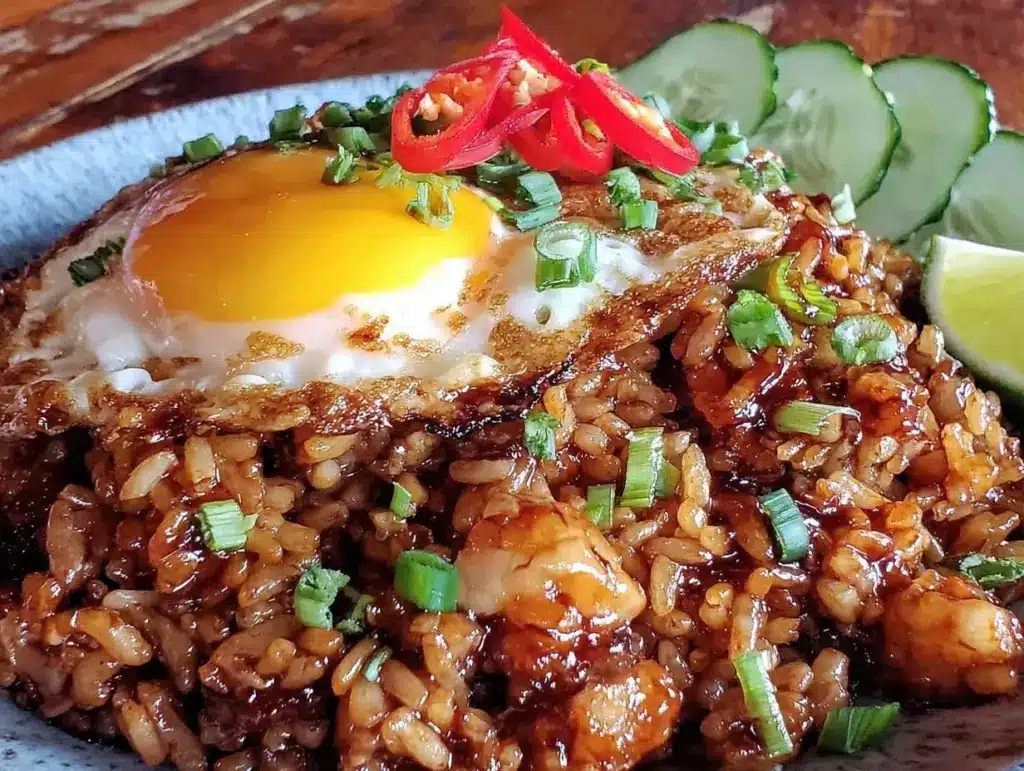
“You know, I never expected to learn much about cooking from my quiet next-door neighbor, Mr. Santoso. One humid Friday evening last summer, as he was tending his little herb garden, he casually mentioned the magic of Indonesian nasi goreng. At first, I thought, ‘Fried rice? How different can it be?’ But honestly, watching him stir-fry that fragrant rice with his special sweet soy sauce, I was hooked. The irresistible aroma pulled me right through his open kitchen window, and before I knew it, I was sitting at his table, savoring one of the most flavorful meals I’d ever had.
It wasn’t just any fried rice, either. This version had layers of bold yet comforting flavors—sweet, savory, a hint of spice—balanced perfectly. I made a mess trying to replicate it the next day (yes, I forgot the garlic the first time!), but that little mishap only meant I got to try it again, better each time. Maybe you’ve been there, trying a recipe that feels more like an experiment than a meal. Well, this Indonesian nasi goreng fried rice with sweet soy sauce is the kind of dish that sticks with you. It’s simple, yet soulful—a real kitchen win that I keep coming back to, especially when I want something quick but impressive.”
Why You’ll Love This Recipe
After countless attempts and tweaks (and a few minor kitchen disasters), I’ve nailed this Indonesian nasi goreng fried rice recipe that’s both easy and crowd-pleasing. Here’s why you’ll find yourself making it over and over:
- Quick & Easy: Ready in under 30 minutes, perfect for busy weeknights or those last-minute dinner cravings.
- Simple Ingredients: Mostly pantry staples—no hunting for exotic items. Sweet soy sauce (kecap manis) adds that authentic touch but can be found at most Asian markets.
- Perfect for Any Occasion: Whether it’s a casual solo lunch or a lively potluck, this dish fits right in.
- Crowd-Pleaser: Kids and adults alike love the sweet and savory balance; it’s comfort food with a twist.
- Unbelievably Delicious: The texture of fluffy rice combined with the caramelized notes of sweet soy sauce is downright addictive.
What sets this recipe apart? It’s the way the sweet soy sauce is incorporated—not just added at the end but stirred in early, letting every grain soak up that rich, molasses-like flavor. Plus, a dash of sambal for heat and fresh green onions for brightness brings the whole thing to life. Honestly, it’s the kind of dish that makes you close your eyes after the first bite and say, “Yes, this is exactly what I needed.”
What Ingredients You Will Need
This Indonesian nasi goreng fried rice comes together with straightforward, wholesome ingredients that pack a punch of flavor and texture. Most are pantry staples, and a few authentic touches make all the difference.
- Cooked Jasmine Rice – 4 cups (about 800g), preferably day-old and chilled (for best texture)
- Sweet Soy Sauce (Kecap Manis) – 3 tablespoons (look for ABC brand for authentic flavor)
- Vegetable Oil – 2 tablespoons (neutral oils like canola or sunflower work well)
- Garlic – 3 cloves, minced (adds depth and aroma)
- Shallots – 2 small, thinly sliced (for subtle sweetness)
- Red Chili or Sambal Oelek – 1 teaspoon, or to taste (gives a mild kick; adjust accordingly)
- Eggs – 2 large, beaten (for richness and protein)
- Cooked Chicken or Shrimp – 1 cup, diced or chopped (optional, for added protein)
- Green Onions – 3 stalks, sliced (freshness and color)
- Carrots – 1 medium, finely diced (adds sweetness and texture)
- Frozen Peas – ½ cup (optional, for a pop of color and sweetness)
- Salt & Black Pepper – to taste (seasoning balance)
Substitution tips: If you can’t find sweet soy sauce, mix regular soy sauce with a teaspoon of brown sugar or molasses. For a gluten-free version, check labels or swap soy sauce with tamari. You can easily swap chicken for tofu or extra veggies to keep it vegetarian.
Equipment Needed
- Large Non-Stick Skillet or Wok: A wok is ideal for even heat, but a sturdy skillet works just fine. I personally use a 12-inch non-stick pan that heats quickly and cleans easily.
- Spatula or Wooden Spoon: For stirring and tossing the rice without breaking the grains.
- Cutting Board and Sharp Knife: For prepping garlic, shallots, carrots, and green onions.
- Mixing Bowl: For beating the eggs before adding to the pan.
If you don’t have a wok, no worries—just use your biggest skillet and keep the heat medium-high. Also, a well-seasoned cast iron pan can give great flavor, but be sure to keep the heat in check to avoid burning the sweet soy sauce.
Preparation Method
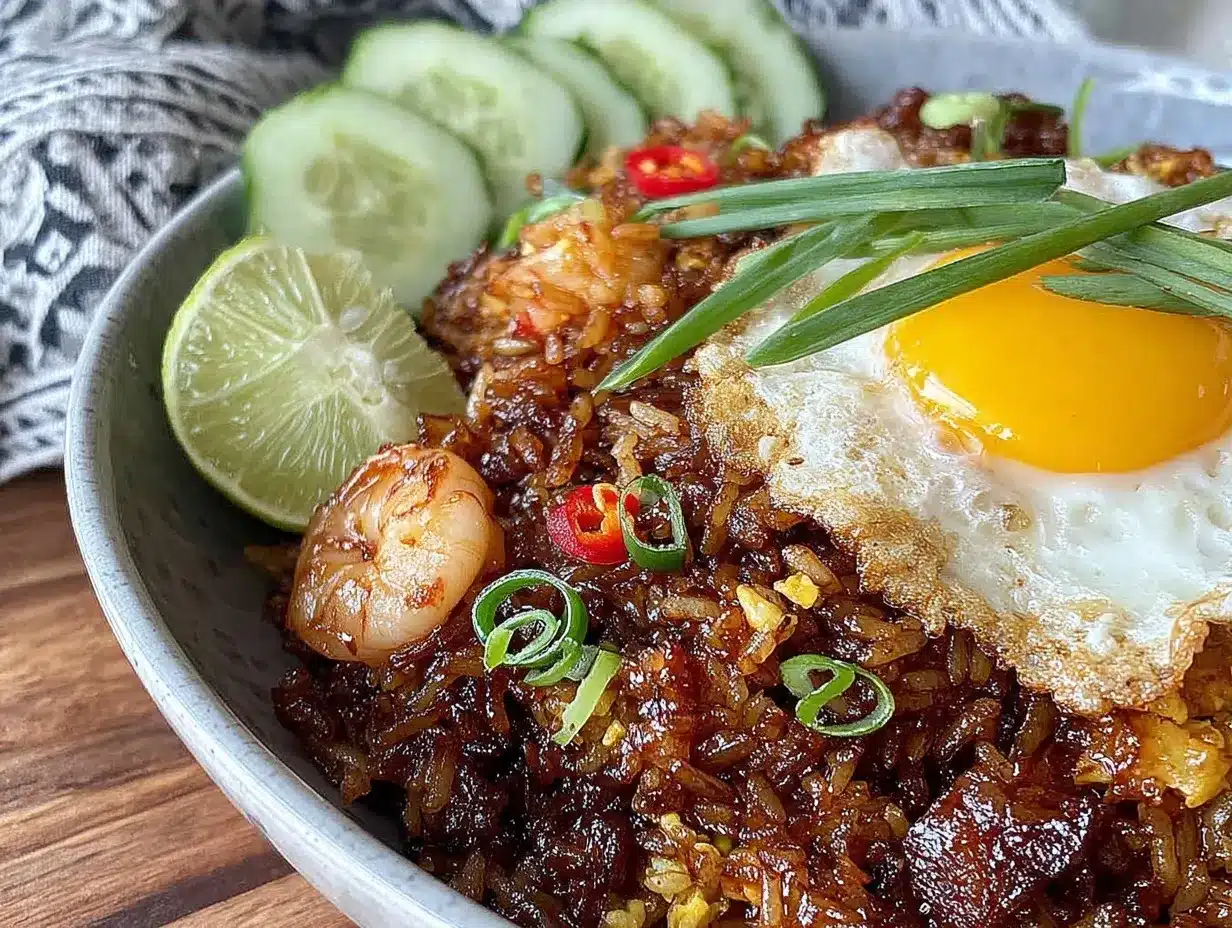
- Prep Your Ingredients (10 minutes): Dice the carrots, slice shallots and green onions, mince garlic, and chop your protein if using. Crack the eggs into a bowl and beat lightly. Make sure your rice is cold and clump-free—break up any stubborn chunks with a fork.
- Heat the Oil (2 minutes): Place your wok or skillet over medium-high heat. Add the vegetable oil and swirl to coat. You want it hot enough that garlic sizzles immediately but not so hot it burns.
- Sauté Aromatics (3 minutes): Add minced garlic and sliced shallots. Stir constantly until fragrant and slightly golden—this aroma is your first sign of success. Be careful not to let them burn; lower heat if needed.
- Add Carrots and Peas (3 minutes): Toss in diced carrots and peas. Cook until softened but still with a little crunch—this keeps the texture lively.
- Push Veggies Aside and Cook Eggs (2 minutes): Move the veggies to one side of the pan. Pour in beaten eggs on the empty side, scramble gently until just cooked but still moist. Then mix everything together.
- Add Protein (if using) and Rice (3 minutes): Toss in cooked chicken or shrimp, stirring to warm through. Then add the cold rice, breaking up any clumps as you stir. Make sure rice grains are separate and coated with oil.
- Season with Sweet Soy Sauce and Chili (3 minutes): Pour in kecap manis and sambal oelek. Stir thoroughly so every grain glistens with that rich, sweet, slightly spicy sauce. This is where the magic happens—taste and adjust salt or chili as needed.
- Finish with Green Onions and Pepper (1 minute): Stir in sliced green onions and a pinch of freshly cracked black pepper. Remove from heat immediately to keep the onions bright and fresh.
Pro tip: Using day-old rice is key. Freshly cooked rice tends to be too moist and clumps together, but chilled rice separates better and fries up perfectly. Also, keep your heat steady—too high and the sauce can burn; too low and it won’t caramelize.
Cooking Tips & Techniques
Getting nasi goreng just right can feel tricky, but here are some kitchen-tested tips to make sure your fried rice turns out perfect every time.
- Use Cold, Dry Rice: Ideally, use rice cooked the day before and refrigerated. This helps prevent mushiness and clumping.
- Don’t Overcrowd the Pan: Fry in batches if you have to. Crowding traps steam, which makes the rice soggy instead of crispy.
- Control Your Heat: Medium-high heat is best to quickly fry ingredients and caramelize the sweet soy sauce without burning.
- Prep Ingredients Before Heating: Once the pan’s hot, you’ll need to cook quickly. Have everything chopped and ready to go.
- Stir Often But Gently: You want the rice to fry evenly and get a bit of color, but vigorous stirring can break grains and release starch, making it gluey.
- Adjust Seasonings Gradually: Taste as you go—sweet soy sauce varies by brand, so start with less and add more to suit your palate.
Honestly, my first few tries were sticky disasters, but I learned that patience at the pan makes all the difference. Also, a splash of oil added midway through cooking helps keep things from sticking and adds shine.
Variations & Adaptations
Nasi goreng is a wonderfully flexible dish—feel free to make it your own!
- Vegetarian Version: Skip the chicken or shrimp and add extra veggies like bell peppers, mushrooms, or tofu cubes. Use mushroom soy sauce for a deeper umami flavor.
- Spicy Twist: Amp up the heat with extra sambal oelek or fresh sliced bird’s eye chilies. A squeeze of lime at the end cuts through the richness nicely.
- Low-Carb Option: Swap rice for cauliflower rice. The cooking method stays the same, just reduce the cooking time since cauliflower cooks faster.
- Seafood Lover’s: Use a mix of shrimp, squid, and fish for a seafood nasi goreng. Add a dash of fish sauce for authentic flavor.
Personally, I once tried adding pineapple chunks for a sweet-savory surprise—it turned out surprisingly refreshing and perfect for summer evenings. Don’t be afraid to experiment!
Serving & Storage Suggestions
Serve your Indonesian nasi goreng hot, straight from the pan. Garnish with extra sliced green onions or crispy fried shallots if you have them on hand. It pairs beautifully with a fried egg on top for that classic street-food vibe.
For drinks, iced jasmine tea or a light lager complements the sweet and spicy flavors perfectly.
Store leftovers in an airtight container in the refrigerator for up to 3 days. When reheating, sprinkle a little water over the rice and reheat in a skillet or microwave to keep it from drying out.
Flavors tend to deepen after a day, so sometimes I make it a day ahead on purpose. Just give it a quick toss in a hot pan before serving to refresh the texture.
Nutritional Information & Benefits
One serving of this nasi goreng fried rice (about 1.5 cups/300g) contains roughly:
| Calories | 380-420 kcal |
|---|---|
| Protein | 18-22 g (depending on added protein) |
| Carbohydrates | 50-55 g |
| Fat | 10-12 g |
Sweet soy sauce adds a touch of sugar but also brings antioxidants from fermented soybeans. Garlic and shallots contribute immune-supporting compounds, while fresh veggies add fiber and vitamins. This dish can be gluten-free if you choose the right soy sauce and is naturally low in dairy.
From a wellness perspective, the balanced protein and fiber help keep you full without feeling heavy, making it a satisfying and nourishing meal.
Conclusion
This Indonesian nasi goreng fried rice with sweet soy sauce is more than just a quick meal—it’s a little celebration of flavors and textures that surprises you each time you make it. Whether you stick with the classic or add your own twist, it’s a recipe that invites creativity while delivering dependable deliciousness.
Honestly, I love how it brings a bit of that warm, bustling Indonesian street food vibe into my kitchen without needing hours or fancy ingredients. Give it a try, tweak it to your taste, and please share what variations you come up with—I’m always excited to hear how others make it their own.
Happy cooking, and may your nasi goreng always be flavorful and satisfying!
FAQs
What type of rice is best for nasi goreng?
Day-old cooked jasmine rice is ideal because it’s drier and less sticky, which helps it fry up nicely without clumping.
Can I make nasi goreng without sweet soy sauce?
You can substitute with regular soy sauce mixed with a bit of brown sugar or molasses, but the signature sweetness and depth might be milder.
How spicy is nasi goreng traditionally?
It varies! The sambal oelek adds mild to moderate heat, but you can adjust or omit it based on your spice tolerance.
Is nasi goreng gluten-free?
Yes, if you use gluten-free soy sauce or tamari. Check labels carefully to avoid wheat-based soy sauces.
Can I prepare nasi goreng ahead of time?
Absolutely! It actually tastes better after resting for a day. Just store it in the fridge and reheat properly before serving.
Pin This Recipe!
Flavorful Indonesian Nasi Goreng Fried Rice Easy Homemade Recipe with Sweet Soy Sauce

A quick and easy Indonesian fried rice recipe featuring day-old jasmine rice, sweet soy sauce, and a balance of sweet, savory, and spicy flavors. Perfect for busy weeknights or casual meals.
- Prep Time: 10 minutes
- Cook Time: 17 minutes
- Total Time: 27 minutes
- Yield: 4 servings 1x
- Category: Main Course
- Cuisine: Indonesian
Ingredients
- 4 cups cooked jasmine rice (about 800g), preferably day-old and chilled
- 3 tablespoons sweet soy sauce (kecap manis)
- 2 tablespoons vegetable oil (canola or sunflower)
- 3 cloves garlic, minced
- 2 small shallots, thinly sliced
- 1 teaspoon red chili or sambal oelek, or to taste
- 2 large eggs, beaten
- 1 cup cooked chicken or shrimp, diced or chopped (optional)
- 3 stalks green onions, sliced
- 1 medium carrot, finely diced
- ½ cup frozen peas (optional)
- Salt and black pepper to taste
Instructions
- Prep your ingredients: dice carrots, slice shallots and green onions, mince garlic, and chop protein if using. Beat the eggs in a bowl. Ensure rice is cold and clump-free.
- Heat the oil in a large non-stick skillet or wok over medium-high heat until hot but not smoking.
- Add minced garlic and sliced shallots; stir constantly until fragrant and slightly golden, about 3 minutes.
- Add diced carrots and peas; cook until softened but still slightly crunchy, about 3 minutes.
- Push vegetables to one side of the pan. Pour in beaten eggs on the empty side and scramble gently until just cooked but still moist, about 2 minutes. Mix everything together.
- Add cooked chicken or shrimp if using, stirring to warm through. Then add cold rice, breaking up any clumps and stirring to coat grains with oil, about 3 minutes.
- Pour in sweet soy sauce and sambal oelek; stir thoroughly so every grain is coated with the rich, sweet, slightly spicy sauce. Taste and adjust salt or chili as needed, about 3 minutes.
- Stir in sliced green onions and freshly cracked black pepper. Remove from heat immediately to keep onions bright and fresh.
Notes
Use day-old chilled rice for best texture to avoid mushiness. Control heat to prevent burning the sweet soy sauce. Stir gently to avoid breaking rice grains. Adjust seasoning gradually. For gluten-free, use tamari or gluten-free soy sauce. Substitute protein with tofu or extra vegetables for vegetarian version.
Nutrition
- Serving Size: About 1.5 cups (300g
- Calories: 400
- Sugar: 6
- Sodium: 700
- Fat: 11
- Saturated Fat: 2
- Carbohydrates: 53
- Fiber: 3
- Protein: 20
Keywords: nasi goreng, Indonesian fried rice, sweet soy sauce, kecap manis, easy fried rice, quick dinner, Asian cuisine, stir-fry rice