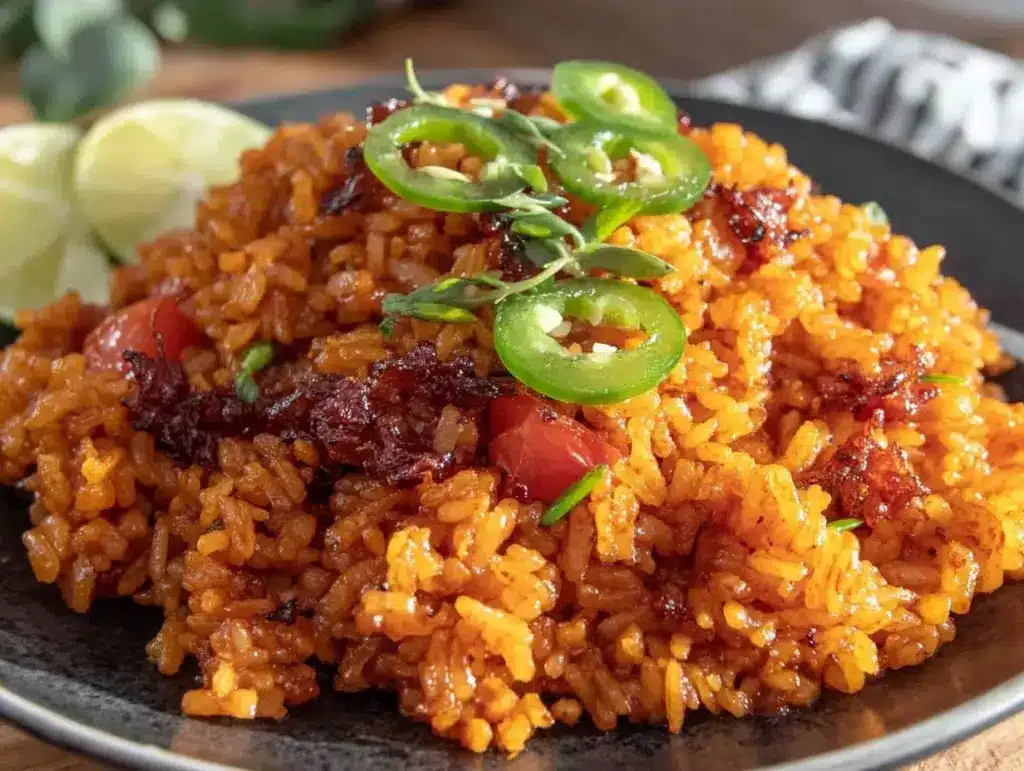
“You won’t believe this story,” my neighbor chuckled as I helped carry groceries up the stairs on a humid Thursday afternoon. She swore she wasn’t much of a cook, yet there she was, sharing secrets while chopping peppers for what she called her “magic pot.” That day, I stumbled upon my new favorite: Nigerian Jollof Rice with spicy Scotch bonnet peppers. The heat hit just right, and honestly, I forgot all about the mess I made trying to keep up in her tiny kitchen.
Maybe you’ve been there—trying to recreate a dish that feels impossible to capture, like it was made in a sun-drenched kitchen far away from your own. This recipe isn’t just any Jollof rice; it’s the one that stays with you because of its bold, smoky flavors and that fiery kick from Scotch bonnets that made me pause (and then reach for a second helping). I remember the way the rice glistened, the rich tomato base bubbling away, and the warmth spreading through the room. It’s a dish that brings people together, and it’s surprisingly easy once you get the hang of it.
Sure, I’ve had my fair share of kitchen mishaps—like the time I forgot to soak the rice and ended up with a sticky mess. But this version? It balances spice, depth, and comfort perfectly. So, if you’re ready to try a recipe that’s lively, authentic, and absolutely packed with flavor, keep reading. This Nigerian Jollof Rice with spicy Scotch bonnet peppers just might become your new go-to for gatherings or a cozy night in.
Why You’ll Love This Recipe
After countless tests and taste sessions (sometimes at odd hours), this Nigerian Jollof Rice recipe has become a favorite for many reasons. It’s not just about the heat or the color—it’s the whole experience that wins hearts:
- Quick & Easy: Ready in under an hour, perfect for those days when you want something hearty without fuss.
- Simple Ingredients: Most items are pantry staples or easy to find at your local market—no exotic shopping needed.
- Perfect for Any Occasion: Whether it’s a casual dinner, potluck, or festive celebration, this dish shines.
- Crowd-Pleaser: Kids and spice lovers alike give it thumbs up, thanks to its balanced heat and rich taste.
- Unbelievably Delicious: The smoky tomato base combined with the punch of Scotch bonnet peppers creates a flavor that’s both comforting and exciting.
What sets this recipe apart is the way the Scotch bonnet peppers are handled—carefully blended into the sauce to spread their heat evenly without overpowering the dish. The slow simmering of the tomato and pepper mix, along with a touch of smoked paprika, adds a smoky layer that feels like a warm hug on a plate. Honestly, once you try this, you’ll understand why I keep coming back to it, even on the busiest nights.
What Ingredients You Will Need
This Nigerian Jollof Rice recipe uses simple, wholesome ingredients that come together to create a bold and satisfying dish. Most of these are staples you might already have, and substitutions are easy if needed.
- Long-grain parboiled rice: 2 cups (about 400g) – This type holds up well, staying fluffy without turning mushy.
- Fresh tomatoes: 4 medium, blended or finely chopped – They form the base of the sauce.
- Tomato paste: 3 tablespoons – Concentrates the tomato flavor and deepens the color.
- Red bell peppers: 2 large, blended – Adds sweetness and body to the sauce.
- Scotch bonnet peppers: 2-3 (adjust to spice preference) – These give the signature heat. Use gloves when handling.
- Onion: 1 large, finely chopped – Adds aromatic depth.
- Garlic cloves: 3, minced – For a subtle spicy note.
- Ginger: 1-inch piece, grated – Adds warmth and complexity.
- Vegetable oil: ¼ cup (60ml) – I prefer using a neutral oil like sunflower or canola.
- Chicken or vegetable broth: 2 cups (480ml) – Enhances flavor and cooks the rice.
- Bay leaves: 2 – For subtle herbal notes.
- Smoked paprika: 1 teaspoon – Provides a smoky undertone (optional but recommended).
- Salt: To taste.
- Black pepper: Freshly ground, to taste.
- Fresh thyme: 1 teaspoon, chopped (or ½ teaspoon dried) – Adds a fragrant touch.
Substitution tips: If you want a milder heat, swap Scotch bonnet peppers for habaneros or omit one pepper. Use jasmine rice if parboiled rice isn’t available, but reduce cooking liquid slightly. For a gluten-free option, ensure broth is gluten-free or use water with seasoning.
Equipment Needed
- Large heavy-bottomed pot with lid: Ideal for even cooking and preventing burning. A Dutch oven works great.
- Blender or food processor: To blend the tomato, bell peppers, and Scotch bonnet peppers smoothly.
- Wooden spoon or heatproof spatula: For stirring without scratching your pots.
- Measuring cups and spoons: For accuracy, especially with rice and liquids.
- Knife and cutting board: For chopping onions, garlic, and ginger.
If you don’t have a blender, you can finely chop the tomatoes and peppers, though the texture will be chunkier. For budget-friendly pots, a thick-bottomed saucepan can substitute but watch the heat closely to avoid scorching. Keep your blender blade sharp and clean for the smoothest sauce texture, and always rinse your pot quickly after cooking to prevent stains from the vibrant tomato sauce.
Preparation Method
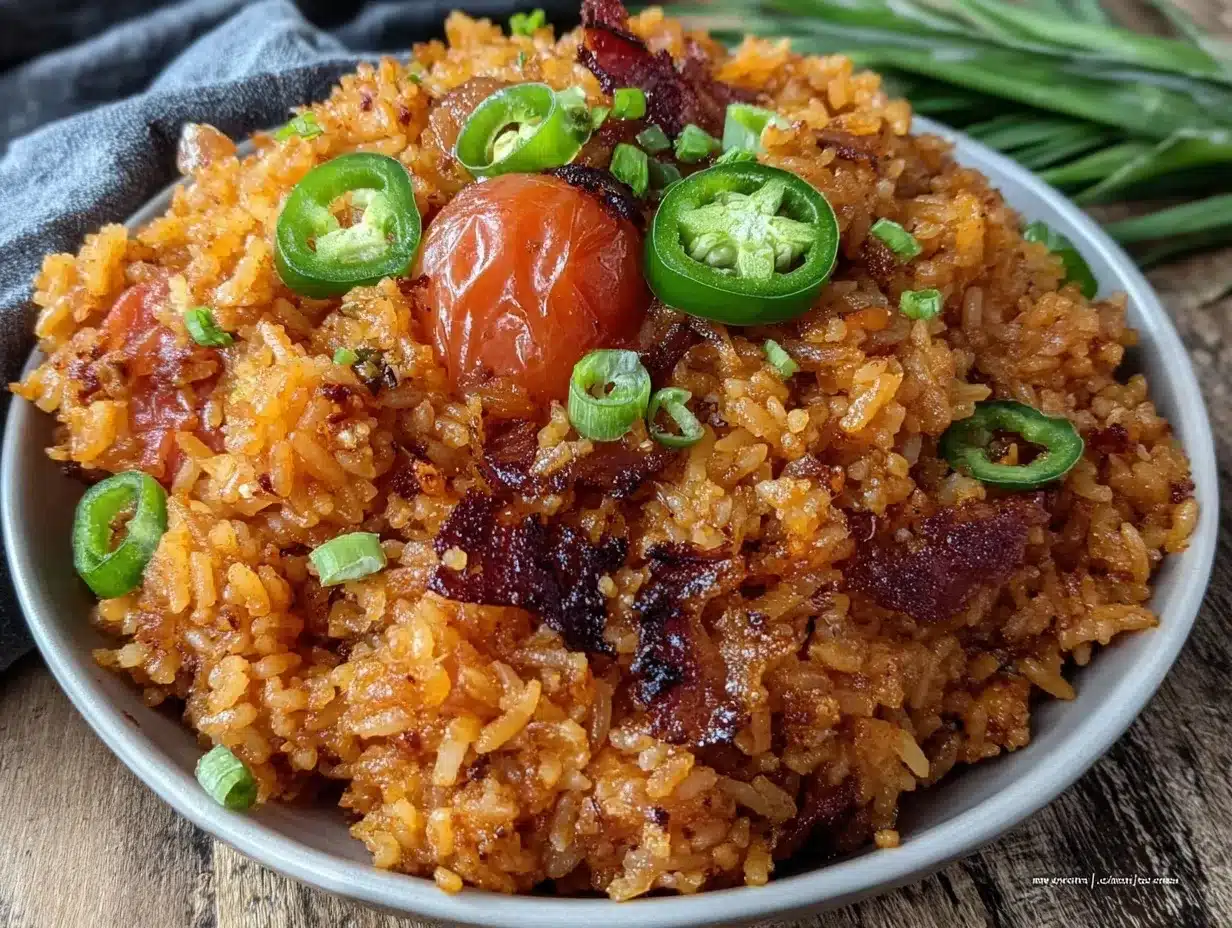
- Prepare your ingredients (10 minutes): Rinse the rice thoroughly under cold water until the water runs clear—this removes excess starch and prevents clumping. Set aside to drain. Blend the fresh tomatoes, red bell peppers, and Scotch bonnet peppers together until smooth. Chop the onion, mince garlic, and grate ginger.
- Cook the base sauce (15 minutes): Heat the vegetable oil in your heavy-bottomed pot over medium heat. Add the chopped onion and sauté until translucent and soft, about 5 minutes. Stir in the minced garlic and grated ginger, cooking for another 2 minutes until fragrant. Pour in the blended pepper mixture and tomato paste, stirring well. Let this simmer gently, stirring occasionally, until the sauce thickens and the oil begins to separate from the tomato base—about 10 minutes. This step builds that signature rich flavor.
- Add spices and broth (5 minutes): Stir in the bay leaves, smoked paprika, fresh thyme, salt, and black pepper. Pour in the chicken or vegetable broth, then bring the mixture to a gentle boil.
- Cook the rice (30-35 minutes): Add the rinsed rice to the sauce, stirring well to combine. Reduce the heat to low, cover the pot tightly, and let it cook undisturbed for about 25-30 minutes. Avoid lifting the lid too often; the steam is key for fluffy rice. Check at 25 minutes—if the rice isn’t tender and liquid is absorbed, cover and cook a bit longer. If the bottom starts to stick or burn, lower the heat immediately and add a splash of water.
- Final touches (5 minutes): Once the rice is cooked, fluff it gently with a fork to separate grains. Remove the bay leaves. Taste and adjust seasoning if needed—sometimes a pinch more salt or a dash of black pepper makes all the difference.
Pro tip: If you like a slight smoky crust (known as “party rice”), increase the heat to medium for the last 5 minutes of cooking, letting the rice crisp lightly at the bottom. Just watch carefully so it doesn’t burn! Also, stirring the rice right after adding it to the sauce helps coat every grain with flavor.
Cooking Tips & Techniques
Cooking Nigerian Jollof Rice can feel intimidating at first, but a few tips will have you cooking like a pro:
- Rinse the rice well: This removes surface starch and prevents the rice from becoming gummy, which is a common beginner mistake.
- Use fresh, ripe tomatoes and peppers: They make a world of difference in taste and color. Canned tomatoes work in a pinch but lack that fresh brightness.
- Don’t rush the simmer: Allowing the sauce to reduce slowly concentrates flavors and helps develop that vibrant red hue.
- Control the heat of Scotch bonnet peppers: Start with fewer peppers and add more as you go if you want extra spice. Remember, the heat intensifies as the dish cooks.
- Keep the lid on while cooking rice: Lifting the lid releases steam and can cause uneven cooking.
- Multitask smartly: While the sauce simmers, prep your sides or set the table—this keeps the cooking flow smooth.
I once burned a whole batch because I got distracted by a phone call (lesson learned!). Now, I make it a point to stay close and keep the heat moderate. Trust me, patience pays off big time with this recipe.
Variations & Adaptations
Want to mix things up or tailor this recipe to your needs? Here are some fun ideas:
- Vegetarian version: Use vegetable broth and add sautéed mushrooms, peas, or diced carrots for extra texture and nutrition.
- Smoky grilled twist: Grill the bell peppers and tomatoes before blending for an even smokier flavor that mimics open-fire cooking.
- Mild heat option: Substitute Scotch bonnet peppers with milder chili or remove seeds to tame the spice while keeping flavor.
- Seafood Jollof: Add cooked shrimp or fish chunks near the end for a seafood delight.
- Personal favorite: I sometimes stir in a handful of chopped fresh spinach right before fluffing the rice for a pop of color and a mild earthy note.
Feel free to swap long-grain rice for basmati if you prefer its aroma and texture, but adjust the liquid slightly to avoid overcooking. Also, this recipe adapts well to a slow cooker—just layer ingredients and cook on low for 2-3 hours, stirring halfway through.
Serving & Storage Suggestions
Nigerian Jollof Rice is best served hot, straight from the pot, but it also holds up well for leftovers. Here’s how to make the most of it:
- Serving: Spoon onto plates and garnish with chopped fresh parsley or coriander. Pair with fried plantains, grilled chicken, or a fresh cucumber salad for a balanced meal.
- Storage: Store leftovers in an airtight container in the refrigerator for up to 3 days. The flavors actually deepen overnight, so it tastes even better the next day.
- Freezing: Freeze in portions for up to 1 month. Thaw overnight in the fridge before reheating.
- Reheating: Warm gently on the stovetop with a splash of water or broth to loosen the rice, stirring occasionally to prevent sticking. Microwave works too but cover loosely to keep moisture in.
Pro tip: Leftover Jollof rice makes a fantastic base for fried rice—just toss it in a hot pan with some oil, veggies, and a fried egg!
Nutritional Information & Benefits
This Nigerian Jollof Rice recipe delivers a hearty, balanced meal rich in complex carbs and vitamins. Here’s a rough estimate per serving (serves 4):
| Nutrient | Amount |
|---|---|
| Calories | 350-400 kcal |
| Carbohydrates | 65g |
| Protein | 6-8g (higher if adding meat or seafood) |
| Fat | 8-10g (mainly from oil) |
| Fiber | 4g |
Key benefits include lycopene from tomatoes—a powerful antioxidant—and capsaicin from Scotch bonnet peppers, which may boost metabolism. Using vegetable broth keeps the dish lighter and suitable for most diets. This recipe is naturally gluten-free and can be made vegan by swapping broth and omitting animal products.
Conclusion
So, why should you give this Nigerian Jollof Rice with spicy Scotch bonnet peppers a try? Because it’s a dish that brings a little heat, a lot of heart, and a whole lot of flavor to your table. It’s approachable yet impressive, with enough room for you to make it your own. I love how it fills the kitchen with vibrant aromas and how each bite feels like a celebration.
Try it as is or tweak the spice and ingredients to suit your taste. And hey, if you’ve got your own twist or story about this dish, I’d love to hear about it—drop a comment or share your version! Cooking is all about sharing, after all. So, get that pot ready and enjoy every bite.
Frequently Asked Questions
Can I use regular white rice instead of parboiled rice?
Yes, but regular white rice is more delicate and might get mushy. Reduce the cooking liquid slightly and keep an eye on cooking time to avoid overcooking.
How spicy is this recipe with Scotch bonnet peppers?
Scotch bonnet peppers are quite hot—similar to habaneros. If you prefer less heat, start with one pepper or remove the seeds before blending.
Can I prepare Jollof Rice in advance?
Absolutely! It tastes great reheated and the flavors often deepen overnight. Store it covered in the fridge for up to 3 days.
What can I serve alongside Nigerian Jollof Rice?
It pairs wonderfully with fried plantains, grilled meats, steamed veggies, or a fresh salad. The sweetness of plantains balances the spice perfectly.
Is this recipe suitable for vegetarians?
Yes! Use vegetable broth and add your favorite veggies or plant-based protein to keep it vegetarian and still delicious.
Pin This Recipe!
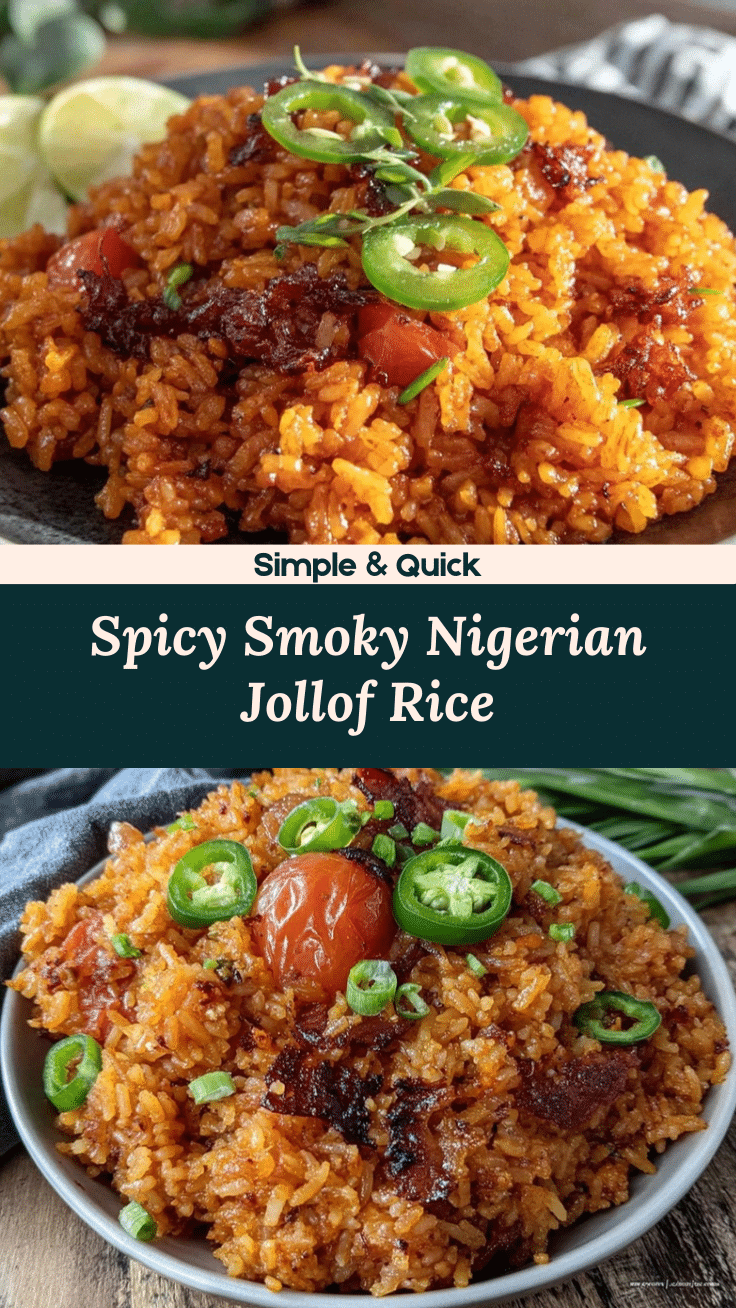
Flavorful Nigerian Jollof Rice Recipe with Spicy Scotch Bonnet Peppers Made Easy

A bold and smoky Nigerian Jollof Rice recipe featuring spicy Scotch bonnet peppers, perfect for gatherings or a cozy night in. This easy-to-make dish balances heat, depth, and comfort with simple ingredients.
- Prep Time: 10 minutes
- Cook Time: 55 minutes
- Total Time: 1 hour 5 minutes
- Yield: 4 servings 1x
- Category: Main Course
- Cuisine: Nigerian
Ingredients
- 2 cups long-grain parboiled rice (about 400g)
- 4 medium fresh tomatoes, blended or finely chopped
- 3 tablespoons tomato paste
- 2 large red bell peppers, blended
- 2–3 Scotch bonnet peppers (adjust to spice preference, use gloves when handling)
- 1 large onion, finely chopped
- 3 garlic cloves, minced
- 1-inch piece ginger, grated
- 1/4 cup vegetable oil (60ml), preferably sunflower or canola
- 2 cups chicken or vegetable broth (480ml)
- 2 bay leaves
- 1 teaspoon smoked paprika (optional but recommended)
- Salt, to taste
- Freshly ground black pepper, to taste
- 1 teaspoon fresh thyme, chopped (or 1/2 teaspoon dried)
Instructions
- Prepare your ingredients (10 minutes): Rinse the rice thoroughly under cold water until the water runs clear to remove excess starch. Set aside to drain. Blend the fresh tomatoes, red bell peppers, and Scotch bonnet peppers until smooth. Chop the onion, mince garlic, and grate ginger.
- Cook the base sauce (15 minutes): Heat the vegetable oil in a large heavy-bottomed pot over medium heat. Add the chopped onion and sauté until translucent and soft, about 5 minutes. Stir in the minced garlic and grated ginger, cooking for another 2 minutes until fragrant. Pour in the blended pepper mixture and tomato paste, stirring well. Let simmer gently, stirring occasionally, until the sauce thickens and the oil begins to separate from the tomato base, about 10 minutes.
- Add spices and broth (5 minutes): Stir in the bay leaves, smoked paprika, fresh thyme, salt, and black pepper. Pour in the chicken or vegetable broth and bring the mixture to a gentle boil.
- Cook the rice (30-35 minutes): Add the rinsed rice to the sauce and stir well to combine. Reduce heat to low, cover the pot tightly, and cook undisturbed for 25-30 minutes. Check at 25 minutes; if rice isn’t tender and liquid absorbed, cover and cook longer. If the bottom starts to stick or burn, lower heat and add a splash of water.
- Final touches (5 minutes): Fluff the rice gently with a fork to separate grains. Remove bay leaves. Taste and adjust seasoning with salt or black pepper as needed.
Notes
Use gloves when handling Scotch bonnet peppers to avoid irritation. For a milder heat, reduce the number of peppers or remove seeds before blending. To achieve a smoky crust (‘party rice’), increase heat to medium for the last 5 minutes of cooking, watching carefully to avoid burning. Rinsing rice well prevents gumminess. Fresh ripe tomatoes and peppers improve flavor and color. Leftovers taste better the next day and can be frozen for up to 1 month.
Nutrition
- Serving Size: 1 serving (approxima
- Calories: 350400
- Sugar: 57
- Fat: 810
- Saturated Fat: 12
- Carbohydrates: 65
- Fiber: 4
- Protein: 68
Keywords: Nigerian Jollof Rice, Jollof Rice recipe, Scotch bonnet peppers, spicy rice, African cuisine, easy Jollof rice, smoky rice dish