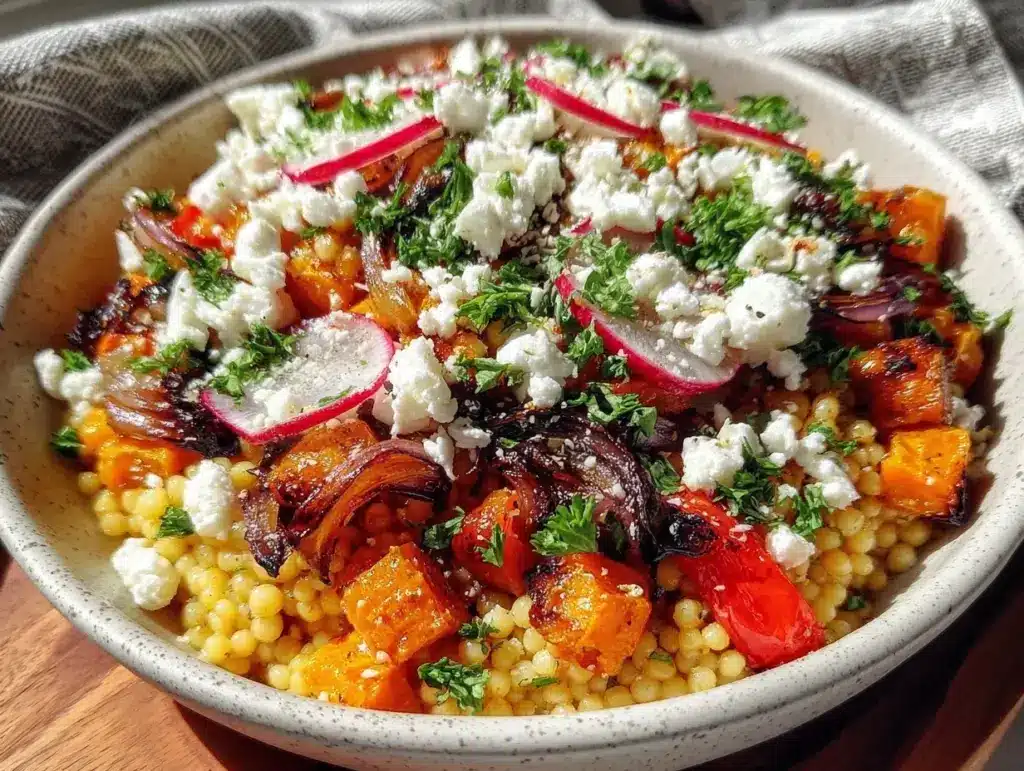
“I wasn’t expecting cooking advice from my plumber, but there I was, watching him fix my sink while he told me about his grandmother’s Israeli couscous salad recipe…” It was a Tuesday afternoon, and the kitchen was a mess—half the veggies spilled on the floor as I juggled chopping and listening. You know that moment when you think you’re just going to get a quick fix, and instead, you walk away with a new favorite recipe? Yeah, that was this salad.
Honestly, the way the warm roasted vegetables combined with the chewy yet tender pearls of Israeli couscous, all topped with salty, creamy feta, was something I hadn’t expected. The texture contrast was delightful—the slight crisp from the roasted veggies paired with the couscous’s buttery softness was a game changer. I still remember the cracked bowl I used that day, chipped on the rim, but somehow perfect for tossing everything together.
Maybe you’ve been there when a recipe just clicks, and suddenly your usual lunch routine feels jazzed up. This fresh Israeli couscous salad stayed with me because it felt both comforting and exciting, like a little celebration in a bowl. Plus, it’s one of those rare dishes that works great warm, room temperature, or chilled—which means leftovers? Yes, please. Let me tell you, once you try it, you’ll find yourself whipping it up more often than you expected.
Why You’ll Love This Fresh Israeli Couscous Salad Recipe
Having tested many grain salads, this one stands out for several reasons. It’s not just a salad; it’s a complete meal that’s easy to make and satisfying to eat. Here’s why this recipe has earned a permanent spot in my rotation:
- Quick & Easy: Ready in under 40 minutes—perfect for busy weeknights or when you’re craving something fresh but filling.
- Simple Ingredients: Uses pantry staples like Israeli couscous and basic veggies with an easy-to-find feta addition—no obscure markets required.
- Perfect for Any Occasion: Whether it’s a casual lunch, picnic, or potluck, this salad fits right in.
- Crowd-Pleaser: The combo of roasted veggies and tangy feta wins over picky eaters and foodies alike.
- Unbelievably Delicious: The roasted vegetables bring out natural sweetness and depth, while the couscous adds a chewy texture you don’t get with regular pasta or rice.
What makes this version different? I swear by roasting the vegetables just right—not too soft, with a hint of caramelization that brings out their best flavor. Tossing the warm veggies with the Israeli couscous allows the flavors to meld beautifully, and the final crumble of feta adds just the right amount of creaminess and saltiness. Trust me, this isn’t just another grain salad; it’s thoughtfully balanced and honestly a little addictive.
What Ingredients You Will Need
This fresh Israeli couscous salad uses simple, wholesome ingredients to deliver bold flavor and satisfying texture without the fuss. Most of these are pantry staples or seasonal vegetables you can swap around depending on what’s fresh.
- Israeli Couscous: 1 ½ cups (250g) – I recommend using Pearl Couscous by brands like Osem for the best texture.
- Vegetables for Roasting:
- 1 medium zucchini, cut into half-moons (adds moisture and mild sweetness)
- 1 red bell pepper, chopped (for vibrant color and sweetness)
- 1 small red onion, sliced into wedges (brings a mild, caramelized bite)
- 1 cup cherry tomatoes, halved (burst of juiciness)
- 8 oz (225g) cremini mushrooms, quartered (earthy depth)
- Olive oil: 3 tablespoons – use extra virgin for best flavor and health benefits.
- Garlic: 3 cloves, minced (fresh is key here for that punch).
- Lemon juice: 2 tablespoons, freshly squeezed (adds brightness).
- Fresh herbs: ¼ cup chopped parsley and 2 tablespoons chopped mint (optional but highly recommended for freshness).
- Feta cheese: ½ cup crumbled (about 100g) – I prefer creamy feta from a local deli or trusted brands like Dodoni.
- Salt & pepper: To taste – kosher salt works best for seasoning.
- Optional extras: A handful of toasted pine nuts or slivered almonds for crunch.
If you’re feeling adventurous, you can swap out vegetables—eggplant or asparagus work well in warmer months. For a dairy-free version, try vegan feta alternatives or simply omit the cheese.
Equipment Needed
- Baking sheet: For roasting the vegetables. I prefer rimmed ones to avoid spills.
- Medium saucepan: To cook the Israeli couscous perfectly. A heavy-bottomed pan helps prevent sticking.
- Mixing bowl: Large enough to toss the salad comfortably.
- Knife and cutting board: Sharp knife for chopping veggies quickly and safely.
- Measuring cups and spoons: For precise measurements—especially important for the lemon juice and oil balance.
- Wooden spoon or spatula: For stirring the couscous and mixing the salad without bruising ingredients.
If you don’t have a baking sheet, a cast iron skillet can be used for roasting on the stovetop, just watch the heat carefully to prevent burning. For budget-friendly options, any standard oven tray lined with parchment paper works fine.
Preparation Method
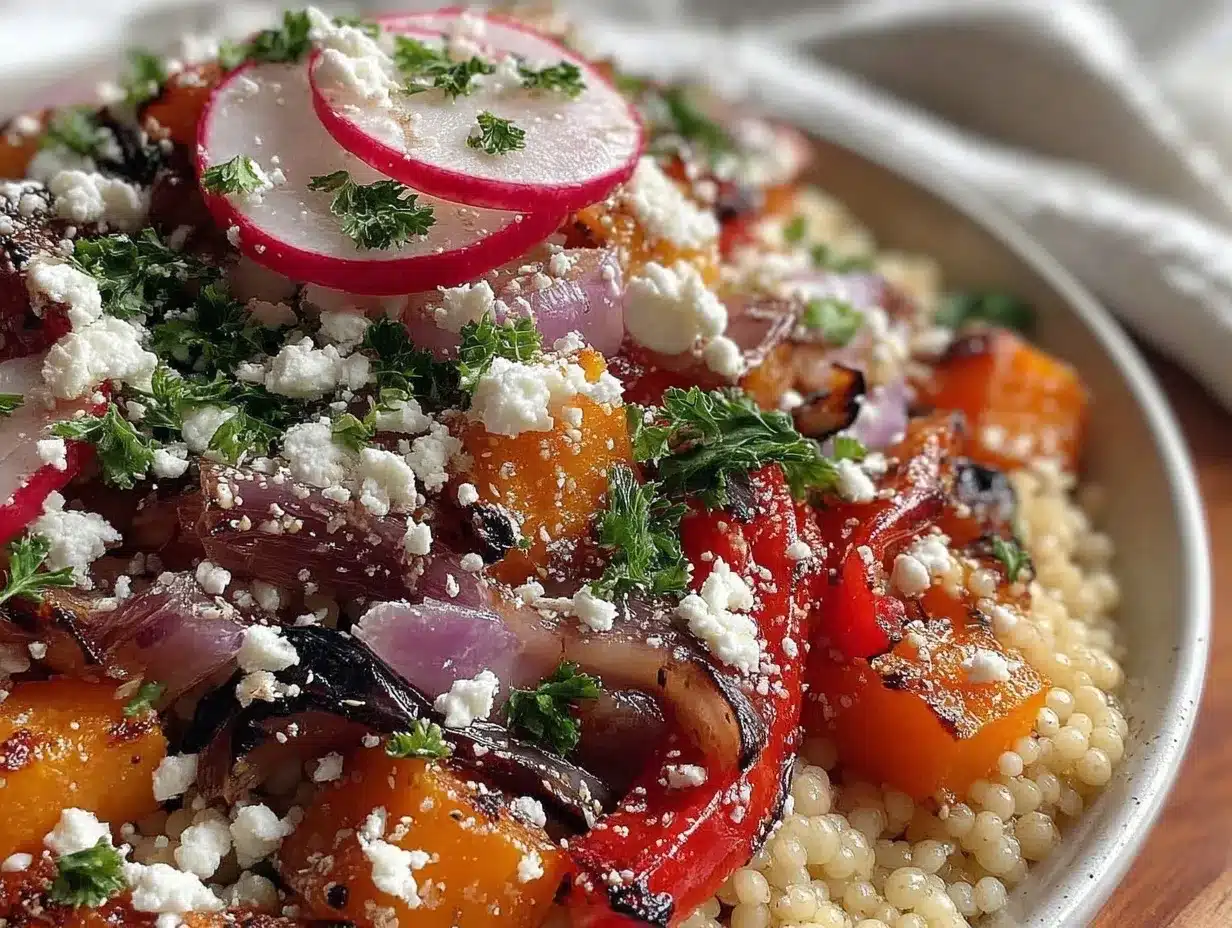
- Preheat and prep: Set your oven to 425°F (220°C). Line a baking sheet with parchment paper or lightly grease it to prevent sticking. This step usually takes about 10 minutes including chopping.
- Roast vegetables: Toss zucchini, bell pepper, red onion, cherry tomatoes, and mushrooms with 2 tablespoons of olive oil, minced garlic, salt, and pepper on the baking sheet. Spread evenly so they roast rather than steam. Roast for 20-25 minutes, stirring halfway, until veggies are tender and caramelized around the edges. You’re looking for a slight golden-brown color—don’t rush this part.
- Cook Israeli couscous: While veggies roast, bring 2 cups (475ml) of water to a boil in a medium saucepan. Add 1 ½ cups (250g) couscous and a pinch of salt. Reduce heat to medium and simmer uncovered for about 10 minutes, stirring occasionally until couscous is tender but still chewy. Drain any excess water if needed. Fluff with a fork and transfer to a large mixing bowl.
- Toss salad: Once vegetables are out of the oven and slightly cooled (around 5 minutes), add them to the couscous bowl. Drizzle with the remaining 1 tablespoon of olive oil and lemon juice. Add chopped parsley and mint, then toss gently to combine everything.
- Add feta and finish: Crumble feta cheese over the top and gently fold it in. Taste and adjust seasoning with salt and pepper if needed.
- Serve: You can enjoy the salad warm, at room temperature, or chilled. It keeps well for up to 3 days refrigerated, flavors deepen over time.
Pro tip: If you accidentally over-roast the veggies and they get too soft, add an extra handful of fresh herbs or a splash of lemon juice to brighten the flavors and add freshness back.
Cooking Tips & Techniques
Getting the perfect texture on both the couscous and roasted veggies is key here. Don’t rush the roasting—those caramelized edges make a huge flavor difference. I’ve learned the hard way that overcrowding the baking sheet leads to soggy veggies. Give them space to roast properly.
When cooking Israeli couscous, think of it like pasta: al dente is best. Overcooking makes it mushy, and undercooking leaves it hard. Stir occasionally to prevent clumping, and drain well if needed.
For the dressing, freshly squeezed lemon juice is non-negotiable. Bottled lemon juice just doesn’t cut it here. If you want a little twist, a teaspoon of honey or a pinch of sumac can add a subtle tanginess that’s delightful.
Multitasking tip: Start roasting the veggies first, then cook the couscous while they’re in the oven. This way, everything finishes around the same time, and you avoid overcooked or cold components.
Variations & Adaptations
- Grain swap: Use quinoa or bulgur instead of Israeli couscous for a gluten-free option.
- Veggie twists: Swap bell peppers for roasted sweet potatoes or butternut squash in fall for a cozy, sweet note.
- Protein boost: Add chickpeas or grilled chicken strips to make it more filling.
- Dairy-free: Replace feta with crumbled tofu marinated in lemon and herbs or omit cheese completely for a vegan version.
- Spicy kick: Toss in some finely diced jalapeño or sprinkle chili flakes before serving.
Personally, I once added roasted eggplant and a handful of pomegranate seeds for a Middle Eastern flair, which was a beautiful balance of smoky and sweet. Feel free to experiment based on what you love!
Serving & Storage Suggestions
This salad is best served slightly warm or at room temperature—it makes a perfect light lunch or a side dish alongside grilled meats. For serving, a wide shallow bowl helps show off the colorful veggies and crumbled feta.
Pair it with crisp white wine or a refreshing iced tea for a summer meal. It also shines alongside hummus and warm pita bread for a Mediterranean-themed spread.
Store leftovers in an airtight container in the refrigerator for up to 3 days. When reheating, warm gently in a microwave or on the stovetop, adding a splash of water or olive oil if it feels dry. Flavors often deepen after a day, so leftovers can be even better.
Nutritional Information & Benefits
Per serving (makes about 4 servings): Approximately 350 calories, with 12g protein, 45g carbohydrates, and 10g fat. The fresh vegetables add fiber and vitamins A and C, while the olive oil contributes heart-healthy fats.
Israeli couscous is made from semolina wheat, so it contains gluten; if you’re avoiding gluten, quinoa or rice-based options work well. Feta adds calcium and protein but watch the sodium if you’re salt-sensitive.
This salad offers a balanced, satisfying meal that’s relatively light but nourishing. It’s a great way to get your veggies and whole grains in a delicious package, and the herbs provide antioxidants and freshness that your body will thank you for.
Conclusion
This fresh Israeli couscous salad with roasted vegetables and feta is honestly one of those recipes you’ll want to keep coming back to. It’s colorful, flavorful, and versatile enough to suit your mood or ingredients on hand. Whether you’re new to couscous or a seasoned salad lover, this dish makes healthy eating feel easy and fun.
Feel free to tweak the veggies, herbs, or add your favorite protein to make it your own. Trust me, once you try it, you’ll understand why it stuck around in my kitchen (and hopefully yours too). Don’t forget to leave a comment sharing your favorite twists or how it turned out for you—I love hearing from fellow food explorers!
Happy cooking and enjoy every delicious bite!
FAQs About Fresh Israeli Couscous Salad with Roasted Vegetables and Feta
Can I make this salad ahead of time?
Yes! It actually tastes great after sitting in the fridge for a few hours or overnight, allowing the flavors to meld. Just add the feta right before serving to keep it fresh.
What’s the difference between Israeli couscous and regular couscous?
Israeli couscous, also called pearl couscous, is larger and has a chewy, pasta-like texture, while regular couscous is finer and fluffier. The Israeli variety holds up better in salads.
Can I use frozen vegetables instead of fresh for roasting?
Fresh veggies roast best because they caramelize well. Frozen veggies might release water and steam rather than roast, resulting in a softer texture.
How do I store leftovers? Will the salad get soggy?
Store in an airtight container in the fridge. The salad holds up well, but if it seems dry after refrigeration, stir in a little olive oil or lemon juice before serving.
Is this salad suitable for vegans?
You can make it vegan by omitting the feta or using a plant-based cheese alternative. The rest of the salad is naturally vegan-friendly.
Pin This Recipe!
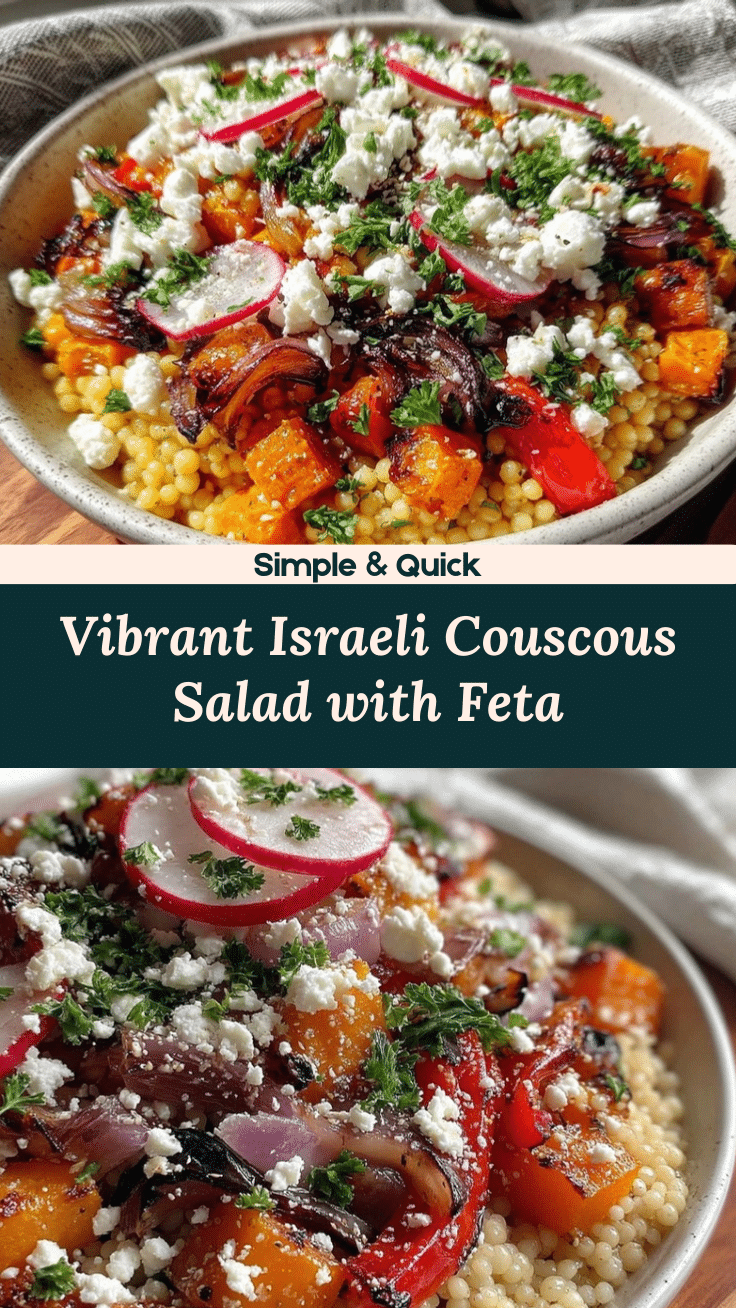
Fresh Israeli Couscous Salad Recipe Easy Roasted Veggies Feta Delight
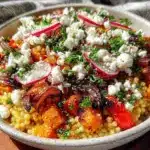
A flavorful and satisfying salad combining warm roasted vegetables with chewy Israeli couscous and creamy feta cheese. Perfect served warm, room temperature, or chilled.
- Prep Time: 10 minutes
- Cook Time: 30 minutes
- Total Time: 40 minutes
- Yield: 4 servings 1x
- Category: Main Course
- Cuisine: Mediterranean
Ingredients
- 1 ½ cups (250g) Israeli couscous (pearl couscous)
- 1 medium zucchini, cut into half-moons
- 1 red bell pepper, chopped
- 1 small red onion, sliced into wedges
- 1 cup cherry tomatoes, halved
- 8 oz (225g) cremini mushrooms, quartered
- 3 tablespoons extra virgin olive oil
- 3 cloves garlic, minced
- 2 tablespoons freshly squeezed lemon juice
- ¼ cup chopped parsley
- 2 tablespoons chopped mint (optional)
- ½ cup crumbled feta cheese (about 100g)
- Salt and pepper to taste
- Optional: toasted pine nuts or slivered almonds for crunch
Instructions
- Preheat oven to 425°F (220°C). Line a baking sheet with parchment paper or lightly grease it.
- Toss zucchini, bell pepper, red onion, cherry tomatoes, and mushrooms with 2 tablespoons olive oil, minced garlic, salt, and pepper on the baking sheet. Spread evenly.
- Roast vegetables for 20-25 minutes, stirring halfway, until tender and caramelized around edges.
- While vegetables roast, bring 2 cups (475ml) water to a boil in a medium saucepan. Add couscous and a pinch of salt. Reduce heat to medium and simmer uncovered for about 10 minutes, stirring occasionally until tender but chewy. Drain excess water if needed. Fluff with a fork and transfer to a large mixing bowl.
- Once vegetables are slightly cooled (about 5 minutes), add them to the couscous bowl. Drizzle with remaining 1 tablespoon olive oil and lemon juice. Add parsley and mint, then toss gently to combine.
- Crumble feta cheese over the top and gently fold in. Adjust seasoning with salt and pepper if needed.
- Serve warm, at room temperature, or chilled. Store leftovers in an airtight container in the refrigerator for up to 3 days.
Notes
Do not overcrowd the baking sheet to avoid soggy vegetables. Use freshly squeezed lemon juice for best flavor. Leftovers taste better after flavors meld overnight. For dairy-free, omit feta or use vegan cheese alternatives. Add toasted nuts for crunch. Roasting vegetables to slight caramelization enhances sweetness and depth.
Nutrition
- Serving Size: 1 serving (about 1/4
- Calories: 350
- Fat: 10
- Carbohydrates: 45
- Protein: 12
Keywords: Israeli couscous salad, roasted vegetables, feta cheese, easy salad, healthy lunch, Mediterranean salad, pearl couscous