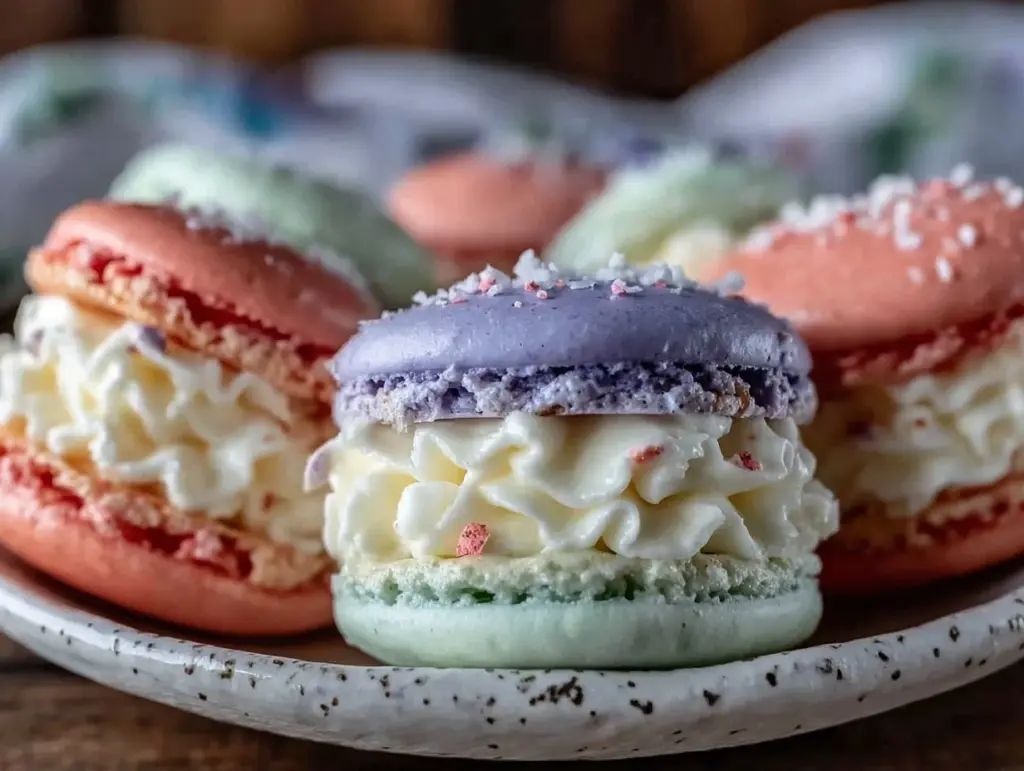
“Hand me that piping bag,” my quirky neighbor Alice said one sunny Saturday morning, her eyes gleaming with mischief. She was determined to teach me how to make these delicate little treats that looked like pastel Easter eggs—macarons with a lemon twist. Honestly, I wasn’t expecting much beyond a messy kitchen and a few broken shells. But three hours later, with flour dust still in the air and a slightly crooked piping bag in my hand, I was holding a tray of macarons that looked almost too pretty to eat.
Maybe you’ve been there—standing in your kitchen, doubting that this fussy French confection could ever come out right. The truth is, macarons can be tricky (I’ve had my fair share of cracked shells and sad, hollow centers). But this particular recipe, which includes a pastel lemon buttercream filling, kind of won me over for good. It’s the kind of recipe that sneaks up on you, turning a baking experiment into a small celebration on a plate.
That day, while Alice was distracted by a phone call, I almost gave up. The batter was a bit too runny, and I had forgotten the baking timer. But somehow, the eggs came out with a perfect “foot” and a tender bite. It wasn’t just about the look; the lemon buttercream filling added a bright, tangy contrast that made every bite feel like springtime itself. Since then, I keep making these for Easter and whenever I need a little pick-me-up (which, let’s face it, is often). Let me tell you why these aren’t just your average macarons.
Why You’ll Love This Recipe
This recipe has been tested more times than I can count—by me, my neighbor Alice, and even my notoriously picky cousin! Here’s why it stands out:
- Quick & Easy: You’ll have your macarons ready in just about 90 minutes, making them perfect for a last-minute Easter surprise or any spring gathering.
- Simple Ingredients: No need for exotic imports; everything comes from your pantry or local store, including fresh lemons for that zingy buttercream.
- Perfect for Easter & Springtime: The pastel colors and lemon flavor bring that fresh, festive vibe that everyone loves during the season.
- Crowd-Pleaser: Kids and adults alike are drawn to these little beauties. The texture is just right—light, crisp shells with a melt-in-your-mouth center.
- Unbelievably Delicious: The lemon buttercream filling adds a creamy, citrusy punch that balances the sweet almond shells perfectly.
What really makes this recipe different? It’s the pastel lemon buttercream filling. I blend in just the right amount of lemon zest and juice to keep the flavor bright without overpowering the delicate macaron shells. Plus, the piping technique I learned from Alice helps create that classic Easter egg shape that’s fun and festive. Honestly, this recipe isn’t just another macaron—it’s a springtime treat that feels special but is surprisingly easy once you get the hang of it.
What Ingredients You Will Need
This recipe uses simple, wholesome ingredients to deliver a bold flavor and satisfying texture without the fuss. Most of these are pantry staples, and you can swap a few to suit dietary needs or preferences.
- For the Macaron Shells:
- 100g (3.5 oz) almond flour, finely ground (Bob’s Red Mill works well for texture)
- 100g (3.5 oz) powdered sugar
- 75g (2.6 oz) egg whites, aged at room temperature (about 2 large eggs)
- 50g (1.8 oz) granulated sugar
- Pinch of cream of tartar (helps stabilize the meringue)
- Gel food coloring in pastel shades (pink, yellow, light blue, or lavender)
- For the Pastel Lemon Buttercream Filling:
- 120g (4.2 oz) unsalted butter, softened (I recommend Plugrá for a creamy finish)
- 150g (5.3 oz) powdered sugar, sifted
- Zest of 1 large lemon (organic, if possible)
- 1-2 tablespoons fresh lemon juice (to taste)
- 1 teaspoon vanilla extract
- Pinch of salt
- Optional: a few drops of yellow gel food coloring for pastel effect
Ingredient Tips: For best results, use almond flour with a fine, uniform grind to avoid gritty shells. Aging egg whites (letting them sit out for 24 hours covered) reduces moisture, improving meringue stability. If you want a gluten-free option, this recipe is naturally gluten-free! For a dairy-free buttercream, swap the butter with vegan margarine or coconut oil, but keep in mind the flavor and texture will shift slightly.
Equipment Needed
- Mixing Bowls: A large bowl for almond flour and powdered sugar, and a separate clean bowl for whipping egg whites.
- Electric Mixer or Stand Mixer: Essential for whipping stiff meringue. Hand mixers can work but require more effort.
- Sifter: To sift almond flour and powdered sugar for a smooth batter.
- Piping Bags and Round Nozzle Tips: Size 10-12 nozzle recommended for piping uniform egg shapes.
- Baking Sheets: Heavy-duty preferred to avoid warping.
- Parchment Paper or Silicone Baking Mats: For non-stick baking surface ensuring easy removal of shells.
- Spatula: For folding batter gently (a rubber or silicone spatula works best).
- Fine Zester or Microplane: For lemon zest in the buttercream.
I’ve tried using plastic piping bags, but the reusable silicone ones hold up better for the buttercream. If you don’t have a stand mixer, a hand mixer with a whisk attachment works fine, but it may take a few extra minutes to reach stiff peaks. For budget-friendly baking sheets, the non-stick ones from Wilton are reliable without breaking the bank.
Preparation Method
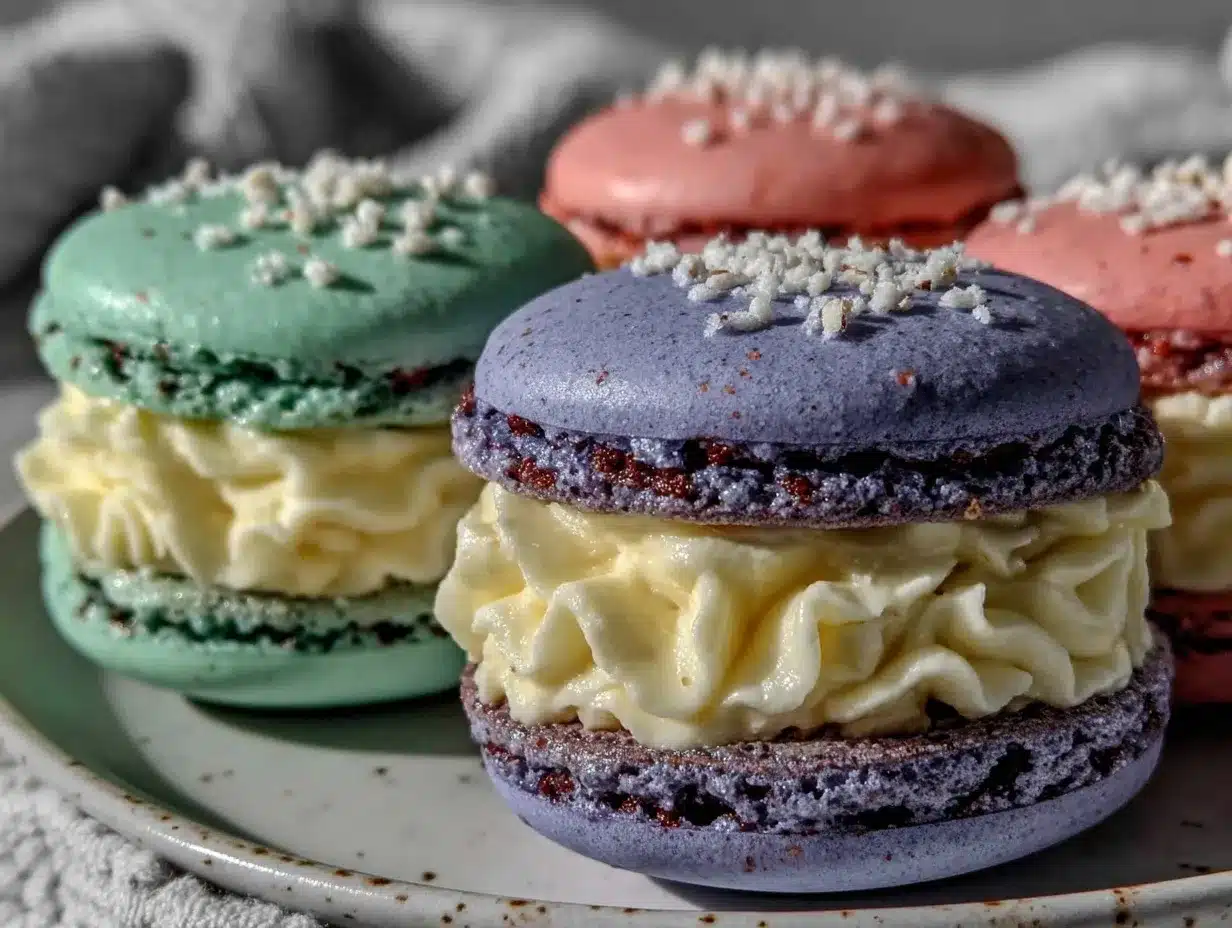
- Prep Your Ingredients (10 minutes): Sift together the almond flour and powdered sugar into a large bowl to remove lumps. Separate the egg whites and let them sit at room temperature for about 30 minutes before starting to whisk.
- Make the Meringue (10-15 minutes): In a clean bowl, beat the egg whites on medium speed until foamy. Add the cream of tartar, then gradually add granulated sugar, increasing speed to high. Whip until stiff, glossy peaks form—when you lift the whisk, the peaks should stand tall without drooping.
- Color the Meringue (optional): Divide the meringue into portions if using multiple colors. Gently fold in gel food coloring with a spatula until you achieve pastel shades. Be careful not to overmix here.
- Fold Dry Ingredients into Meringue (5 minutes): Add the sifted almond flour and powdered sugar mixture to the meringue in batches. Use a folding motion—cut through the center and scoop around the sides—until the batter flows slowly off the spatula in a thick ribbon. Avoid overmixing, or the batter will be too runny; undermixing leaves lumps.
- Pipe the Macarons (15 minutes): Transfer batter to piping bags fitted with round tips. On lined baking sheets, pipe oval shapes about 1.5 inches long, mimicking Easter eggs. Tap the baking sheet firmly on the counter a few times to release air bubbles. If bubbles appear, pop them with a toothpick.
- Rest the Shells (30-60 minutes): Let the piped shells sit at room temperature until a skin forms on the surface—when you lightly touch them, they shouldn’t stick to your finger. This step is crucial for developing the signature macaron “feet.”
- Bake the Macarons (12-15 minutes): Preheat oven to 300°F (150°C). Bake one sheet at a time on the middle rack for 12-15 minutes. The shells should have formed feet and be firm to touch but not browned. Let cool completely on the baking sheet.
- Prepare the Lemon Buttercream (10 minutes): Beat softened butter until creamy. Gradually add powdered sugar, lemon zest, lemon juice, vanilla, and salt. Mix until smooth and fluffy. Add a few drops of yellow food coloring for that perfect pastel lemon hue.
- Assemble the Macarons (10 minutes): Match shells of similar size. Pipe a ring of lemon buttercream around the edge of one shell, then fill the center lightly (to avoid oozing). Sandwich with the matching shell, pressing gently.
- Rest Assembled Macarons (24 hours recommended): Store in an airtight container in the fridge for 24 hours to let flavors meld and the texture soften. Bring to room temperature before serving.
Pro Tip: If your macaron shells crack or don’t develop feet, it’s often because they didn’t dry long enough or the oven temperature was too high. An oven thermometer can save you here. Also, aging egg whites helps reduce humidity, which is a common culprit for failed shells.
Cooking Tips & Techniques
Macarons can be intimidating, but a few tricks make a big difference. First, patience is your best friend. Don’t rush the resting step—this allows the skin to form and prevents cracking. I’ve learned the hard way that skipping this step leads to disappointment.
When folding the batter (the macaronage), aim for a consistency that flows like lava. This means it should fall slowly from the spatula in a thick ribbon. If it’s too stiff, your macarons will be lumpy; too runny, and they’ll spread too much. I usually count 50 folds, but it depends on your batter’s texture.
Temperature control is another key. My oven tends to run hot, so I lower the temperature slightly and use an oven thermometer. If you don’t have one, try baking a test batch. Also, avoid opening the oven door during baking to keep the heat steady.
For the lemon buttercream, use softened butter—not melted. If the butter is too soft or warm, the filling can be runny. If it’s too cold, it won’t mix well. I like to beat the butter on medium speed until creamy before adding sugar and lemon juice gradually.
Finally, assemble the macarons at least a few hours before serving, ideally overnight. This resting time lets the shells absorb some moisture from the buttercream, giving you that classic chewy interior with a crisp shell.
Variations & Adaptations
- Flavor Swaps: Try swapping the lemon zest and juice for orange or lime for a citrus twist. You can also add a touch of lavender extract to the buttercream for a floral note perfect for spring.
- Color Variations: Use different pastel gel colors to create a rainbow of Easter eggs. You could even pipe tiny speckles with a contrasting color for a quail egg effect.
- Dietary Adaptations: For a dairy-free version, substitute the butter in the filling with coconut oil or vegan butter. Use aquafaba (chickpea water) in place of egg whites, but be warned—it takes extra practice to get the meringue right with aquafaba.
- Different Fillings: Swap the lemon buttercream for raspberry jam or white chocolate ganache for a richer bite. I once tried a cream cheese frosting with a hint of vanilla, which was a delightful surprise.
Serving & Storage Suggestions
Serve these Easter egg macarons at room temperature to enjoy their delicate texture and vibrant flavors. They make a charming centerpiece for any pastel-themed dessert table or a thoughtful gift wrapped in a pretty box.
Pair them with a light cup of tea—Earl Grey or green tea work beautifully—or a sparkling lemonade to echo the citrus notes. They also complement fresh berries or a simple fruit salad.
Store macarons in an airtight container in the refrigerator for up to 5 days. If you need to keep them longer, freeze them in a single layer, wrapped well, for up to 2 months. To thaw, place them in the fridge overnight, then bring to room temperature before serving.
Macarons tend to soften over time as the filling’s moisture seeps into the shells, which many find perfect for that chewy center texture. So, if you prefer a crisp bite, enjoy them within a few hours of assembly.
Nutritional Information & Benefits
Each macaron (about 25g) contains approximately:
| Calories | 95 |
|---|---|
| Fat | 6g |
| Carbohydrates | 9g |
| Protein | 2g |
| Sugar | 7g |
Almond flour offers a good source of vitamin E and healthy fats, which support heart health. The fresh lemon zest adds vitamin C and antioxidants, giving the buttercream a slight nutritional boost beyond just sweetness.
This recipe is naturally gluten-free and can be adapted for dairy-free diets. Keep in mind the sugar content, especially if you’re watching intake, but honestly, these macarons are a treat worth savoring occasionally.
Conclusion
Perfect Easter Egg Macarons with Pastel Lemon Buttercream are more than just a pretty dessert—they’re a celebration of patience, technique, and a little bit of spring magic. Whether you’re new to macarons or have tried and stumbled before, this recipe offers a reliable path to success with flavors that brighten the table and lift the spirit.
Don’t be afraid to tweak the colors, fillings, or flavors to match your style or dietary needs. I love how these macarons bring a touch of joy to my kitchen, and I hope they do the same for you.
If you try this recipe, please share your experience or any fun twists you added in the comments. Happy baking, and may your Easter be as sweet and colorful as these little pastel eggs!
FAQs
What if my macaron shells crack during baking?
Cracking usually means the shells didn’t dry long enough before baking or the oven temperature was too high. Let them rest until a skin forms and use an oven thermometer to check your heat.
Can I make the macarons without a stand mixer?
Yes, a hand mixer with a whisk attachment works, but it may take longer to reach stiff peaks. Just be patient and make sure your bowl and whisk are clean and dry.
How do I know when the macaron batter is properly mixed?
When you lift the spatula, the batter should flow off slowly in a thick ribbon, like lava. It shouldn’t be too runny or too stiff.
Can I prepare the lemon buttercream in advance?
Absolutely! Make the buttercream a day ahead and store it in the fridge. Bring it to room temperature and whip again before assembling for the best texture.
How should I store leftover macarons?
Keep them in an airtight container in the fridge for up to 5 days or freeze for longer storage. Thaw in the fridge overnight before enjoying.
Pin This Recipe!
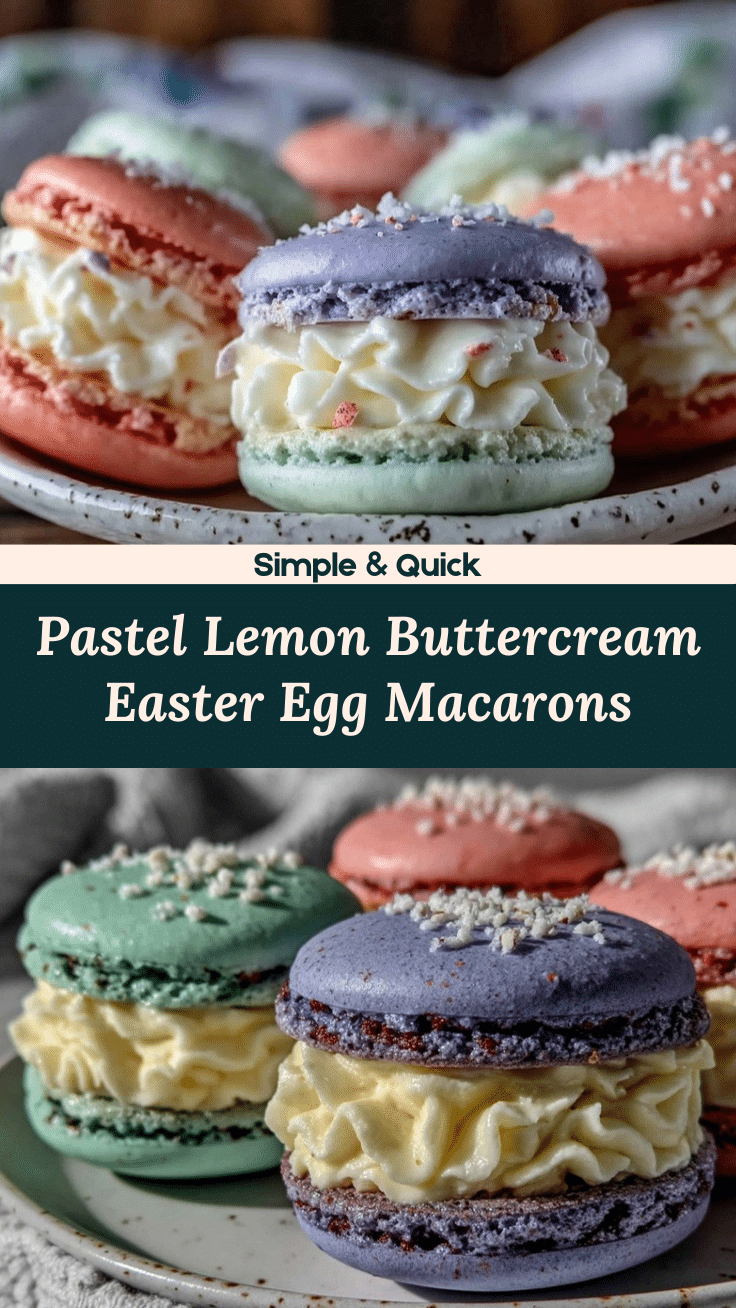
Perfect Easter Egg Macarons Recipe with Easy Pastel Lemon Buttercream Filling
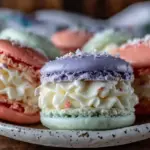
Delicate pastel Easter egg-shaped macarons with a bright, tangy lemon buttercream filling. This recipe is quick, easy, and perfect for spring celebrations.
- Prep Time: 40 minutes
- Cook Time: 15 minutes
- Total Time: 90 minutes
- Yield: 20-24 macarons (about 10-12 sandwiches) 1x
- Category: Dessert
- Cuisine: French
Ingredients
- 100g (3.5 oz) almond flour, finely ground
- 100g (3.5 oz) powdered sugar
- 75g (2.6 oz) egg whites, aged at room temperature (about 2 large eggs)
- 50g (1.8 oz) granulated sugar
- Pinch of cream of tartar
- Gel food coloring in pastel shades (pink, yellow, light blue, or lavender)
- 120g (4.2 oz) unsalted butter, softened
- 150g (5.3 oz) powdered sugar, sifted
- Zest of 1 large lemon
- 1–2 tablespoons fresh lemon juice
- 1 teaspoon vanilla extract
- Pinch of salt
- Optional: a few drops of yellow gel food coloring
Instructions
- Sift together the almond flour and powdered sugar into a large bowl to remove lumps. Separate the egg whites and let them sit at room temperature for about 30 minutes before starting to whisk.
- In a clean bowl, beat the egg whites on medium speed until foamy. Add the cream of tartar, then gradually add granulated sugar, increasing speed to high. Whip until stiff, glossy peaks form.
- Divide the meringue into portions if using multiple colors. Gently fold in gel food coloring with a spatula until you achieve pastel shades.
- Add the sifted almond flour and powdered sugar mixture to the meringue in batches. Fold gently until the batter flows slowly off the spatula in a thick ribbon.
- Transfer batter to piping bags fitted with round tips. Pipe oval shapes about 1.5 inches long on lined baking sheets. Tap the baking sheet to release air bubbles and pop any bubbles with a toothpick.
- Let the piped shells sit at room temperature for 30-60 minutes until a skin forms on the surface.
- Preheat oven to 300°F (150°C). Bake one sheet at a time on the middle rack for 12-15 minutes. Let cool completely on the baking sheet.
- Beat softened butter until creamy. Gradually add powdered sugar, lemon zest, lemon juice, vanilla, and salt. Mix until smooth and fluffy. Add yellow food coloring if desired.
- Match shells of similar size. Pipe a ring of lemon buttercream around the edge of one shell, then fill the center lightly. Sandwich with the matching shell, pressing gently.
- Store assembled macarons in an airtight container in the fridge for 24 hours to let flavors meld and texture soften. Bring to room temperature before serving.
Notes
Use almond flour with a fine, uniform grind for smooth shells. Age egg whites for 24 hours to reduce moisture and improve meringue stability. Let piped shells rest until a skin forms to develop feet. Use an oven thermometer to maintain correct baking temperature. For dairy-free buttercream, substitute butter with vegan margarine or coconut oil. Assemble macarons at least a few hours before serving, ideally overnight, for best texture.
Nutrition
- Serving Size: 1 macaron sandwich (
- Calories: 95
- Sugar: 7
- Fat: 6
- Carbohydrates: 9
- Protein: 2
Keywords: macarons, Easter, lemon buttercream, pastel macarons, French dessert, spring dessert, gluten-free, lemon macarons