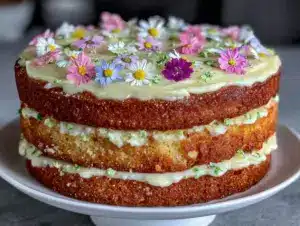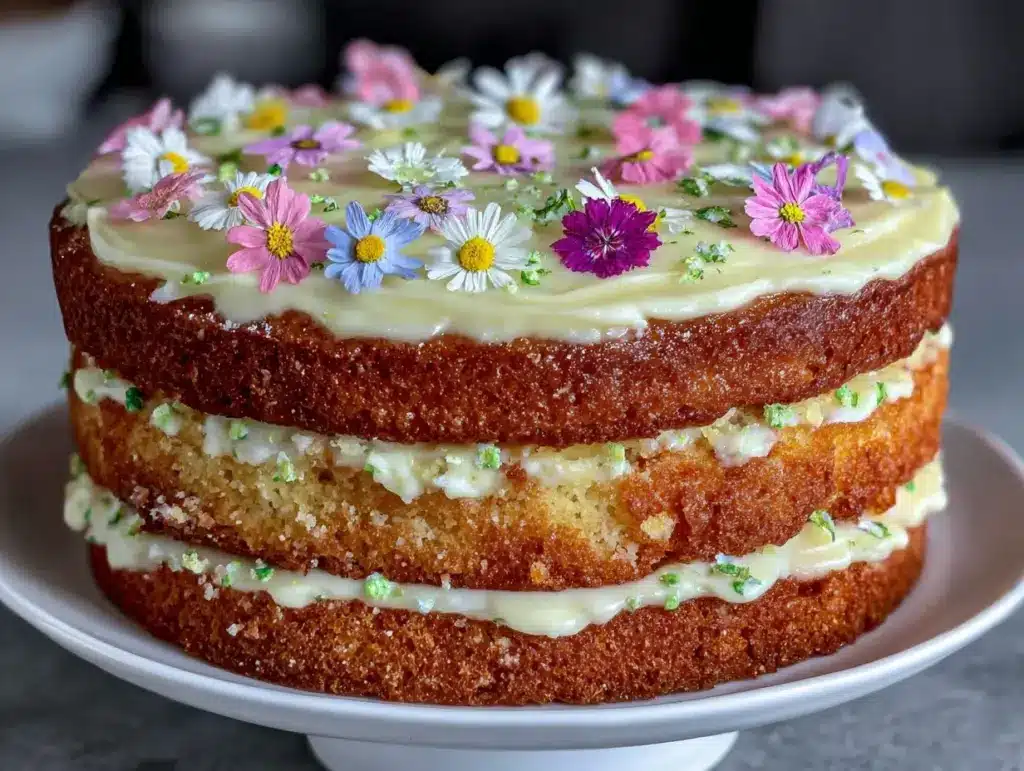
“I wasn’t expecting to find a lemon elderflower cake recipe tucked away in the back of a dusty community garden newsletter, but there it was—scribbled in the margins, next to a pressed violet petal. It was a rainy Thursday afternoon, and honestly, I was just looking for something to brighten the gloom. The idea of a naked cake adorned with delicate edible flowers felt like the kind of fresh twist that could turn any ordinary day into a celebration.
That first attempt was a bit of a mess—flour dust everywhere, a cracked mixing bowl, and an elderflower syrup spill that almost sent me running for takeout. Yet, the taste? Oh, that zingy lemon paired with the subtle floral notes was something else. It reminded me of spring afternoons spent in my neighbor’s garden, where she’d casually hand me a sprig of fresh elderflower, insisting it was the secret to her famous lemonade.
You know that feeling when a recipe surprises you so much that you keep coming back to it, tweaking, tasting, and sharing? That’s exactly what happened here. Maybe you’ve been there—chasing that perfect balance of bright, fresh flavors wrapped in simple, rustic beauty. This perfect lemon elderflower naked cake with edible flowers isn’t just a dessert; it’s a little moment of joy, a slice of sunshine on a plate, and a story waiting to be told at your next gathering.
Why You’ll Love This Recipe
This lemon elderflower naked cake recipe has quickly become a favorite, and I’m excited to share why it might just become yours too:
- Quick & Easy: You can whip this up in under two hours, perfect for those last-minute celebrations or spontaneous baking urges.
- Simple Ingredients: Nothing fancy here—just pantry staples and a few fresh touches like lemon zest and elderflower cordial.
- Perfect for Special Occasions: Whether it’s a spring brunch, a bridal shower, or a garden party, this cake brings effortless elegance to the table.
- Crowd-Pleaser: The light, tangy lemon combined with the subtle floral elderflower flavor gets rave reviews every time—kids and adults alike can’t stop at one slice.
- Unbelievably Delicious: The naked cake style means you get that rustic charm with just enough frosting to keep things moist and flavorful without overwhelming the layers.
What sets this recipe apart? Honestly, it’s the way the elderflower syrup is folded into the frosting, giving it that uniquely floral touch without being overpowering. Plus, the edible flowers aren’t just decoration—they add a fresh, natural aroma and a delicate crunch that turns every bite into a tiny celebration.
It’s not just a cake; it’s a little bit of springtime magic you can make in your own kitchen. Trust me, once you try it, you’ll find yourself making excuses to bake it again and again.
What Ingredients You Will Need
This recipe uses straightforward, wholesome ingredients that combine to create a bright, fresh flavor profile with a light, fluffy texture. Most of these are pantry basics, with a few fresh elements to keep things lively.
- For the Cake Layers:
- All-purpose flour (2 ½ cups / 320 grams) – I prefer King Arthur for consistent results
- Baking powder (2 ½ teaspoons) – fresh is key for good rise
- Salt (½ teaspoon)
- Unsalted butter (1 cup / 226 grams), softened – use high-quality butter for best flavor
- Granulated sugar (1 ¾ cups / 350 grams)
- Large eggs (4), room temperature
- Whole milk (1 cup / 240 ml), room temperature – you can swap with almond milk for dairy-free
- Fresh lemon zest (2 tablespoons) – finely grated for that zingy brightness
- Fresh lemon juice (¼ cup / 60 ml)
- For the Elderflower Syrup:
- Elderflower cordial (½ cup / 120 ml) – I recommend Belvoir for authentic flavor
- Water (½ cup / 120 ml)
- Sugar (¼ cup / 50 grams)
- For the Frosting:
- Unsalted butter (1 cup / 226 grams), softened
- Powdered sugar (4 cups / 480 grams), sifted
- Heavy cream (¼ cup / 60 ml)
- Elderflower cordial (2 tablespoons)
- Fresh lemon juice (1 tablespoon)
- For Decoration:
- Edible flowers (a mix of violets, pansies, nasturtiums) – sourced from a trusted organic supplier
- Additional lemon zest for garnish
Quick tip: If you can’t find elderflower cordial, you can make a simple syrup with dried elderflowers from a specialty shop, but the cordial really brings that authentic, sweet floral note without fuss.
Equipment Needed
- Two 8-inch (20 cm) round cake pans – I use non-stick with removable bottoms, but greased and lined pans work just fine
- Mixing bowls – at least two, medium and large sizes
- Electric mixer or stand mixer – honestly, it makes life easier, but a sturdy whisk and some muscle will do
- Zester or microplane – for that fresh lemon zest
- Measuring cups and spoons – precise measurements help keep the cake tender
- Cooling racks – essential to avoid soggy bottoms
- Serrated knife – for leveling cake layers if needed
- Offset spatula or butter knife – for frosting the cake evenly
- Basting brush – to soak the elderflower syrup into the cake layers easily
If you don’t have a stand mixer, a hand mixer will work fine. Just be ready for a slightly longer mixing time. Also, I once tried skipping the cooling rack and learned the hard way that cakes get soggy fast if left on a flat surface while cooling!
Preparation Method
- Prepare the Elderflower Syrup (10 minutes)
In a small saucepan, combine elderflower cordial, water, and sugar. Bring to a gentle simmer over medium heat, stirring until the sugar dissolves completely. Remove from heat and let cool. This syrup will soak into your cake layers, keeping them moist and fragrant. - Preheat and Prep Pans (5 minutes)
Set your oven to 350°F (175°C). Grease two 8-inch round cake pans with butter or non-stick spray, then line the bottoms with parchment paper. This helps the cakes slide out smoothly. - Mix Dry Ingredients (5 minutes)
In a bowl, whisk together the flour, baking powder, and salt. Set aside. - Cream Butter and Sugar (5 minutes)
In your mixer bowl, beat the softened butter and granulated sugar on medium speed until light and fluffy, about 3-4 minutes. You want it pale and airy to give the cake a tender crumb. - Add Eggs and Lemon Flavor (5 minutes)
Beat in the eggs one at a time, mixing well after each addition. Stir in the lemon zest and fresh lemon juice. At this stage, the batter will smell wonderfully fresh and citrusy. - Combine Wet and Dry Ingredients (5 minutes)
Alternately add the dry ingredients and milk to the butter mixture, beginning and ending with the dry. Mix on low speed just until combined—overmixing can make the cake dense. - Pour and Bake (30-35 minutes)
Divide the batter evenly between the two prepared pans. Smooth the tops gently with a spatula. Bake for 30 to 35 minutes, or until a toothpick inserted into the center comes out clean. The cakes should be golden and spring back when lightly pressed. - Cool and Remove from Pans (15-20 minutes)
Let the cakes cool in the pans for 10 minutes, then turn out onto cooling racks. Peel off the parchment paper and allow cakes to cool completely before assembling. - Make the Frosting (10 minutes)
Beat softened butter until smooth and creamy. Gradually add powdered sugar, mixing on low speed to avoid a powdery cloud. Pour in heavy cream, elderflower cordial, and lemon juice. Increase speed to medium-high and beat until fluffy and spreadable. Taste and adjust elderflower or lemon if needed. - Assemble the Naked Cake (15 minutes)
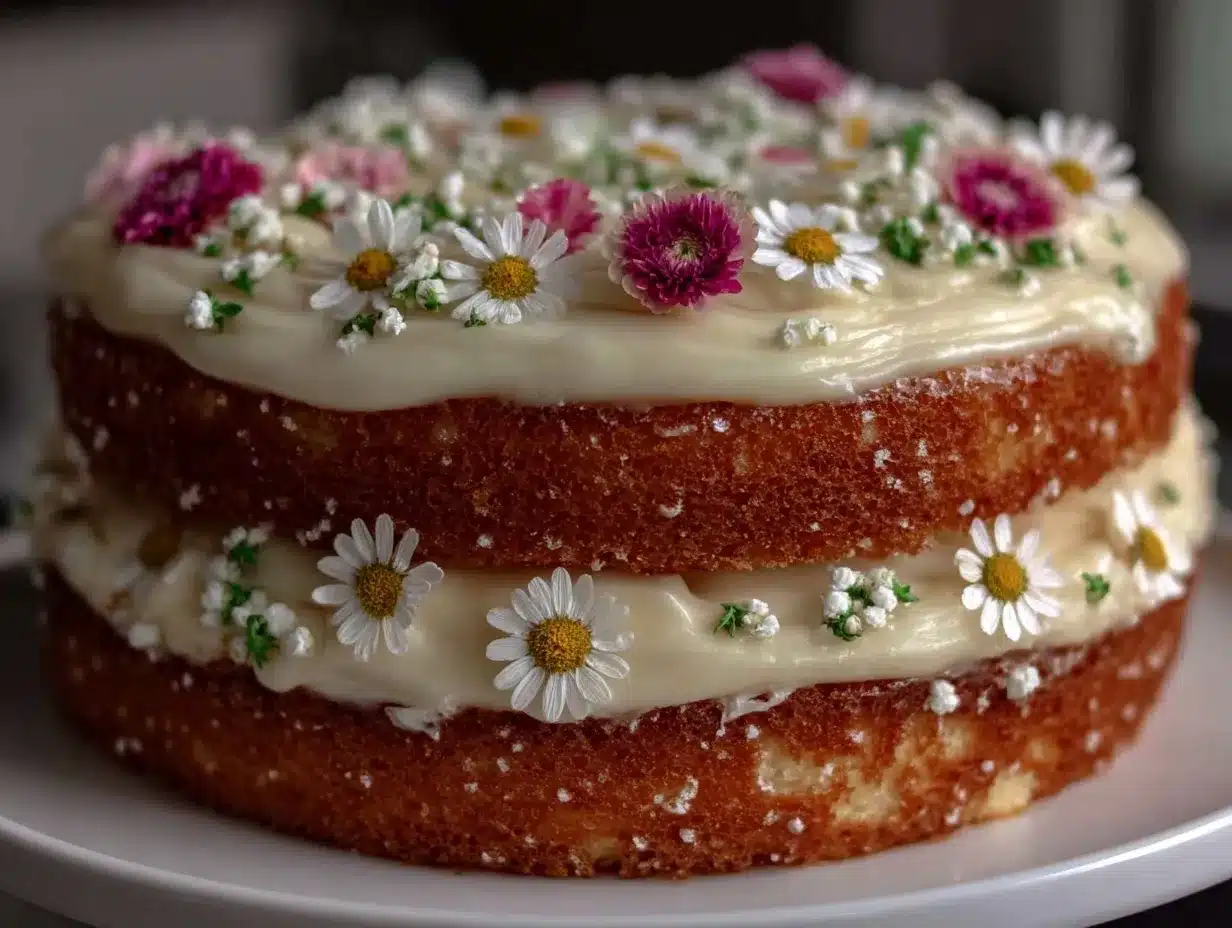
Place one cake layer on your serving plate. Using a basting brush, gently soak the top with elderflower syrup. Spread a generous but thin layer of frosting over it. Add the second cake layer and repeat soaking and frosting on top and sides, keeping frosting thin to maintain that rustic naked look. - Decorate (5 minutes)
Carefully arrange edible flowers and sprinkle additional lemon zest on top. Keep it natural and loose for that charming, effortless look.
Note: If your cake layers domed during baking, use a serrated knife to level them before assembling. Also, I once forgot to cool the cakes fully and ended up with melting frosting—lesson learned!
Cooking Tips & Techniques
Making a lemon elderflower naked cake is easier than it looks, but a few tricks can really help you nail it every time.
- Butter Temperature Matters: Softened butter (not melted) traps air when creamed with sugar, giving you a lighter cake. If your kitchen’s warm, a quick chill in the fridge helps.
- Don’t Overmix Batter: Mixing just until ingredients combine prevents a tough crumb. When flour meets liquid, gluten forms—too much and your cake gets chewy.
- Use Fresh Lemons: The zest is where the magic happens. Avoid pre-grated or dried zest—it lacks that zingy brightness.
- Soak Layers Generously: Elderflower syrup keeps the cake moist and intensifies flavor. Use a basting brush to control the amount and avoid sogginess.
- Chill Frosting if Too Soft: If your frosting feels runny, pop it in the fridge for 10-15 minutes and then whip it again.
- Edible Flowers Safety: Only use flowers labeled edible and pesticide-free. Nasturtiums and pansies are usually safe bets.
- Multitasking Tip: While cakes bake, prepare the syrup and frosting to save time.
Honestly, I ruined my first frosting batch by adding too much liquid—so start slow, and taste as you go. Your patience will pay off with that perfectly balanced floral-lemon flavor.
Variations & Adaptations
- Gluten-Free Version: Swap all-purpose flour with a gluten-free blend like Bob’s Red Mill 1-to-1 baking flour. Add a teaspoon of xanthan gum if your blend doesn’t include it for better texture.
- Vegan Adaptation: Replace butter with vegan margarine, eggs with flax eggs (1 tablespoon ground flaxseed + 3 tablespoons water per egg), and milk with plant-based milk. Use dairy-free elderflower cordial and coconut cream for frosting.
- Seasonal Twist: Swap edible flowers for fresh berries in summer or candied citrus peel in winter. A lavender syrup can substitute elderflower for a different floral note.
- Cooking Method: Try baking in three smaller tins for a taller cake or use cupcake tins for individual servings. Adjust baking time accordingly.
- Flavor Boost: Add a teaspoon of vanilla extract to the frosting or a pinch of cardamom to the cake batter for subtle complexity.
One time, I tried adding fresh rosemary to the syrup for a savory hint, and it surprisingly worked well with the lemon. Feel free to experiment—but maybe keep a backup cake handy!
Serving & Storage Suggestions
This lemon elderflower naked cake is best served at room temperature, about 30 minutes out of the fridge. The floral aroma really shines when the cake isn’t cold.
Pair it with a cup of Earl Grey tea or a crisp glass of sparkling wine to complement those citrus and elderflower notes. For a full spread, serve alongside fresh fruit or a light salad.
To store, cover the cake loosely with plastic wrap or place in a cake dome. It keeps well in the fridge for up to 3 days. If you want to freeze, wrap tightly in plastic wrap and foil—freeze for up to 2 months. Thaw overnight in the fridge and bring to room temperature before serving.
Reheating isn’t necessary, but if you prefer, a few seconds in the microwave (covered) can soften the frosting slightly. Over time, the flavors actually meld and deepen, making leftovers even better the next day.
Nutritional Information & Benefits
This cake offers a fresh take on indulgence with some nutritional perks:
- Approximate calories per slice (1/12th): 320 kcal
- Contains moderate amounts of protein from eggs and butter
- Lemon zest and juice provide vitamin C and antioxidants
- Elderflower is traditionally known for its anti-inflammatory properties
- Made with real butter and sugar, so enjoy in moderation as a treat
- Gluten-free and vegan variations make it accessible for different dietary needs
Personally, I appreciate that this cake feels lighter than a traditional butter-heavy dessert, thanks to the naked style and bright lemon flavor. It’s indulgence without the usual heaviness.
Conclusion
If you’re after a cake that’s as charming as it is delicious, this perfect lemon elderflower naked cake with edible flowers is worth making. It’s a celebration of fresh, natural flavors paired with a rustic, homemade look that makes every slice feel special.
Feel free to tweak the flower selection or syrup intensity to suit your taste. Honestly, it’s one of those recipes that invites creativity and a little bit of kitchen playfulness.
I keep coming back to this cake because it reminds me of sunny afternoons and simple joys—something I hope you’ll experience too. When you make it, drop a comment or share your own variations—I’d love to hear how it turns out!
Go on, treat yourself and those around you to something sweet, bright, and a bit unexpected.
FAQs
Can I make this cake ahead of time?
Yes! You can bake the cake layers a day in advance and store them wrapped tightly at room temperature. Assemble and decorate the day you plan to serve for best freshness.
Are all flowers safe to use as decoration?
Only use edible flowers from trusted sources. Common safe choices include pansies, nasturtiums, violets, and calendula. Avoid any flowers treated with pesticides or unknown varieties.
What if I don’t have elderflower cordial?
You can substitute with simple syrup infused with dried elderflowers or use a mild floral syrup like lavender, but the flavor will vary slightly.
How do I prevent the frosting from melting?
Ensure your butter is softened but not warm, and chill the frosting if it becomes too soft. Keep the cake refrigerated until serving if your kitchen is warm.
Can I use this recipe to make cupcakes?
Absolutely! Use cupcake liners in a muffin tin, fill about two-thirds full, and bake for 18-22 minutes. Adjust frosting quantities accordingly.
Pin This Recipe!
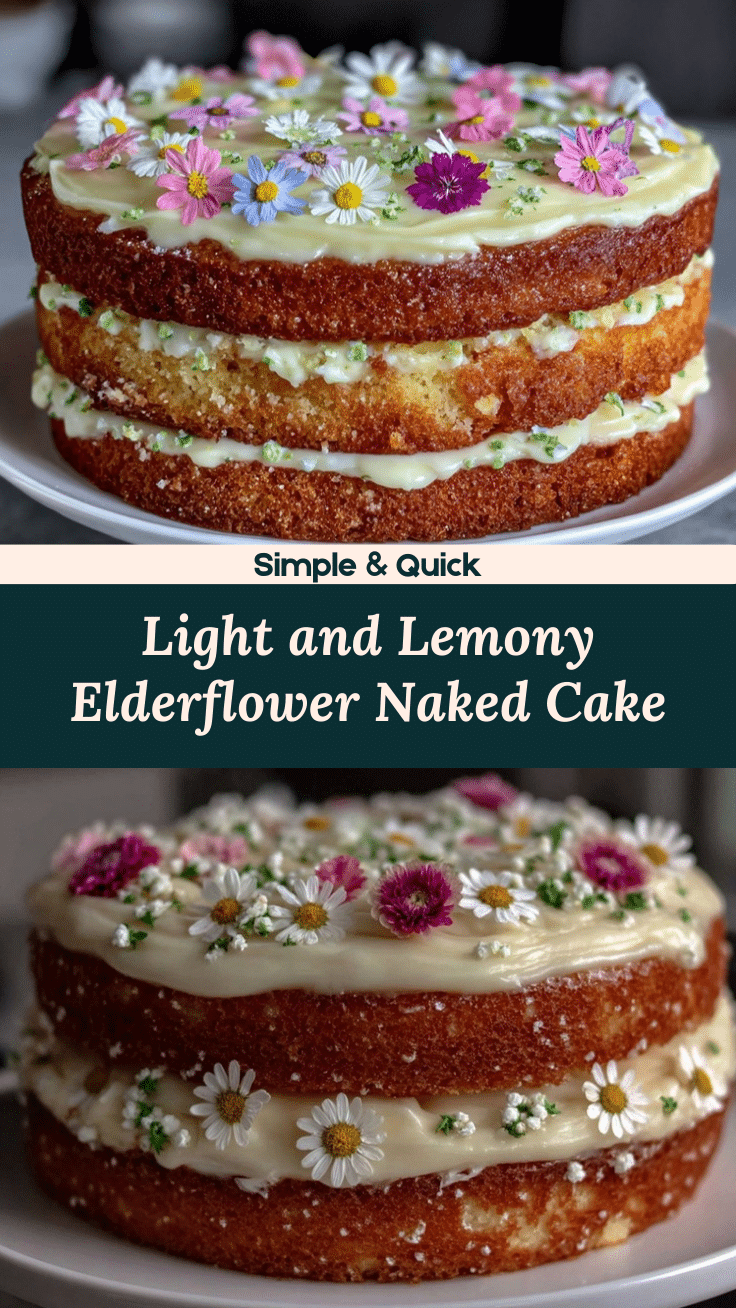
Perfect Lemon Elderflower Naked Cake Recipe with Edible Flowers
A bright and fresh lemon elderflower naked cake adorned with delicate edible flowers, perfect for special occasions and easy to make with simple ingredients.
- Prep Time: 30 minutes
- Cook Time: 35 minutes
- Total Time: 1 hour 5 minutes
- Yield: 12 servings 1x
- Category: Dessert
- Cuisine: British
Ingredients
- 2 ½ cups (320 grams) all-purpose flour
- 2 ½ teaspoons baking powder
- ½ teaspoon salt
- 1 cup (226 grams) unsalted butter, softened
- 1 ¾ cups (350 grams) granulated sugar
- 4 large eggs, room temperature
- 1 cup (240 ml) whole milk, room temperature (can substitute almond milk for dairy-free)
- 2 tablespoons fresh lemon zest, finely grated
- ¼ cup (60 ml) fresh lemon juice
- ½ cup (120 ml) elderflower cordial
- ½ cup (120 ml) water
- ¼ cup (50 grams) sugar
- 1 cup (226 grams) unsalted butter, softened (for frosting)
- 4 cups (480 grams) powdered sugar, sifted
- ¼ cup (60 ml) heavy cream
- 2 tablespoons elderflower cordial (for frosting)
- 1 tablespoon fresh lemon juice (for frosting)
- Edible flowers (a mix of violets, pansies, nasturtiums) for decoration
- Additional lemon zest for garnish
Instructions
- Prepare the Elderflower Syrup: In a small saucepan, combine elderflower cordial, water, and sugar. Bring to a gentle simmer over medium heat, stirring until the sugar dissolves completely. Remove from heat and let cool.
- Preheat oven to 350°F (175°C). Grease two 8-inch round cake pans and line bottoms with parchment paper.
- Mix dry ingredients: whisk together flour, baking powder, and salt in a bowl; set aside.
- Cream butter and sugar: beat softened butter and granulated sugar on medium speed until light and fluffy, about 3-4 minutes.
- Add eggs one at a time, mixing well after each addition. Stir in lemon zest and fresh lemon juice.
- Alternately add dry ingredients and milk to the butter mixture, beginning and ending with dry ingredients. Mix on low speed just until combined.
- Divide batter evenly between prepared pans and smooth tops. Bake for 30-35 minutes or until a toothpick inserted in the center comes out clean.
- Cool cakes in pans for 10 minutes, then turn out onto cooling racks. Remove parchment paper and cool completely.
- Make frosting: beat softened butter until smooth. Gradually add powdered sugar on low speed. Add heavy cream, elderflower cordial, and lemon juice. Beat on medium-high until fluffy and spreadable.
- Assemble cake: place one cake layer on serving plate. Brush top with elderflower syrup. Spread a thin layer of frosting. Add second layer and repeat soaking and frosting on top and sides.
- Decorate with edible flowers and sprinkle additional lemon zest on top.
Notes
Use softened butter, not melted, for a lighter cake. Avoid overmixing batter to prevent toughness. Use fresh lemon zest for best flavor. Soak cake layers generously with elderflower syrup but avoid sogginess. Chill frosting if too soft. Only use edible, pesticide-free flowers. You can make the cake layers a day ahead and assemble before serving.
Nutrition
- Serving Size: 1 slice (1/12th of c
- Calories: 320
- Sugar: 30
- Sodium: 150
- Fat: 15
- Saturated Fat: 9
- Carbohydrates: 45
- Fiber: 1
- Protein: 4
Keywords: lemon cake, elderflower cake, naked cake, edible flowers, spring dessert, easy cake recipe, floral cake