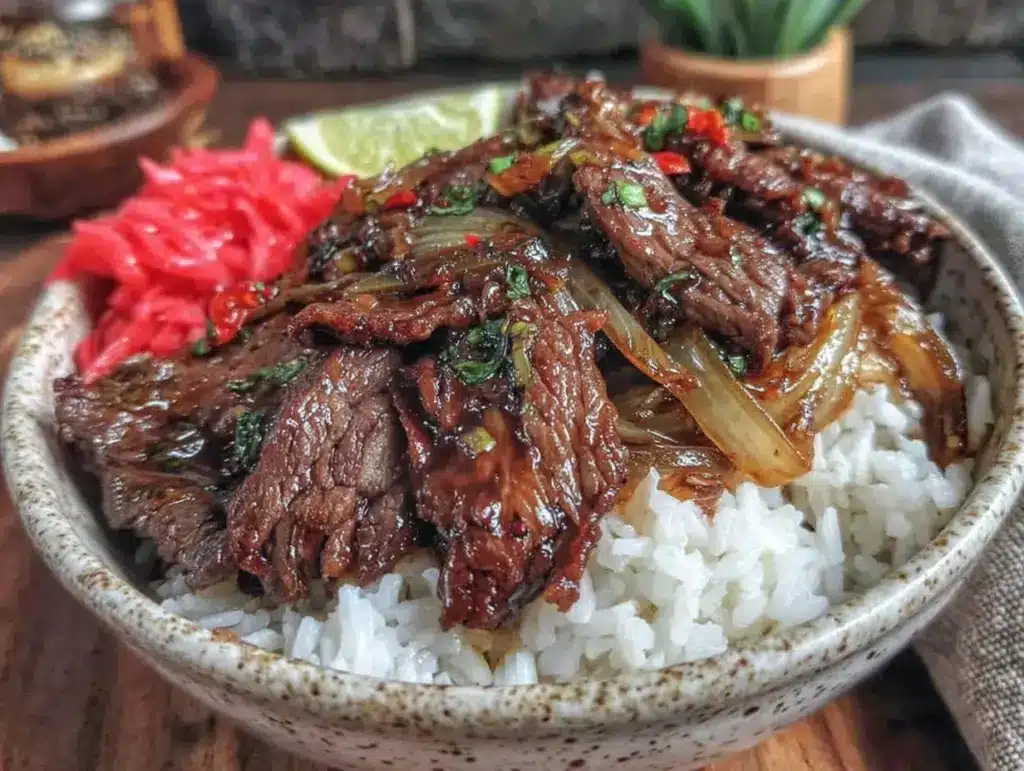
“Hand me that bowl,” my neighbor said last Tuesday as I was fumbling through my grocery bags, and before I knew it, we were standing in his kitchen, surrounded by the aroma of simmering sweet onions and tender beef. Honestly, I wasn’t expecting much from what he called his “quick fix” after work, but that night, I tasted a savory Japanese Gyudon beef bowl that changed my idea of comfort food. The thinly sliced beef soaked in a subtle yet rich sauce paired with those caramelized sweet onions was something else. Oh, and the pickled ginger on top? It gave a zing that perfectly cut through the richness.
I’d never tried making gyudon myself before — let’s face it, it felt a little intimidating with all those Japanese seasonings and slicing techniques. But, as I watched him cook effortlessly, I realized it was just about layering simple flavors with care. Maybe you’ve been there, staring at a recipe that looks complicated but ends up being just a few easy steps away from delicious.
That night, my neighbor’s recipe stayed with me. I made a mess the first time I tried it, forgot to add mirin, and almost gave up. But the balance of sweet and savory, the softness of the beef, and the sharp pop of pickled ginger kept me coming back. So here I am, sharing this savory Gyudon beef bowl recipe — easy enough for a weeknight, yet packed with authentic flavors that feel special. It’s one of those meals that’s humble yet deeply satisfying, a true bowl of warmth whenever you need it.
Why You’ll Love This Recipe
After testing this savory Gyudon beef bowl recipe several times (and yes, sometimes burning the onions), I can honestly say it’s a keeper. It’s become my go-to when I want something comforting but quick. Here’s why you’ll want to make it your own:
- Quick & Easy: Ready in under 30 minutes, perfect for busy nights or last-minute cravings.
- Simple Ingredients: You probably have most of these in your pantry or fridge already—no exotic shopping required.
- Perfect for Cozy Dinners: Whether you’re solo or feeding a small crowd, this bowl hits the spot with minimal fuss.
- Crowd-Pleaser: Kids, adults, picky eaters — it’s always a hit thanks to that savory-sweet balance.
- Unbelievably Delicious: The tender beef infused with umami-rich sauce paired with caramelized onions and tangy pickled ginger is next-level comfort food.
What makes this Gyudon different? I learned that the secret lies in how you cook those sweet onions slowly to bring out their natural sugars, and in balancing the sauce with soy, mirin, and a hint of dashi flavor. Plus, topping it all off with freshly grated ginger and tangy pickled ginger creates layers of flavor that keep you coming back for more.
This recipe isn’t just a meal; it’s a little moment of joy — the kind that makes you pause with your chopsticks mid-bite and smile. It’s comfort food that respects tradition but fits perfectly into busy modern life.
What Ingredients You Will Need
This savory Gyudon beef bowl recipe uses straightforward, wholesome ingredients that come together for bold flavor and perfect texture. Most are pantry staples or easy to find in your local grocery store or Asian market.
- Beef: Thinly sliced ribeye or sirloin (about 12 oz / 340 g) – look for pre-sliced gyudon-style beef or ask your butcher to slice it thinly.
- Sweet Onions: 2 medium onions, thinly sliced (these caramelize beautifully and add natural sweetness).
- Soy Sauce: 1/4 cup (60 ml), preferably low sodium to control saltiness.
- Mirin: 3 tbsp (45 ml), a sweet rice wine that adds depth and gentle sweetness.
- Sake: 2 tbsp (30 ml), for authentic flavor and tenderizing the beef (optional, but recommended).
- Dashi Stock: 1/2 cup (120 ml), a Japanese broth base; you can use instant dashi powder or substitute with light beef broth if needed.
- Sugar: 1 tbsp (12 g) – balances the savory sauce perfectly.
- Pickled Ginger (Beni Shoga): 2 tbsp (30 g), for topping – adds a bright, tangy contrast.
- Fresh Ginger: 1 tsp, grated – adds warmth and a subtle kick.
- Cooked Japanese Short-Grain Rice: 4 cups (about 700 g) – the perfect base for soaking up all that sauce.
Ingredient Tips: I usually grab Kikkoman soy sauce for consistent flavor and use a good quality mirin like Takara. If you can’t find pickled ginger, thinly sliced fresh ginger mixed with a little rice vinegar works well as a substitute.
Substitutions: For a gluten-free option, swap soy sauce with tamari. You can replace dashi stock with mushroom broth for a vegetarian twist, though it changes the classic flavor slightly.
Equipment Needed
- Sharp Chef’s Knife: Essential for thinly slicing the beef and onions.
- Cutting Board: A sturdy surface to handle slicing.
- Large Skillet or Frying Pan: Preferably non-stick for easy caramelizing.
- Medium Saucepan: For cooking rice if you don’t have a rice cooker.
- Rice Cooker (Optional): Great for perfectly cooked rice without fuss.
- Wooden Spoon or Silicone Spatula: Useful for stirring without scratching your pan.
- Measuring Cups and Spoons: For precise ingredients.
Personally, I’ve tried this recipe using both a cast-iron skillet and a non-stick pan. The cast iron gives a fantastic sear on the onions but requires a bit more attention to avoid burning. Non-stick is forgiving and easier for beginners. If you use a wooden spoon, remember to scrape gently to avoid damaging your pan’s surface.
Preparation Method
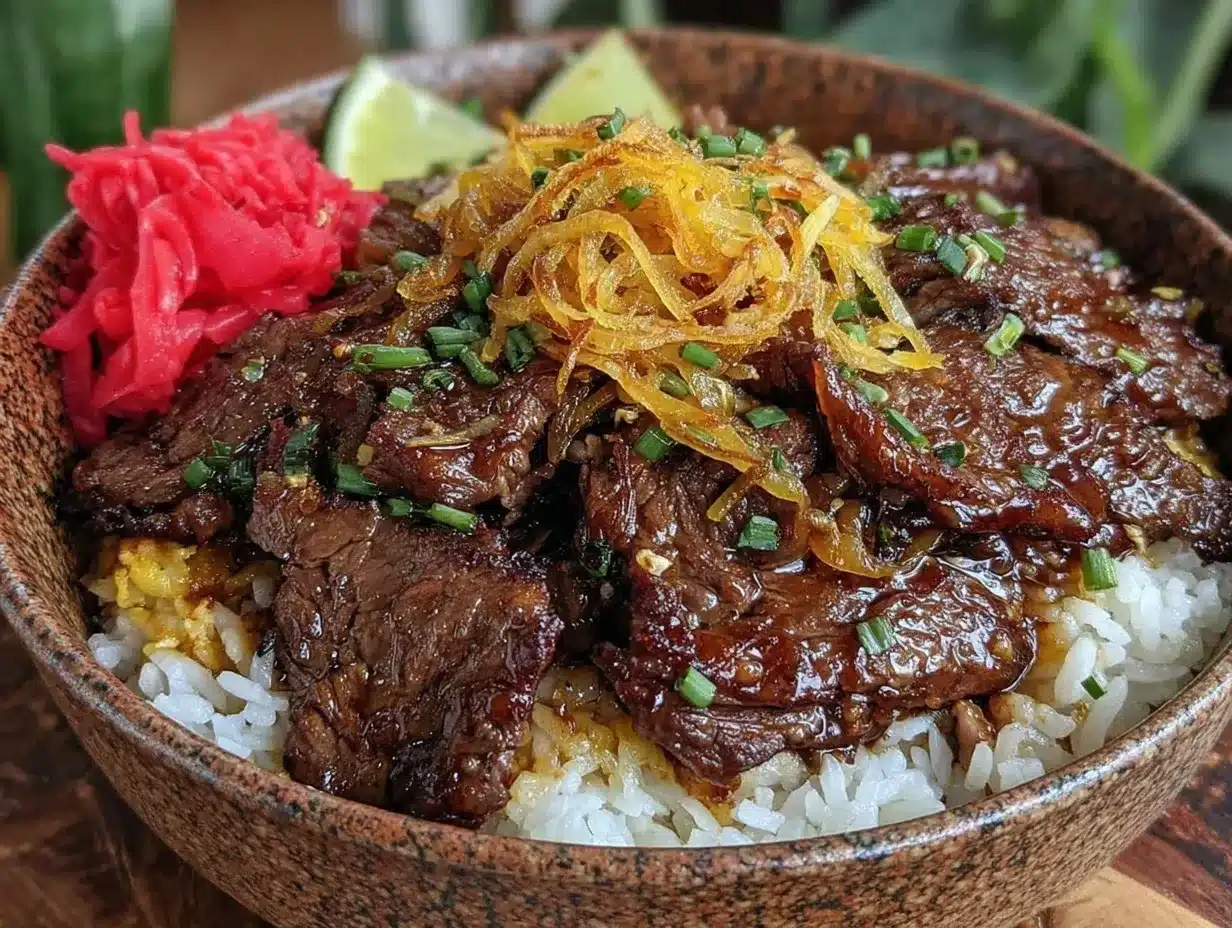
- Prepare the Rice: Rinse 2 cups (400 g) of Japanese short-grain rice under cold water until the water runs clear. Cook in a rice cooker or on the stove with 2 1/4 cups (540 ml) of water. This takes about 20 minutes. Keep warm until serving.
- Slice the Beef and Onions: Using a sharp knife, thinly slice 12 oz (340 g) of ribeye or sirloin against the grain. Peel and thinly slice 2 medium sweet onions. Set both aside.
- Caramelize the Onions: Heat 1 tbsp (15 ml) vegetable oil in a large skillet over medium heat. Add the sliced onions and cook, stirring occasionally, for about 10-12 minutes until soft and golden brown. Patience here pays off; you want natural sweetness to develop without burning.
- Add the Beef: Push the onions to the side, increase heat to medium-high, and add the beef slices. Quickly stir and spread them out to sear lightly, about 2-3 minutes, until just browned but not fully cooked through.
- Make the Sauce: In a small bowl, mix 1/4 cup (60 ml) soy sauce, 3 tbsp (45 ml) mirin, 2 tbsp (30 ml) sake, 1/2 cup (120 ml) dashi stock, 1 tbsp (12 g) sugar, and 1 tsp grated fresh ginger. Pour this over the beef and onions.
- Simmer: Reduce heat to medium-low and let everything simmer gently for about 5-7 minutes until the beef is tender and the sauce has thickened slightly. Stir occasionally to prevent sticking. The sauce should coat the beef beautifully without being watery.
- Serve: Spoon the cooked rice into bowls, then top generously with the beef and onion mixture. Garnish with 2 tbsp (30 g) pickled ginger on the side for that signature zing.
Pro Tip: If your sauce seems too salty, a splash of water or extra mirin can balance it out. Also, don’t overcook the beef — it should remain tender and juicy, not tough.
When I first made this, I accidentally added the sake too early, which made the beef a bit dry. Lesson learned: add the sauce all at once and keep a close eye during simmering.
Cooking Tips & Techniques
Getting that perfect Gyudon can seem tricky, but here are some tips I picked up after a few stumbles in the kitchen.
- Slice Thinly: The beef needs to be paper-thin to cook quickly and soak up the sauce. If you can’t find pre-sliced gyudon beef, partially freezing the meat for 30 minutes before slicing helps a lot.
- Low and Slow Onions: Patience with onions is key. Cook them low and slow to bring out their natural sweetness without burning. Trust me, a rushed onion will ruin the balance.
- Balance Your Sauce: Taste the sauce before simmering the beef. Adjust sweetness or saltiness with sugar or soy sauce as needed.
- Don’t Overcook Beef: Gyudon beef should be tender, not chewy. Simmer just until the beef changes color and is tender; it will continue cooking a bit off heat.
- Multitasking: Start cooking your rice first since it takes the longest. While it’s steaming, prep your onions and beef — this keeps everything timed perfectly.
- Use Fresh Ginger: It adds subtle warmth and depth to the sauce, making a big difference in flavor authenticity.
I once skipped simmering and just poured the sauce over cooked beef — the result was bland and disappointing. So simmering everything together is a must for that rich, melded flavor.
Variations & Adaptations
This Japanese Gyudon beef bowl recipe is flexible. Here are some tasty ideas to make it your own or fit dietary needs:
- Vegetarian Version: Swap beef for thinly sliced king oyster mushrooms or tofu strips. Use vegetable broth instead of dashi for simmering.
- Low-Carb Option: Serve over cauliflower rice or shirataki noodles instead of traditional rice.
- Spicy Twist: Add a teaspoon of chili paste or sprinkle togarashi (Japanese chili pepper) on top for some heat.
- Seasonal Veggies: Toss in sliced shiitake mushrooms, spinach, or shredded carrots during the simmering step for added texture and nutrition.
- Personal Favorite: I sometimes add a soft-poached egg on top — the yolk enriches the sauce and adds creaminess that’s hard to beat.
Feel free to adjust soy sauce and sugar amounts to your taste; some like it sweeter, some saltier. This recipe is forgiving enough that small tweaks won’t break it.
Serving & Storage Suggestions
Serve your savory Gyudon beef bowl hot, straight from the pan, with a side of pickled ginger to brighten every bite. Presentation-wise, a simple sprinkle of chopped green onions or toasted sesame seeds adds a nice touch.
It pairs wonderfully with a light cucumber salad or miso soup for a balanced meal. For beverages, green tea or a crisp Japanese lager is a classic match.
If you have leftovers, store them in an airtight container in the refrigerator for up to 3 days. The beef and onions keep their flavor well, though the rice might dry out a bit.
Reheat gently in a skillet over low heat to avoid toughening the beef, or microwave with a splash of water to keep moisture. Flavors mellow and deepen after a day, so sometimes leftovers taste even better!
Nutritional Information & Benefits
This savory Gyudon beef bowl is not only delicious but packs some good nutrition. A typical serving (1 bowl) provides approximately:
| Calories | 450-500 kcal |
|---|---|
| Protein | 30-35 g |
| Carbohydrates | 50-55 g |
| Fat | 12-15 g |
The beef offers high-quality protein and essential iron, while the onions provide antioxidants and fiber. The pickled ginger supports digestion and adds a refreshing contrast. If you’re watching sodium, opt for low-sodium soy sauce or rinse the beef briefly before cooking.
This dish fits nicely into a balanced diet, especially with the option to adjust rice portions or swap ingredients for dietary needs.
Conclusion
If you’re looking for a savory, satisfying meal that’s simple to make but rich in flavor, this Japanese Gyudon beef bowl recipe is a solid choice. It’s got that perfect mix of tender beef, sweet caramelized onions, and bright pickled ginger that keeps me coming back.
Don’t hesitate to customize it — whether adding veggies, swapping proteins, or adjusting seasoning to your liking. Cooking this dish has become one of my favorite ways to unwind after a busy day (even if I sometimes forget the mirin!).
Give it a try, share your tweaks, and let me know how your version turns out. Happy cooking, and here’s to many cozy, delicious bowls ahead!
FAQs
What cut of beef is best for Gyudon?
Thinly sliced ribeye or sirloin is ideal for its tenderness and marbling. You can also find pre-sliced gyudon beef at Asian markets.
Can I make Gyudon without dashi stock?
Yes, you can substitute with beef or vegetable broth. Instant dashi powder is convenient and adds authentic flavor but isn’t mandatory.
How do I store leftovers?
Store beef and onions separately from rice in airtight containers in the fridge for up to 3 days. Reheat gently to keep beef tender.
Is this recipe gluten-free?
Traditional soy sauce contains gluten, but you can use tamari or a gluten-free soy sauce alternative to make it gluten-free.
Can I prepare this recipe ahead of time?
You can prep the sauce and slice ingredients in advance. Cook the beef and onions just before serving for the best texture and flavor.
Pin This Recipe!
Savory Gyudon Beef Bowl Recipe
An easy homemade Japanese beef bowl featuring thinly sliced ribeye or sirloin simmered with sweet caramelized onions and topped with tangy pickled ginger. Perfect for a quick, comforting meal with authentic flavors.
- Prep Time: 10 minutes
- Cook Time: 20 minutes
- Total Time: 30 minutes
- Yield: 4 servings 1x
- Category: Main Course
- Cuisine: Japanese
Ingredients
- 12 oz (340 g) thinly sliced ribeye or sirloin beef
- 2 medium sweet onions, thinly sliced
- 1/4 cup (60 ml) low sodium soy sauce
- 3 tbsp (45 ml) mirin
- 2 tbsp (30 ml) sake (optional but recommended)
- 1/2 cup (120 ml) dashi stock (or instant dashi powder or light beef broth)
- 1 tbsp (12 g) sugar
- 2 tbsp (30 g) pickled ginger (beni shoga) for topping
- 1 tsp fresh ginger, grated
- 4 cups (about 700 g) cooked Japanese short-grain rice
Instructions
- Prepare the rice: Rinse 2 cups (400 g) of Japanese short-grain rice under cold water until the water runs clear. Cook in a rice cooker or on the stove with 2 1/4 cups (540 ml) of water for about 20 minutes. Keep warm until serving.
- Slice the beef and onions: Using a sharp knife, thinly slice 12 oz (340 g) of ribeye or sirloin against the grain. Peel and thinly slice 2 medium sweet onions. Set both aside.
- Caramelize the onions: Heat 1 tbsp (15 ml) vegetable oil in a large skillet over medium heat. Add the sliced onions and cook, stirring occasionally, for about 10-12 minutes until soft and golden brown.
- Add the beef: Push the onions to the side, increase heat to medium-high, and add the beef slices. Quickly stir and spread them out to sear lightly, about 2-3 minutes, until just browned but not fully cooked through.
- Make the sauce: In a small bowl, mix 1/4 cup (60 ml) soy sauce, 3 tbsp (45 ml) mirin, 2 tbsp (30 ml) sake, 1/2 cup (120 ml) dashi stock, 1 tbsp (12 g) sugar, and 1 tsp grated fresh ginger. Pour this over the beef and onions.
- Simmer: Reduce heat to medium-low and let everything simmer gently for about 5-7 minutes until the beef is tender and the sauce has thickened slightly. Stir occasionally to prevent sticking.
- Serve: Spoon the cooked rice into bowls, then top generously with the beef and onion mixture. Garnish with 2 tbsp (30 g) pickled ginger on the side.
Notes
For gluten-free, substitute soy sauce with tamari. Use vegetable broth instead of dashi for a vegetarian twist. Partially freezing beef before slicing helps achieve thin slices. Cook onions low and slow to develop sweetness without burning. Avoid overcooking beef to keep it tender. Adjust sauce seasoning to taste. Leftovers keep well for up to 3 days; reheat gently to maintain tenderness.
Nutrition
- Serving Size: 1 bowl
- Calories: 475
- Fat: 13.5
- Carbohydrates: 52.5
- Protein: 32.5
Keywords: Gyudon, Japanese beef bowl, savory beef bowl, quick dinner, caramelized onions, pickled ginger, easy Japanese recipe