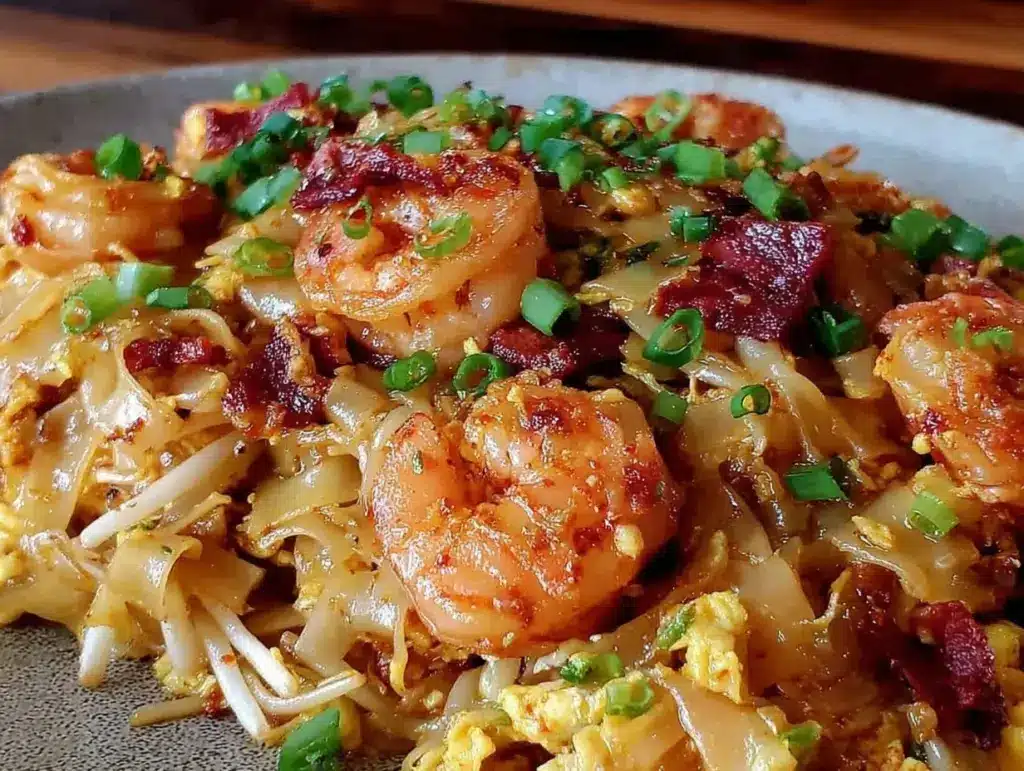
“It was 11 PM on a Tuesday, and all I could think about was the smoky, savory punch of char kway teow,” I remember thinking as I rummaged through my fridge, half asleep but stubbornly craving that exact flavor. I didn’t have half the ingredients a traditional recipe calls for, and honestly, the kitchen was a bit of a mess from the day’s chaos. Somehow, with a bit of improvisation—plus a sprinkle of shrimp I luckily had on hand—I put together what became my go-to version of Singapore Char Kway Teow with shrimp. You know that feeling when a late night snack turns into a full-blown favorite? Yeah, that.
The sizzling sound when the flat rice noodles hit the hot wok, the way the smoky wok hei flavor envelops the shrimp and Chinese sausage—it’s unforgettable. I remember almost burning the garlic because my phone rang mid-sizzle, but hey, that charred edge actually added something special. Maybe you’ve been there, juggling distractions while cooking something that just needs your full attention. Since that night, this recipe has stuck with me, not just for the taste but for the memories of that chaotic kitchen moment turned delicious victory.
Whether you’re a seasoned char kway teow fan or new to this iconic Singaporean street food, this recipe brings the charm of hawker stalls right to your home, with a straightforward method that anyone can follow—even if your kitchen isn’t perfectly organized at the moment.
Why You’ll Love This Savory Singapore Char Kway Teow with Shrimp Recipe
After countless trials and a few happy accidents, this version of char kway teow stands out because it balances authenticity with ease. I’ve tested this recipe over several weeks, tweaking the searing heat and sauce ratios until it sings. And honestly, it’s become a family favorite—my picky eater nephew even asks for it on weekends!
- Quick & Easy: Ready in under 30 minutes, making it perfect for weeknight dinners or last-minute cravings.
- Simple Ingredients: Uses pantry staples and common Asian ingredients you can find at most grocery stores.
- Perfect for Casual Gatherings: Great for sharing at potlucks or cozy meals with friends.
- Crowd-Pleaser: The umami-packed shrimp and smoky noodles always get rave reviews.
- Unbelievably Delicious: That signature wok hei flavor with a perfect balance of sweet, salty, and smoky notes makes this far from the average stir-fried noodle dish.
This recipe isn’t just a copy of what you find elsewhere—it uses a quick sauce blend that keeps the noodles moist without sogginess and calls for tossing the shrimp in early to infuse flavor. Plus, the secret is in the high-heat sear and the timing—techniques that bring out the best in every bite. Honestly, it’s the kind of dish that makes you close your eyes after the first mouthful and think, “Yep, this is it.”
What Ingredients You Will Need
This recipe uses simple, wholesome ingredients to deliver bold flavor and that iconic char kway teow texture without fuss. Most items are pantry-friendly, and a few fresh ingredients give it that authentic lift.
- Flat Rice Noodles (Kway Teow): Fresh if possible, about 400g (14 oz). Dry noodles can work in a pinch but soak them well.
- Shrimp: 200g (7 oz), peeled and deveined. Medium-sized works best for even cooking.
- Chinese Sausage (Lap Cheong): 1-2 links, thinly sliced (adds sweetness and depth).
- Bean Sprouts: 100g (3.5 oz), washed and drained for crunch.
- Garlic: 3 cloves, minced. I like fresh, pungent garlic for that punch.
- Eggs: 2 large, lightly beaten for richness and texture.
- Dark Soy Sauce: 2 tablespoons for color and caramelized flavor (I recommend Kikkoman brand).
- Light Soy Sauce: 1 tablespoon for saltiness.
- Oyster Sauce: 1 tablespoon for umami depth.
- Chili Paste or Fresh Chili: Optional, about 1 teaspoon if you like it spicy.
- Vegetable Oil or Peanut Oil: 3 tablespoons for high-heat cooking.
- Green Onions: 2 stalks, chopped, for freshness and garnish.
- White Pepper: A pinch, freshly ground if possible.
Substitution tips: If you can’t find Chinese sausage, smoked bacon makes a decent alternative. For a gluten-free version, ensure your soy sauces are gluten-free or swap with tamari. No shrimp? Try thinly sliced chicken or tofu for a vegetarian twist (just adjust cooking times accordingly).
Equipment Needed
- Wok or Large Skillet: A good wok is ideal for that high-heat searing and wok hei flavor, but a sturdy large skillet works too.
- Spatula or Wok Turner: For tossing noodles without breaking them.
- Knife and Cutting Board: For prepping shrimp, sausage, and veggies.
- Mixing Bowls: For beating eggs and mixing sauces.
- Colander or Sieve: To drain noodles and bean sprouts.
If you don’t have a wok, heat your skillet until very hot before adding oil. I once tried this in a non-stick pan, and while it worked, the flavor was less smoky. For wok users, a well-seasoned carbon steel wok is easiest to maintain and improves with use—just rinse with hot water and dry immediately after cooking.
Preparation Method
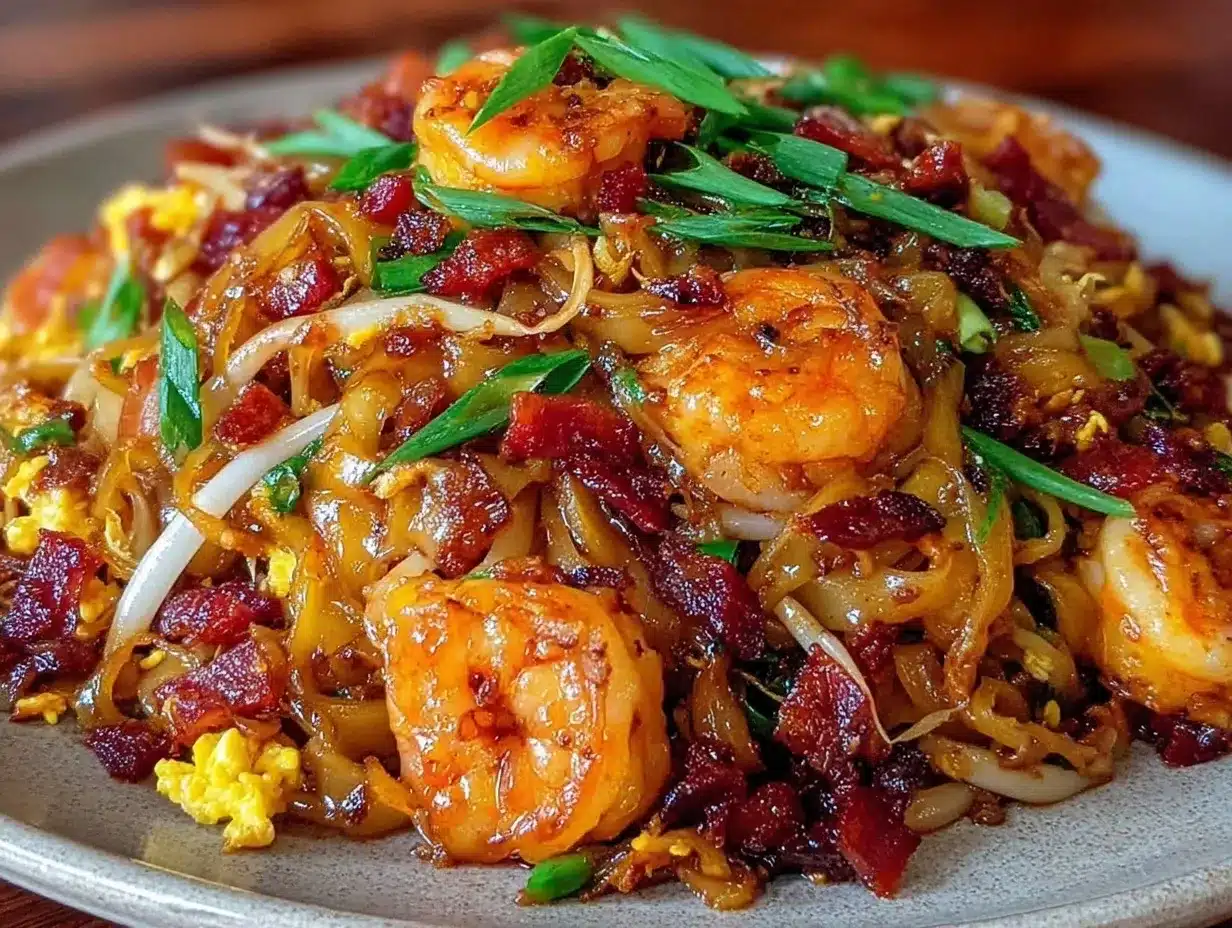
- Prep the Ingredients (10 minutes): Peel and devein shrimp if not done. Slice Chinese sausage thinly. Mince garlic and chop green onions. Rinse and drain bean sprouts. Separate noodles carefully to avoid clumps.
- Make the Sauce Mix: In a small bowl, combine dark soy sauce, light soy sauce, oyster sauce, and chili paste (if using). Set aside for easy pouring.
- Heat the Wok: Place your wok over high heat and let it get very hot—this is key for that smoky flavor. Add 1 tablespoon of oil and swirl.
- Cook the Shrimp: Toss shrimp into the wok, stir-fry for about 1-2 minutes until they start to pink. Remove and set aside to avoid overcooking.
- Cook the Sausage and Garlic: Add another tablespoon of oil, then the sliced Chinese sausage and minced garlic. Stir quickly until fragrant and sausage starts to crisp (about 1-2 minutes).
- Add Noodles: Add the rice noodles carefully, spreading them out in the wok. Pour the sauce mix over the noodles and gently toss to coat evenly. This should take about 2-3 minutes. If noodles stick, a splash of water can help loosen them.
- Push Noodles Aside & Scramble Eggs: Push the noodles to one side of the wok. Add remaining oil to the empty side, pour in beaten eggs, and scramble gently. Once eggs are slightly set, mix them into the noodles.
- Add Shrimp & Bean Sprouts: Return shrimp to the wok and toss with bean sprouts and green onions. Stir-fry everything together for 1-2 minutes until bean sprouts are just tender but still crisp.
- Final Seasoning: Sprinkle a pinch of white pepper, give everything a final toss, and remove from heat immediately to avoid sogginess.
- Serve: Plate immediately for best texture and flavor.
Note: Timing is everything here. The entire stir-fry should be fast and furious. If your wok isn’t hot enough, the noodles will steam rather than fry. If you’re new to this, try prepping all ingredients first to keep the process smooth.
Cooking Tips & Techniques
One thing I learned the hard way is that wok hei—that elusive smoky char flavor—comes from very high heat and quick stirring. If your kitchen has weak burners, crank up the heat and stir constantly to avoid steaming the noodles.
Don’t overcrowd the wok. Cooking in batches if needed keeps the noodles from turning mushy and lets each ingredient get that perfect sear.
When adding the eggs, push the noodles aside instead of mixing right away. Scrambling the eggs separately before combining locks in that fluffy texture.
Use fresh ingredients for best results—fresh bean sprouts and noodles make a noticeable difference. Frozen or dried noodles can be used but soaking and draining properly is crucial.
Finally, avoid adding too much sauce at once. It’s easier to add more later than to fix overly salty or wet noodles.
Variations & Adaptations
- Vegetarian Version: Skip shrimp and sausage. Add firm tofu cubes and extra veggies like bell peppers or mushrooms. Use vegetarian oyster sauce or mushroom sauce.
- Spicy Twist: Amp up heat with fresh bird’s eye chilies or a drizzle of chili oil at the end.
- Low-Carb Option: Swap rice noodles for shirataki noodles or spiralized zucchini, adjusting cooking time accordingly.
- Alternate Protein: Substitute shrimp with thinly sliced chicken breast or pork belly for a different flavor profile.
I once tried adding a splash of lime juice at the end for a tangy contrast—surprisingly refreshing with the rich sauce!
Serving & Storage Suggestions
Serve your char kway teow piping hot straight from the wok, garnished with extra chopped green onions or a wedge of lime for brightness. It pairs wonderfully with a simple Asian-style cucumber salad or a light soup on the side.
Leftovers can be stored in an airtight container in the refrigerator for up to 2 days. Reheat gently in a pan over medium heat, adding a splash of water or soy sauce to loosen the noodles and revive the flavor.
Keep in mind, the noodles will soften with storage, so it’s best enjoyed fresh. However, cold char kway teow can be surprisingly tasty too, with a slightly different texture.
Nutritional Information & Benefits
This recipe provides a balanced mix of protein from shrimp and eggs, carbohydrates from rice noodles, and fiber from bean sprouts. It’s relatively low in fat if you use moderate oil and lean proteins.
Shrimp is a great source of lean protein and omega-3 fatty acids, which support heart health. Bean sprouts add vitamins C and K, plus antioxidants.
For those watching sodium, be mindful of soy sauce amounts, or choose low-sodium versions. This dish is naturally gluten-free if you use gluten-free soy sauces.
Overall, it’s a nourishing comfort meal that satisfies without feeling heavy—perfect for a wholesome weeknight dinner.
Conclusion
Whether you’re craving a quick, authentic taste of Singapore or just want to impress with a flavorful stir-fry, this savory Singapore Char Kway Teow with shrimp recipe has you covered. It’s flexible enough for home cooks of all skill levels and delivers that unmistakable smoky, savory goodness every time.
Feel free to tweak the spice level, protein choices, or veggies to make it your own—you might just find a new family favorite. Honestly, I keep coming back to this recipe because it’s simple, satisfying, and reminds me of that late night kitchen adventure where it all started.
Give it a try, share your tweaks, and let me know how your version turns out—I love hearing your stories and tips!
Frequently Asked Questions
- Can I use dried rice noodles instead of fresh?
Yes, but soak them in warm water until soft and drain well. Fresh flat rice noodles give better texture and taste. - What if I don’t have Chinese sausage?
Smoked bacon or even thinly sliced ham can be a tasty substitute. - How do I get the smoky wok hei flavor at home?
Use a very hot wok or skillet and cook quickly without overcrowding. High heat is key! - Can I make this dish vegetarian?
Absolutely! Simply omit shrimp and sausage and add tofu or extra vegetables. - Is this recipe spicy?
It’s mild by default, but you can add chili paste or fresh chilies to suit your heat preference.
Pin This Recipe!
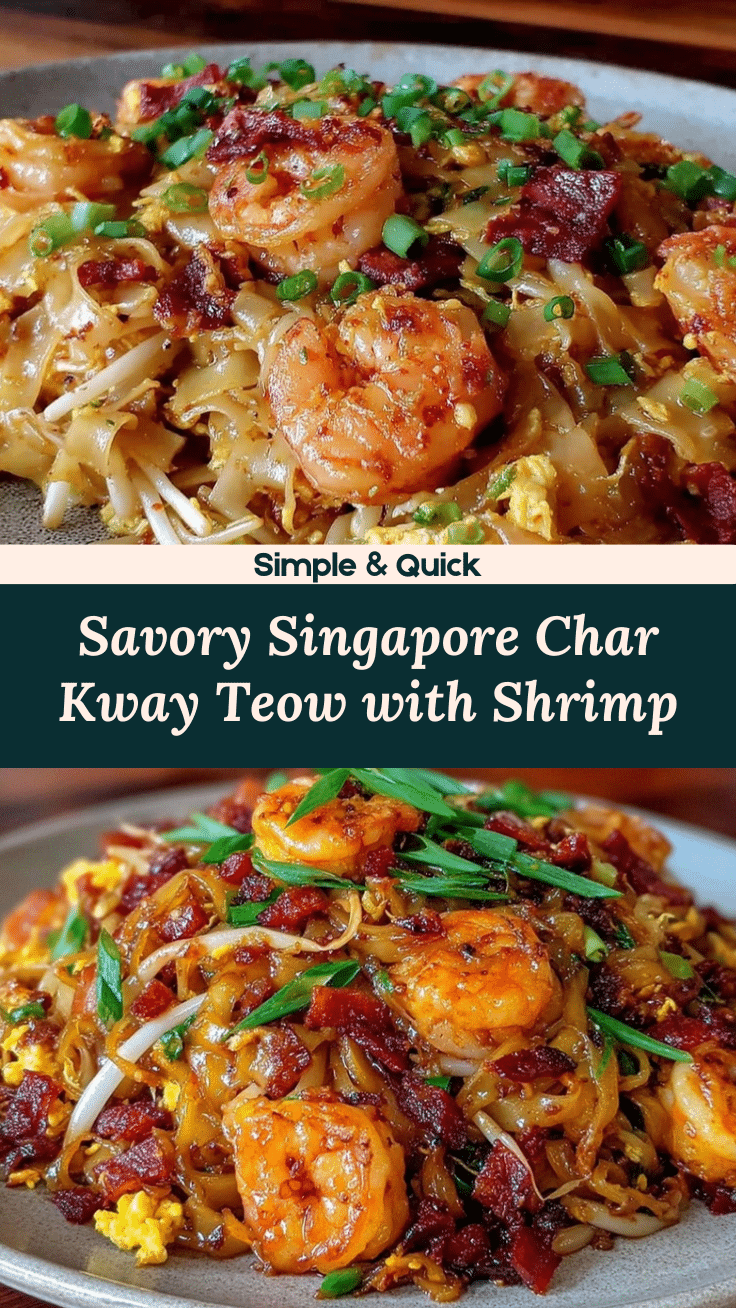
Savory Singapore Char Kway Teow Recipe with Shrimp

A quick and authentic Singaporean stir-fried flat rice noodle dish featuring shrimp, Chinese sausage, and a smoky wok hei flavor. Perfect for weeknight dinners or casual gatherings.
- Prep Time: 10 minutes
- Cook Time: 15 minutes
- Total Time: 25 minutes
- Yield: 3-4 servings 1x
- Category: Main Course
- Cuisine: Singaporean
Ingredients
- 400g (14 oz) flat rice noodles (kway teow), fresh if possible
- 200g (7 oz) shrimp, peeled and deveined
- 1–2 links Chinese sausage (lap cheong), thinly sliced
- 100g (3.5 oz) bean sprouts, washed and drained
- 3 cloves garlic, minced
- 2 large eggs, lightly beaten
- 2 tablespoons dark soy sauce
- 1 tablespoon light soy sauce
- 1 tablespoon oyster sauce
- 1 teaspoon chili paste or fresh chili (optional)
- 3 tablespoons vegetable oil or peanut oil
- 2 stalks green onions, chopped
- Pinch of white pepper, freshly ground
Instructions
- Prep the Ingredients (10 minutes): Peel and devein shrimp if not done. Slice Chinese sausage thinly. Mince garlic and chop green onions. Rinse and drain bean sprouts. Separate noodles carefully to avoid clumps.
- Make the Sauce Mix: In a small bowl, combine dark soy sauce, light soy sauce, oyster sauce, and chili paste (if using). Set aside for easy pouring.
- Heat the Wok: Place your wok over high heat and let it get very hot. Add 1 tablespoon of oil and swirl.
- Cook the Shrimp: Toss shrimp into the wok, stir-fry for about 1-2 minutes until they start to pink. Remove and set aside to avoid overcooking.
- Cook the Sausage and Garlic: Add another tablespoon of oil, then the sliced Chinese sausage and minced garlic. Stir quickly until fragrant and sausage starts to crisp (about 1-2 minutes).
- Add Noodles: Add the rice noodles carefully, spreading them out in the wok. Pour the sauce mix over the noodles and gently toss to coat evenly. This should take about 2-3 minutes. If noodles stick, a splash of water can help loosen them.
- Push Noodles Aside & Scramble Eggs: Push the noodles to one side of the wok. Add remaining oil to the empty side, pour in beaten eggs, and scramble gently. Once eggs are slightly set, mix them into the noodles.
- Add Shrimp & Bean Sprouts: Return shrimp to the wok and toss with bean sprouts and green onions. Stir-fry everything together for 1-2 minutes until bean sprouts are just tender but still crisp.
- Final Seasoning: Sprinkle a pinch of white pepper, give everything a final toss, and remove from heat immediately to avoid sogginess.
- Serve: Plate immediately for best texture and flavor.
Notes
Use a very hot wok or skillet to achieve the smoky wok hei flavor. Avoid overcrowding the wok to prevent steaming the noodles. Scramble eggs separately before mixing for fluffy texture. Fresh noodles and bean sprouts improve texture. Adjust soy sauce amounts to control saltiness. For gluten-free, use tamari or gluten-free soy sauces. Substitute Chinese sausage with smoked bacon or omit for vegetarian version.
Nutrition
- Serving Size: About 1 cup per serv
- Calories: 350
- Sugar: 3
- Sodium: 900
- Fat: 15
- Saturated Fat: 3
- Carbohydrates: 35
- Fiber: 2
- Protein: 20
Keywords: Singapore Char Kway Teow, shrimp stir fry, flat rice noodles, wok hei, Chinese sausage, easy Asian recipe, quick dinner, authentic Singapore street food