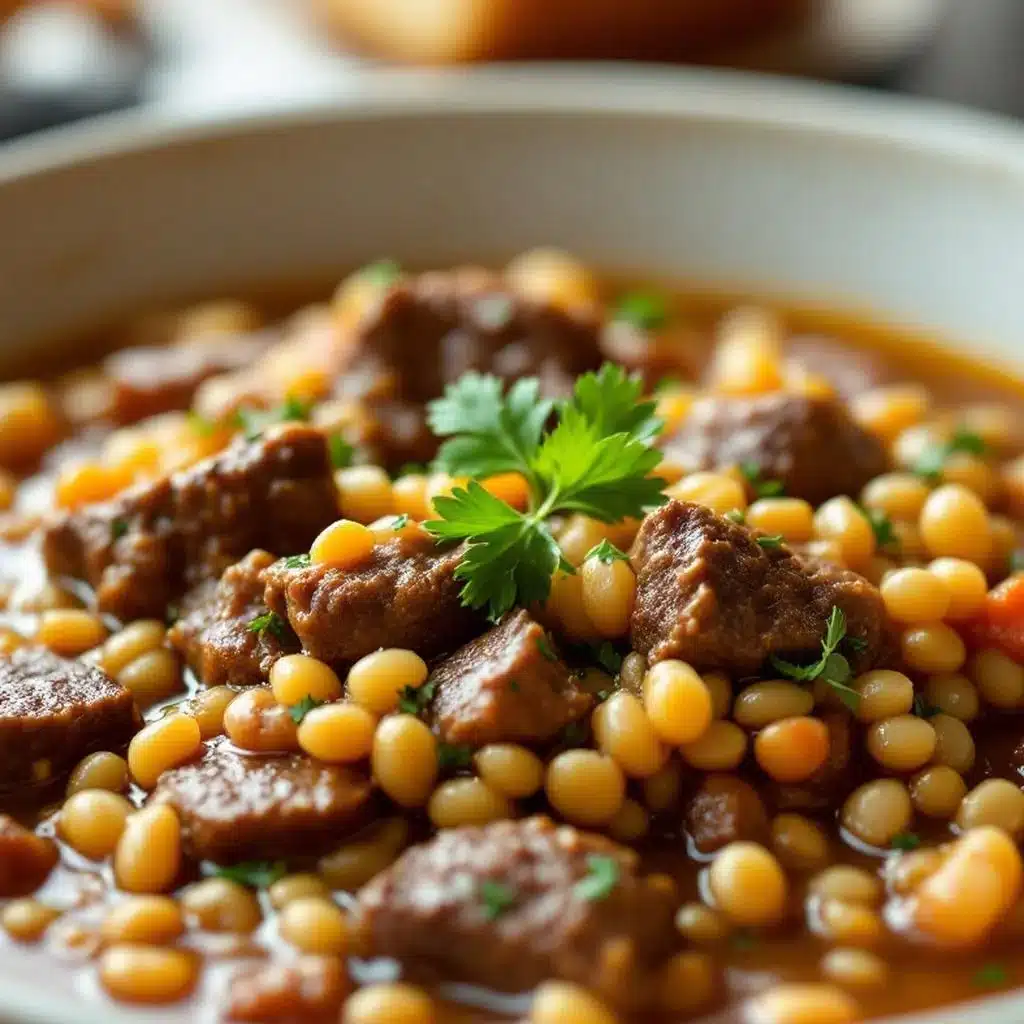
I figured a stew in a Dutch oven would just be a slow, simmering task that required zero attention. It took about two hours for that assumption to fall apart completely. I had left the pot on the back burner, distracted by a collapsing pile of laundry, and nearly burned the bottom off my favorite heavy-bottomed pot. When I finally went back to stir, the smell wasn’t just “stew”—it was deep, caramelized, and slightly charred in the best possible way. That mistake taught me more about flavor development than any recipe book ever could. The key isn’t really in the simmering; it’s in the aggressive browning of the beef and the vegetables before any liquid ever touches the pan. You want that fond—the sticky, brown bits stuck to the cast iron—to be the foundation of your broth. Honestly, if you skip that step, you’re just making hot soup with meat in it, and let’s face it, we can do better than that.
This Cozy Dutch Oven Beef and Barley Stew became my go-to rescue meal after that incident. I wasn’t trying to be a chef; I was just trying to eat something that didn’t require me to leave the house or deal with a mountain of dishes. The beauty of using a Dutch oven is that it holds heat like a stubborn mule. Once you get that internal temperature up, it stays there, gently braising the beef until it falls apart when you look at it wrong. I’ve made this recipe so many times now that I can do it with one eye open, but I still get surprised by how rich the broth becomes. It’s not the flashy, gourmet version you might see in magazines with truffle oil and gold leaf. It’s the real deal. It’s the kind of meal that makes your kitchen smell like a warm hug and makes you forget about the cold wind rattling the windows outside. You know, there is something deeply satisfying about pulling a heavy lid off a pot and watching the steam rise up in a thick, savory cloud. It just feels like winter, properly acknowledged.
I keep coming back to this because it works when everything else feels chaotic. Whether it’s a Tuesday night when I’m exhausted or a Saturday when I want to feel productive without actually doing anything, this stew delivers. It’s forgiving. If you chop the carrots a little too big, they’ll just take a few minutes longer. If you add a splash more wine, the flavor just gets deeper. It’s not a recipe that demands perfection; it demands patience and a willingness to let the ingredients do their work. And once you taste that first spoonful, with the barley soft and creamy and the beef melting on your tongue, you’ll understand why I never go back to quick-fix meals when I have the time to slow down. It’s not just food; it’s a reset button for a hard week.
Why You’ll Love This Recipe
Let’s be honest for a second. Most stew recipes online are just lists of ingredients with vague instructions like “cook until done.” That’s not helpful, and it’s not why we’re here. This Cozy Dutch Oven Beef and Barley Stew is different because it respects the process. I’ve tested this recipe dozens of times, adjusting the liquid ratios and browning times, to get that perfect balance of thick, hearty broth and tender meat. It’s not just another version of beef stew; it’s the one that actually works in a real kitchen, with real ingredients you can find at any grocery store.
- Quick & Easy Prep: While the cooking time is long, the active prep time is surprisingly short. You spend about 20 minutes chopping and searing, and then the Dutch oven does the heavy lifting. It’s perfect for busy weeknights where you want a home-cooked meal but don’t have hours to stand over the stove.
- Simple Ingredients: You likely already have most of this in your pantry. Beef chuck, barley, carrots, onions, and basic spices. No fancy grocery trips needed, and no obscure ingredients that will sit in your cupboard for years unused.
- Perfect for Winter: This is the ultimate cold-weather comfort food. It’s great for cozy dinners, rainy Sundays, or when you need to warm up from the inside out. It pairs wonderfully with a crusty bread or even a side like honey balsamic brussels sprouts if you want to add some green to the meal.
- Crowd-Pleaser: This recipe always gets rave reviews from kids and adults alike. The barley adds a nice chewy texture that people love, and the beef is so tender it practically disappears. It’s a safe bet for family dinners or bringing to a potluck where you need to feed a crowd.
- Unbelievably Delicious: The texture and flavor combo is next-level comfort food. The slow cooking breaks down the connective tissue in the beef, creating a silky sauce that coats every bite. It’s the kind of stew that makes you close your eyes after the first bite and just breathe.
What makes this recipe stand out from the rest is the technique of building layers of flavor. Many people rush the browning step, but taking the time to get a deep, dark crust on the beef creates a depth of flavor that simple boiling never will. I also use a mix of beef broth and a splash of red wine, which adds a subtle acidity that cuts through the richness of the beef. It’s not just good—it’s the kind of meal that feels like you spent all day in the kitchen, even though you didn’t. It’s comfort food reimagined—simpler, faster, but with the same soul-soothing satisfaction. Perfect for impressing guests without stress, or turning a simple meal into something memorable.
What Ingredients You Will Need
This recipe uses simple, wholesome ingredients to deliver bold flavor and satisfying texture without the fuss. The magic here isn’t in exotic spices, but in the quality of the basics and how they interact during the long cooking process. You want ingredients that can withstand heat and time, transforming from raw components into a cohesive, hearty dish. Most of these are pantry staples, but a few key choices will make a noticeable difference in the final result.
- Beef Chuck Roast (2-3 lbs): This is the most critical ingredient. You need a cut with good marbling and connective tissue. Look for beef chuck that has visible white streaks of fat running through the red meat. Avoid lean cuts like sirloin, as they will become dry and tough. I prefer buying a whole roast and cubing it myself, as pre-cut stew meat often includes tougher neck pieces that don’t break down as nicely.
- Pearl Barley (1 cup): This is what gives the stew its unique, chewy texture and helps thicken the broth naturally. Make sure you get pearl barley, not hulled barley, as pearl barley cooks faster and has a softer texture. It absorbs the savory broth beautifully, becoming almost creamy on the inside while retaining a slight bite.
- Carrots (3-4 large): Use large, firm carrots for the best flavor. Peel them and cut them into thick chunks so they don’t disintegrate during the long cook time. If you’re using baby carrots, reduce the cooking time slightly, but honestly, large carrots hold their shape better in a stew like this.
- Yellow Onions (2 large): These provide the sweet, aromatic base for the stew. Dice them finely so they melt into the sauce. I recommend using yellow onions rather than white or red, as they have a higher sugar content that caramelizes well during the browning phase.
- Garlic (4 cloves): Fresh garlic is non-negotiable here. Minced finely. If you use jarred garlic, the flavor just isn’t as bright and pungent enough to cut through the richness of the beef. Add it in the last few minutes of sautéing so it doesn’t burn.
- Tomato Paste (2 tbsp): This adds umami and a deep red color to the broth. It’s not about tasting tomato; it’s about adding that savory, concentrated depth. Cook the tomato paste with the beef for a minute until it darkens slightly to remove any metallic aftertaste.
- Beef Broth (4 cups): Use a low-sodium broth so you can control the saltiness of the final dish. Some brands are very salty, which can make the stew unpalatable if you aren’t careful. I like to use a rich, bone-broth style if I can find it, but standard low-sodium works fine.
- Red Wine (1/2 cup): A dry red wine like Cabernet Sauvignon or Merlot adds complexity and acidity. You don’t need to spend a fortune here; just pick something you would drink. The alcohol will cook off, leaving behind the fruity notes.
- Thyme and Bay Leaves: Fresh thyme is best, but dried works too. Bay leaves add a subtle herbal note that disappears into the background, leaving just the aroma. Remove the bay leaves before serving.
- Butter and Olive Oil: Use a mix of both for searing. The butter adds flavor, while the oil has a higher smoke point, preventing the butter from burning when you’re browning the beef.
For the best texture, I recommend buying a whole chuck roast and cutting it into 1.5-inch cubes yourself. Pre-cut stew meat is often a mix of different cuts, some of which are leaner and tougher. If you need to freeze the beef, make sure to thaw it slowly in the refrigerator overnight to maintain the texture. Also, if you are looking for a gluten-free option, you can substitute the barley with pearl couscous or extra potatoes, though the texture will be different. The barley is really the star of this particular dish, giving it that rustic, hearty feel.
Equipment Needed
You don’t need a lot of fancy gadgets for this recipe, but having the right tools makes the process much smoother and the results significantly better. The most important piece of equipment is, obviously, the Dutch oven. I recommend a 6-to-8-quart heavy-bottomed cast iron Dutch oven. Cast iron retains heat incredibly well, which is essential for that steady, gentle braise. Enamel-coated cast iron is easier to clean and won’t rust, so it’s a good investment if you don’t want to worry about seasoning your pot. A heavy lid is crucial to trap moisture and steam, keeping the stew from drying out.
Besides the pot, you’ll need a sharp chef’s knife and a sturdy cutting board. Since you’re cubing the beef yourself, a good knife makes the job faster and safer. A dull knife is dangerous because it slips. I also recommend using a slotted spoon for removing the beef from the pot. This allows the excess fat and juices to drain back into the stew, keeping the meat from getting too oily. A wooden spoon is perfect for stirring, as it won’t scratch the enamel of your Dutch oven.
If you don’t have a Dutch oven, you can use a heavy stockpot, but the heat distribution won’t be as even, and you might end up with hot spots that burn the bottom. In a pinch, a slow cooker works, but you’ll miss out on the searing step, which is where most of the flavor comes from. If you use a slow cooker, I suggest browning the beef in a separate skillet first. Budget-friendly options include a basic stainless steel pot, but be prepared to watch it more closely, as thinner pots conduct heat unevenly. Maintenance tip: never put a hot cast iron pot into cold water, as the thermal shock can crack the enamel or warp the metal. Let it cool down naturally on the stove.
Preparation Method
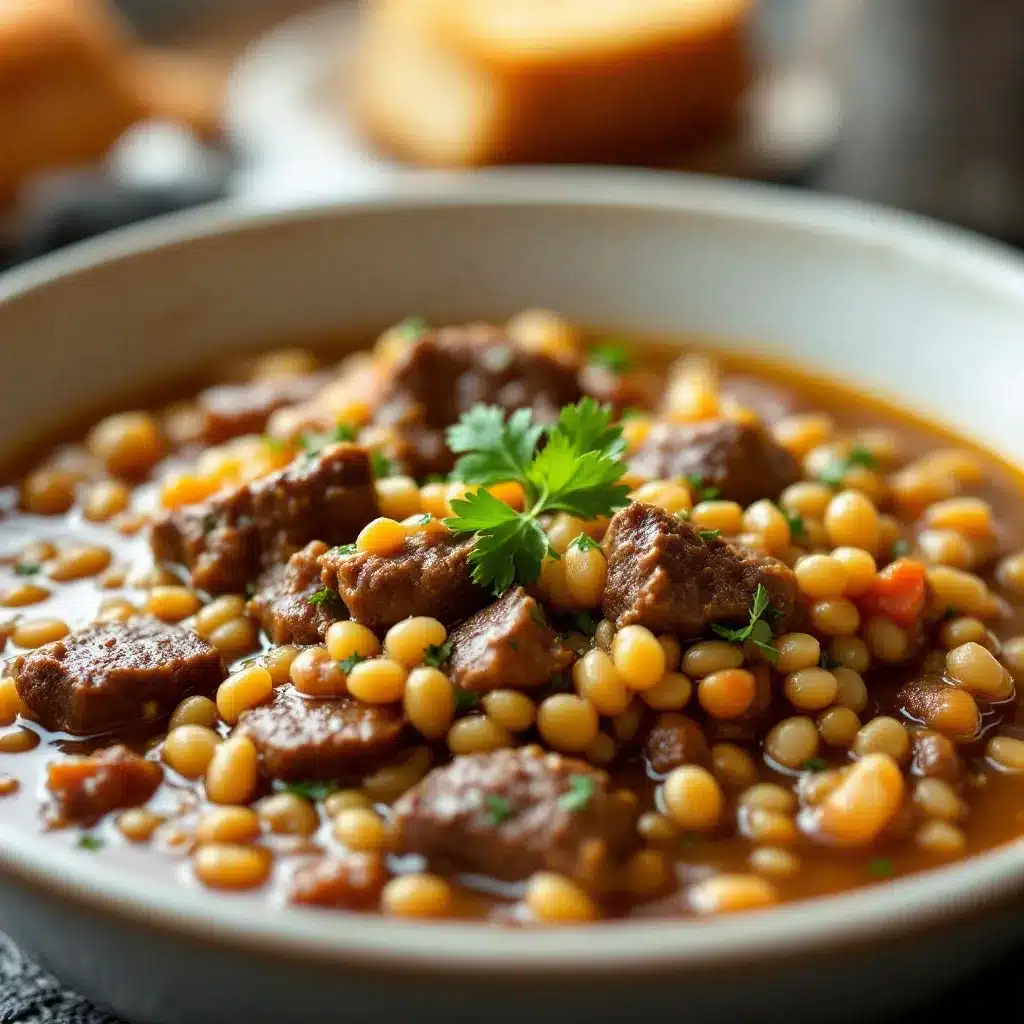
Making this Cozy Dutch Oven Beef and Barley Stew is straightforward, but it requires attention to detail in the beginning. The steps are designed to build flavor layer by layer, so don’t rush them. Here is exactly how to make it.
- Prep the Beef: Pat the beef chuck cubes completely dry with paper towels. This is critical. Wet meat steams instead of sears. Season the beef generously with salt and black pepper. You want a good coating of seasoning on every side.
- Sear the Beef: Heat the Dutch oven over medium-high heat. Add the olive oil and half of the butter. Once the oil shimmers, add the beef in a single layer. Do not overcrowd the pot; do this in batches. If you crowd the pot, the temperature drops, and the meat steams. Sear the beef for 3-4 minutes per side until it has a deep, dark brown crust. Remove the beef to a plate and set aside. This step takes about 10-15 minutes total.
- Sauté the Aromatics: Reduce the heat to medium. Add the remaining butter to the pot. Add the diced onions and carrots. Cook for 5-7 minutes, stirring occasionally, until the onions are translucent and the carrots start to soften. Add the minced garlic and tomato paste. Cook for another minute, stirring constantly, until the garlic is fragrant and the tomato paste darkens slightly. This builds the flavor base.
- Deglaze the Pot: Pour in the red wine. Use a wooden spoon to scrape up all the brown bits (fond) from the bottom of the pot. These bits are pure flavor. Let the wine simmer for 2-3 minutes to let the alcohol cook off and reduce slightly.
- Combine and Simmer: Return the beef and any accumulated juices to the pot. Pour in the beef broth. Add the bay leaves and thyme sprigs. Bring the mixture to a boil, then immediately reduce the heat to low. Cover the pot with the lid.
- Slow Cook: Let the stew simmer gently for 1.5 hours. Do not lift the lid during this time, as you need the steam to stay inside. After 1.5 hours, check the beef. It should be tender but still hold its shape. If not, cook for another 15-30 minutes.
- Add Barley: Stir in the pearl barley. Cover the pot again and simmer for another 45-60 minutes. The barley will absorb liquid and swell, thickening the stew. Check the liquid level halfway through; if it looks too thick, add a splash of water or broth.
- Final Seasoning: Remove the lid. Taste the stew. Add more salt and pepper if needed. Remove the bay leaves and thyme stems. If you want a thicker stew, you can mash a few of the carrots against the side of the pot to release their starch. Let it sit for 10 minutes before serving to allow the flavors to meld.
Watch the liquid level closely in the last hour. Barley is thirsty, and if you don’t have enough liquid, it will become mushy. If the stew looks too thin at the end, you can leave the lid off for the last 10 minutes to let excess water evaporate. The consistency should be thick and hearty, coating the back of a spoon.
Cooking Tips & Techniques
I’ve made this stew enough times to know where things can go wrong, and I’m here to help you avoid those pitfalls. The biggest mistake people make is rushing the browning step. I know it’s tempting to just throw everything in the pot and walk away, but that sear is non-negotiable. Without it, your stew will taste flat and boiled. Take the time to get that deep brown crust on the beef. It’s the difference between a good stew and a great one.
Another common issue is overcrowding the pan. When you sear the beef, give each piece space. If they’re touching, they’ll steam each other. It’s better to do two batches than to have sad, gray meat. Also, don’t skip the deglazing step. That wine isn’t just for flavor; it’s a cleaning agent for your pot, lifting up all those flavorful brown bits. If you don’t scrape them up, they’ll burn in the next step, giving your stew a bitter taste.
Timing is everything with the barley. If you add it too early, it will turn to mush. If you add it too late, it will be hard and chewy in an unappetizing way. Adding it halfway through the cooking process, after the beef has tenderized, is the sweet spot. Also, keep an eye on the salt. Beef broth varies wildly in sodium content. Taste your broth before adding extra salt, and adjust at the very end. Herbs lose their potency over long cooking times, so if you’re using fresh thyme, you can add half at the beginning and half at the end for a brighter flavor.
Multitasking strategy: While the stew is simmering, you can prep sides like crispy bacon wrapped asparagus or just toast some bread. The stew is mostly hands-off, so use that time to get the rest of your meal ready. Consistency comes from patience. Let the stew do its work, and don’t stir it too often. Frequent stirring can break down the beef too much, making it stringy instead of tender chunks.
Variations & Adaptations
While this recipe is perfect as is, sometimes you need to adapt to what’s in your fridge or your dietary needs. Here are a few variations I’ve tried that work well.
- Gluten-Free Option: Swap the pearl barley for pearl couscous or large diced potatoes. Pearl couscous mimics the chewy texture of barley nicely, while potatoes add a different kind of heartiness. Just note that the stew will be thicker with potatoes and thinner with couscous, so adjust liquid accordingly.
- Vegetarian Twist: Replace the beef with hearty mushrooms, like portobello or cremini, and add some lentils for protein. Mushrooms have a meaty texture that holds up well to braising. Use vegetable broth instead of beef broth. This version is surprisingly satisfying and has a deep, earthy flavor.
- Spicy Kick: If you like heat, add a teaspoon of red pepper flakes when you sauté the onions, or stir in a diced jalapeño. For a smokier flavor, use chipotle peppers in adobo sauce. This pairs surprisingly well with the sweetness of the carrots.
- Herb-Forward: Add fresh rosemary along with the thyme. Rosemary has a strong piney flavor that complements beef beautifully. Just use sparingly, as it can overpower the dish if you use too much.
I once tried adding a splash of soy sauce for extra umami, and it worked really well. It adds a salty depth that mimics the richness of the beef without tasting Asian. It’s a secret ingredient I’ve picked up from various chefs. You can also add frozen peas in the last 10 minutes of cooking for a pop of color and sweetness. It’s not traditional, but it’s a nice touch if you have kids who are picky about vegetables.
Serving & Storage Suggestions
This stew is best served hot, straight from the pot. Ladle it into wide bowls so you can get a good mix of meat, vegetables, and barley. It pairs wonderfully with crusty bread, like a sourdough or a baguette, for dipping. I also like to serve it with a simple green salad to cut through the richness. A glass of red wine, preferably the same kind you used in the stew, complements the meal perfectly.
For storage, let the stew cool completely before putting it in the fridge. It will keep in an airtight container for up to 4 days. The flavors actually improve after a day or two, as the ingredients have more time to meld together. To freeze, transfer the stew (without the barley) to freezer-safe bags or containers. The barley tends to get mushy when frozen and thawed, so it’s better to add fresh barley when you reheat it. Freeze for up to 3 months.
When reheating, add a splash of water or broth, as the barley will absorb more liquid from the fridge. Reheat gently on the stove over medium-low heat, stirring occasionally. Do not microwave it on high, as the barley can explode and make a mess. If you’re in a hurry, microwave in short bursts, stirring in between. The stew will thicken significantly in the fridge, so don’t be alarmed; it’s normal. Just loosen it up with liquid when you heat it.
Nutritional Information & Benefits
This Cozy Dutch Oven Beef and Barley Stew is not just comfort food; it’s also packed with nutrients. Beef chuck is a great source of high-quality protein and iron, which helps keep your energy levels up during the cold winter months. Barley is a whole grain that is rich in fiber, aiding in digestion and keeping you feeling full longer. Carrots provide beta-carotene, which your body converts to vitamin A, good for eye health and immunity.
The stew is naturally gluten-free if you use gluten-free broth and barley, but standard barley contains gluten. It’s also dairy-free, unless you add cream at the end. For those watching their sodium, using low-sodium broth and controlling the added salt is key. While it’s not a low-calorie meal, the high protein and fiber content make it a satisfying and balanced option for dinner. It’s a hearty meal that fuels your body and warms your soul, making it a perfect choice for a nutritious yet indulgent winter dinner.
Conclusion
There is something magical about a pot of stew simmering on the stove. It turns a house into a home. This Cozy Dutch Oven Beef and Barley Stew is my go-to for those days when I need comfort, warmth, and a delicious meal that requires minimal effort. It’s forgiving, flavorful, and incredibly satisfying. I hope you give it a try and make it your own. Feel free to add your favorite vegetables or herbs to make it suit your taste.
If you make this recipe, I’d love to hear how it turned out. Leave a comment below with your thoughts, or share a photo on social media. Tag me so I can see your creations! Don’t forget to share this recipe with friends and family who need a little winter warmth in their lives. Happy cooking, and enjoy every spoonful.
Frequently Asked Questions
Can I use a slow cooker for this recipe?
Yes, you can. However, I recommend browning the beef and sautéing the vegetables in a skillet first, then transferring everything to the slow cooker. This ensures you get the deep flavor from the sear. Cook on low for 6-8 hours or high for 3-4 hours. Add the barley in the last hour of cooking.
Why is my stew too thin?
Barley absorbs a lot of liquid. If your stew is too thin, leave the lid off and let it simmer for an extra 10-15 minutes to evaporate excess water. You can also mash a few of the cooked carrots against the side of the pot to release their natural starches and thicken the broth.
Can I freeze this stew?
Yes, but it’s best to freeze the stew without the barley. Barley tends to become mushy and absorb too much liquid when frozen and thawed. Freeze the beef and vegetable mixture for up to 3 months, and add fresh barley when you reheat it.
What cut of beef is best for stew?
Beef chuck roast is the best choice because it has plenty of connective tissue and fat, which breaks down during slow cooking to create tender, flavorful meat. Avoid lean cuts like sirloin or round, as they will become tough and dry.
Can I use instant barley?
I don’t recommend instant barley for this recipe. It cooks too quickly and tends to fall apart, making the stew mushy. Pearl barley is the best option as it holds its shape and provides a nice chewy texture.
Pin This Recipe!
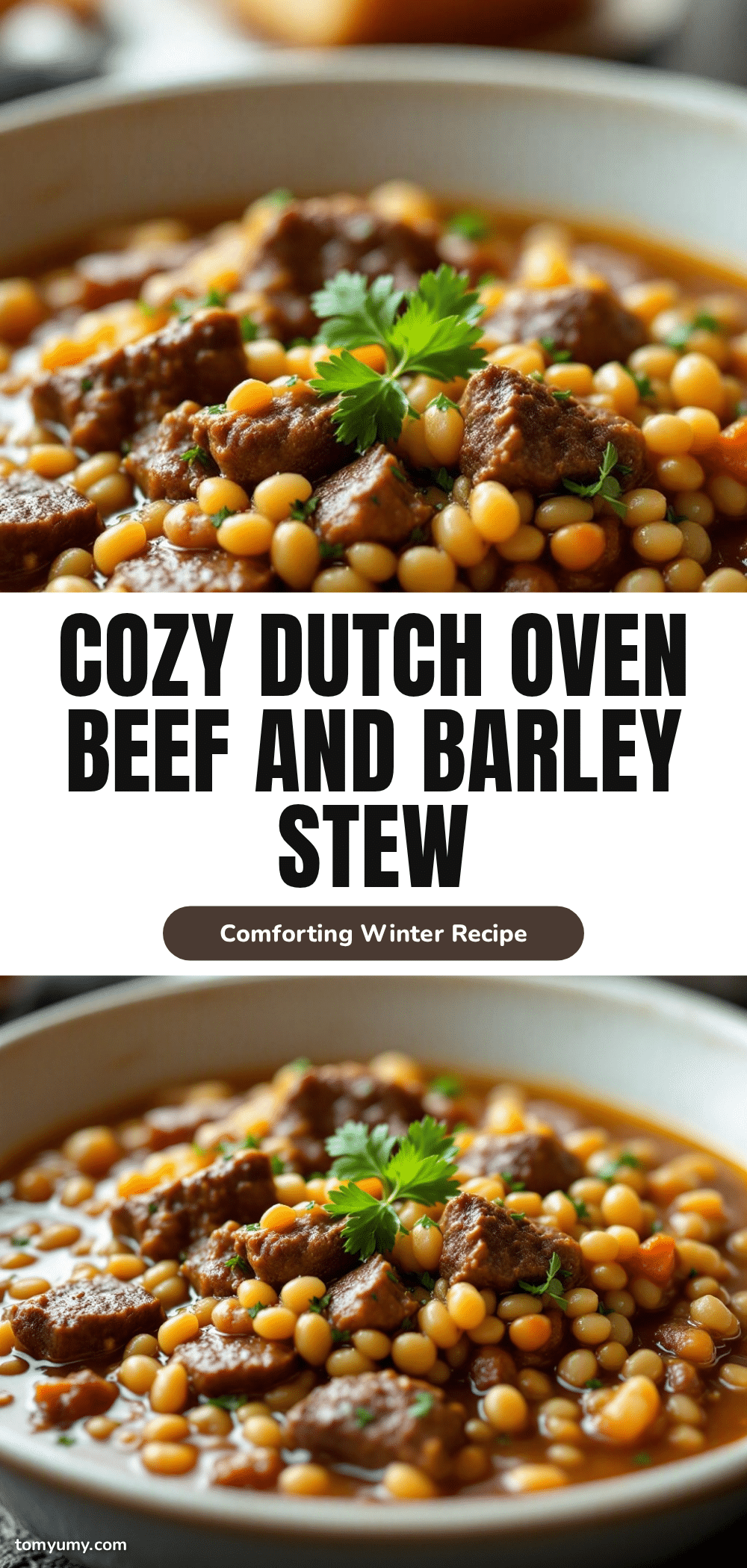
Cozy Dutch Oven Beef and Barley Stew
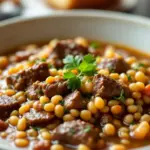
A hearty, slow-simmered winter stew featuring tender beef chuck, pearl barley, and root vegetables, braised in a rich broth with red wine and herbs for deep, caramelized flavor.
- Prep Time: 20 minutes
- Cook Time: 2 hours 45 minutes
- Total Time: 3 hours 5 minutes
- Yield: 6 servings 1x
- Category: Main Course
- Cuisine: American
Ingredients
- 2–3 lbs beef chuck roast, cut into 1.5-inch cubes
- 1 cup pearl barley
- 3–4 large carrots, peeled and cut into thick chunks
- 2 large yellow onions, diced
- 4 cloves garlic, minced
- 2 tbsp tomato paste
- 4 cups low-sodium beef broth
- 1/2 cup dry red wine (such as Cabernet Sauvignon or Merlot)
- Fresh thyme sprigs and bay leaves
- Salt and black pepper to taste
- Butter and olive oil for searing
Instructions
- Pat beef cubes dry and season generously with salt and pepper.
- Heat Dutch oven over medium-high heat with olive oil and half the butter. Sear beef in batches until deeply browned (3-4 minutes per side). Remove and set aside.
- Reduce heat to medium. Add remaining butter, onions, and carrots. Cook until onions are translucent and carrots soften (5-7 minutes).
- Add garlic and tomato paste; cook for 1 minute until fragrant and paste darkens.
- Pour in red wine to deglaze the pot, scraping up brown bits (fond). Simmer for 2-3 minutes.
- Return beef and juices to the pot. Add broth, bay leaves, and thyme. Bring to a boil, then reduce heat to low and cover.
- Simmer gently for 1.5 hours until beef is tender.
- Stir in pearl barley. Cover and simmer for another 45-60 minutes until barley is cooked and stew is thickened.
- Remove lid, taste, and adjust seasoning. Remove bay leaves and thyme stems. Let rest for 10 minutes before serving.
Notes
Do not rush the browning step; it creates the flavor foundation. If using a slow cooker, brown beef and veggies separately first, then cook on low for 6-8 hours, adding barley in the last hour. Freeze stew without barley to prevent mushiness upon thawing.
Nutrition
- Serving Size: 1 bowl
- Calories: 450
- Sugar: 5
- Sodium: 600
- Fat: 18
- Saturated Fat: 7
- Carbohydrates: 42
- Fiber: 6
- Protein: 35
Keywords: beef stew, barley stew, dutch oven recipe, winter comfort food, slow cooker alternative, hearty stew, one pot meal