The kitchen clock read 4:45 PM and the oven was already screaming at 450°F. I stood there holding a meat thermometer like it was a holy relic, sweat beading on my forehead despite the chill coming off the freezer. The prime rib, a magnificent slab of marbled beef that cost more than my weekly grocery budget, was sitting on the counter looking judgmental. Everyone knew the rules. You don’t rush prime rib. You don’t panic. But when the in-laws are arriving in forty-five minutes and you’re the designated “expert” cook, panic is the only thing rising faster than the oven temperature.
I had planned to roast this slowly, low and slow, for hours. Then life happened. A spilled glass of wine, a dog that needed immediate attention, and a sudden realization that I had no time to spare. So, I did what any stressed-out home cook would do. I improvised. I threw on a thick crust of herbs, garlic, and Dijon mustard, cranked the heat, and prayed. The smell of searing beef and rosemary filled the house, masking the tension.
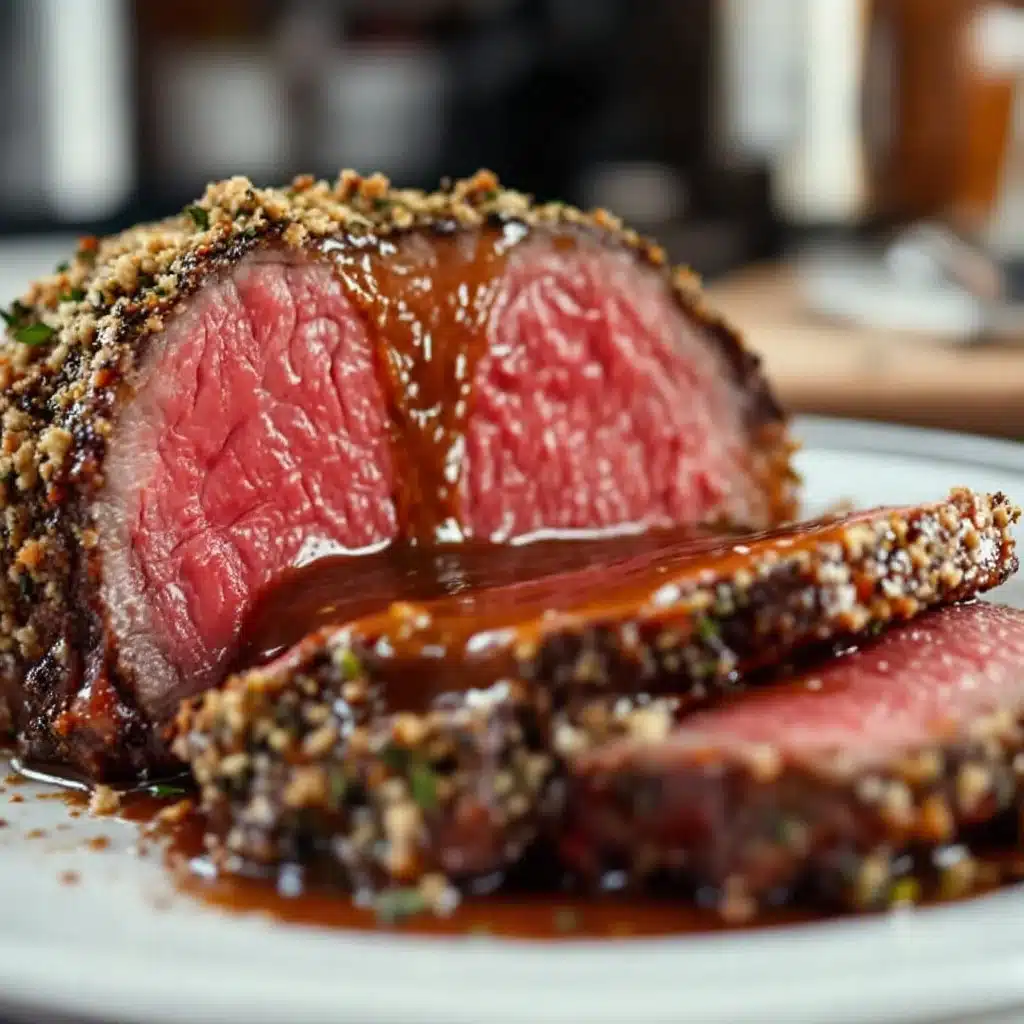
Honestly, I was terrified it would be dry. But as I sliced into that first piece, the juices ran clear and pink, and the crust cracked satisfyingly under my knife. It was tender, flavorful, and completely un-rushed. That night, the silence at the table was the best compliment I could have asked for. This herb-crusted prime rib with au jus isn’t just about the meat; it’s about saving the day when things go sideways. It’s the recipe I make when I need to look like I know what I’m doing, even when I’m barely holding it together.
Why You’ll Love This Recipe
Let’s be real for a second. Cooking a whole roast can feel intimidating. It’s a big purchase, a big commitment, and if you mess it up, it’s expensive dinner waste. But this herb-crusted prime rib changes the game. It’s not just another dry, overcooked holiday disaster. It’s the kind of dish that makes people stop talking and just eat.
Here is why this recipe earns its spot on your table:
* **Quick & Easy Prep:** The hard work happens while the oven does the heavy lifting. You spend about 15 minutes creating that incredible crust, and then you can go relax.
* **Simple Ingredients:** You don’t need rare spices or fancy gadgets. Just good beef, fresh herbs, and pantry staples.
* **Perfect for Gatherings:** Whether it’s Sunday dinner or a last-minute dinner party, this roast is the centerpiece that demands attention.
* **Crowd-Pleaser:** Kids might grumble about vegetables, but they never complain about tender, juicy beef. It’s a universal favorite.
* **Unbelievably Delicious:** The combination of the savory herb crust and the rich, peppery au jus is next-level comfort food.
What makes this different from the other prime rib recipes online? It’s the technique. Most recipes tell you to sear it for an hour. This method uses a high-heat start to lock in the juices and create that crunchy, aromatic exterior, followed by a gentle finish. It’s foolproof. I’ve tested this method so you don’t have to burn your dinner. It’s the kind of recipe that builds your confidence in the kitchen. It’s not just food; it’s a victory.
What Ingredients You Will Need
This recipe relies on the quality of the beef, so don’t cheap out. The rest of the ingredients are there to support the meat, not hide it. You want a blend of fresh aromatics and bold flavors.
**For the Meat:**
* **Prime Rib Roast (Bone-in or Boneless):** Aim for 5-7 lbs. Look for good marbling; that’s where the flavor lives. I prefer bone-in because the bone adds depth to the au jus later.
* **Kosher Salt:** Use coarse salt for rubbing. It adheres better and seasons evenly.
* **Freshly Cracked Black Pepper:** Don’t use the pre-ground stuff. Fresh pepper has a bright, spicy kick that stands up to the beef.
**For the Herb Crust:**
* **Fresh Rosemary:** 2-3 sprigs, finely chopped. Rosemary is piney and strong, perfect for beef.
* **Fresh Thyme:** 1 tablespoon, leaves stripped. It adds an earthy, subtle note.
* **Fresh Parsley:** 2 tablespoons, chopped. Adds a fresh, grassy balance to cut the richness.
* **Garlic:** 4-5 cloves, minced fine. Garlic is non-negotiable here.
* **Dijon Mustard:** 2 tablespoons. This acts as a glue for the herbs and adds a tangy depth.
* **Olive Oil:** 3 tablespoons. Helps conduct heat and brown the herbs.
* **Parmesan Cheese:** 2 tablespoons, grated. Adds a salty, umami crunch to the crust.
**For the Au Jus:**
* **Beef Broth:** 2 cups, low-sodium so you can control the salt.
* **Red Wine:** ½ cup. A dry red like Cabernet or Merlot adds complexity.
* **Shallot:** 1 small, finely diced. Sweeter and more delicate than onion.
* **Butter:** 1 tablespoon. To finish the sauce and give it a glossy sheen.
If you can’t find fresh herbs, dried works in a pinch, but use half the amount. Fresh is best for that vibrant color and flavor. For the wine, don’t drink it if you wouldn’t cook with it. And if you’re watching sodium, keep an eye on the broth and skip the extra salt in the crust.
Equipment Needed
You don’t need a fancy kitchen to pull this off, but having the right tools helps.
* **Roasting Pan with Rack:** This is essential. The rack lifts the meat so it cooks evenly and doesn’t sit in its own fat. A stainless steel pan is best because it’s durable and easy to clean.
* **Instant-Read Thermometer:** This is your best friend. Guessing doneness is how you end up with shoe leather. I recommend a digital probe thermometer for accuracy.
* **Sharp Carving Knife:** A long, sharp blade makes slicing clean cuts much easier. A dull knife will crush the meat.
* **Small Saucepan:** For making the au jus. Any heavy-bottomed pan works.
* **Meat Twine (Optional):** If you buy a boneless roast, tying it helps it keep a uniform shape.
I once tried roasting without a rack, and the bottom was soggy. Don’t make my mistake. If you don’t have a roasting rack, you can lay chopped vegetables like carrots and onions at the bottom of the pan to act as a bed. It’s a cheap, easy hack.
Preparation Method
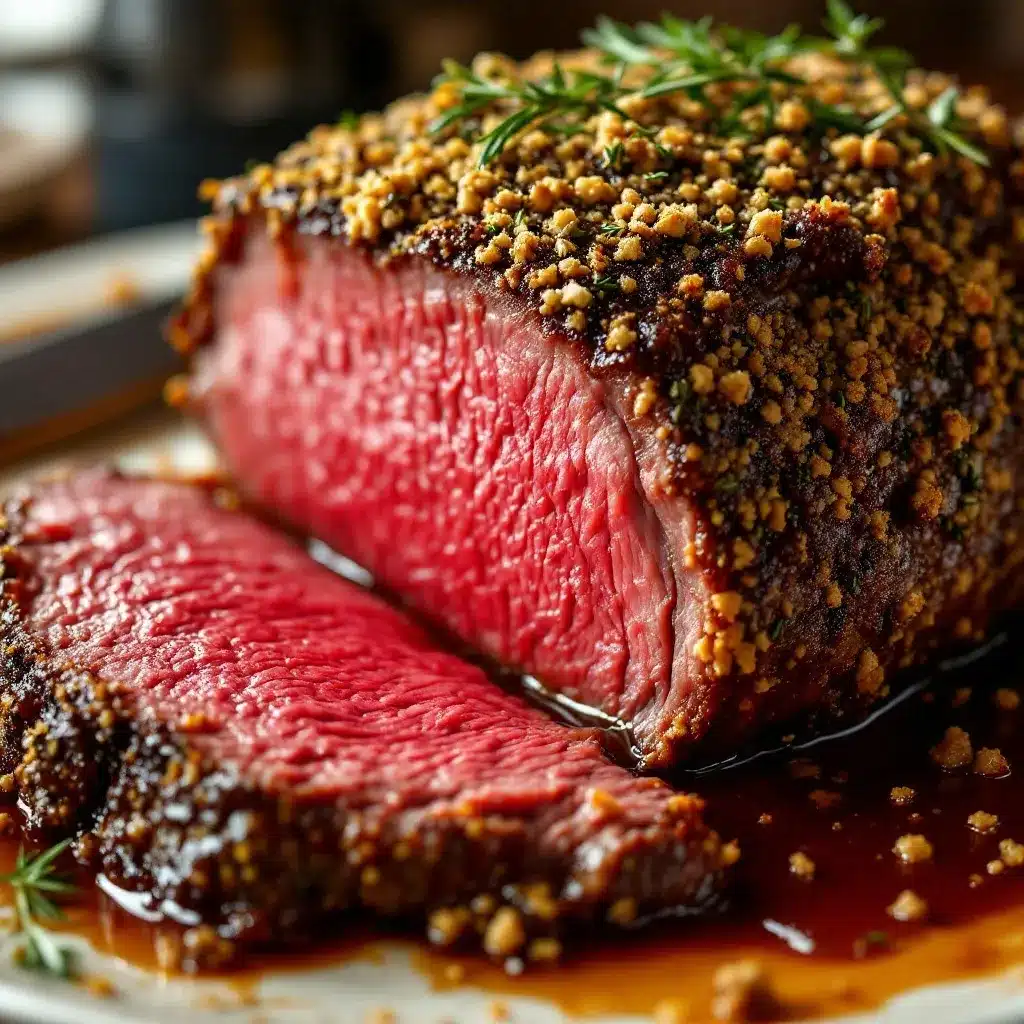
Let’s get this roast into the oven and make some magic happen.
1. **Prep the Meat (10 minutes):** Take the prime rib out of the fridge about an hour before cooking. Let it come to room temperature. This ensures even cooking. Pat it dry with paper towels. Moisture is the enemy of a good crust.
2. **Make the Herb Paste (5 minutes):** In a small bowl, mix the chopped rosemary, thyme, parsley, minced garlic, Dijon mustard, olive oil, Parmesan, salt, and pepper. It should look like a thick, green paste.
3. **Apply the Crust (5 minutes):** Rub the mustard-herb mixture all over the roast. Get into every nook and cranny. Press it in gently so it sticks.
4. **Sear the Roast (15 minutes):** Preheat your oven to 450°F (230°C). Place the roast on the rack in the pan. Put it in the oven for 15 minutes. This high heat starts the browning process.
5. **Lower the Heat (Cooking):** After 15 minutes, reduce the oven temperature to 325°F (165°C). Do not open the oven door. Let it roast for about 15-20 minutes per pound for medium-rare.
6. **Check the Temperature (Critical):** Insert your thermometer into the thickest part of the meat, avoiding the bone. For medium-rare, pull it out at 125°F (52°C). For medium, aim for 135°F (57°C). The temperature will rise a few degrees while resting.
7. **Rest the Meat (20 minutes):** This is the hardest part. Remove the roast from the oven and tent it loosely with foil. Let it rest for at least 20 minutes. This allows the juices to redistribute. If you cut it now, the juice runs out and the meat dries up.
8. **Make the Au Jus (10 minutes):** While the meat rests, make the sauce.
9. **Slice and Serve:** Slice against the grain and serve with the warm au jus.
How do I make the au jus?
While the meat rests, use the same roasting pan. Pour off most of the fat, leaving about a tablespoon. Place the pan on the stovetop over medium heat. Add the diced shallot and cook until soft, about 3 minutes. Deglaze with the red wine, scraping up any brown bits from the bottom. Those bits are flavor gold. Let the wine reduce by half. Add the beef broth and bring to a simmer. Cook for 5 minutes to thicken slightly. Stir in the butter at the end for a glossy finish. Strain if you want it smooth, or leave the shallots for texture.
Cooking Tips & Techniques
Cooking prime rib is less about following steps and more about understanding the meat. Here are some tips that come from years of trial and error (and a few burnt dinners).
* **Room Temperature Matters:** Never put a cold roast in a hot oven. It shocks the meat and leads to uneven cooking. Give it time to warm up.
* **Don’t Overcook It:** Prime rib is best served medium-rare. If you cook it to well-done, it loses all its tenderness. Use a thermometer. It’s not cheating; it’s science.
* **The Rest is Non-Negotiable:** I know you’re hungry. I know the smell is driving you crazy. But wait. The 20-minute rest is crucial. It’s the difference between juicy slices and a dry mess.
* **Searing for Flavor:** The initial high heat creates the Maillard reaction, which gives that deep, savory crust. Don’t skip it.
* **Trusting Your Nose:** If the herbs start smoking, your oven is too hot. Lower it slightly. The herbs should brown, not burn.
I once tried to save time by skipping the rest. Big mistake. The plate was a swimming pool of juice, and the meat was tough. Don’t be that person. Plan your sides around the resting time. Start your potatoes or vegetables so they are ready when the meat is.
Variations & Adaptations
This recipe is a framework, not a rulebook. Feel free to make it your own.
* **Spicy Kick:** Add a teaspoon of red pepper flakes or a dash of cayenne to the herb paste. It adds a nice heat that cuts through the fat.
* **Mustard Swap:** If you don’t like Dijon, use whole-grain mustard. It adds a bit more texture and tang.
* **Herb Blend:** Swap rosemary for sage or tarragon. Sage is great with pork, but it works well with beef too. Tarragon adds an anise note that’s interesting.
* **Gluten-Free:** This recipe is naturally gluten-free, but double-check your broth and wine. Some broths have hidden gluten.
* **Low-Sodium:** Skip the salt in the crust and use low-sodium broth. You can always add salt at the table.
I once made this with a pesto base instead of the herb paste. It was rich and flavorful, though a bit heavy. It’s a good option if you have leftover pesto in the fridge.
Serving & Storage Suggestions
Prime rib is a showstopper, so present it well. Slice it against the grain on a warm platter. Garnish with fresh parsley or rosemary sprigs. Serve the au jus in a gravy boat on the side.
**What to Serve With It:**
* Roasted potatoes are classic.
* Green beans with almonds.
* Creamed spinach.
* A simple arugula salad with lemon vinaigrette to cut the richness.
For drinks, a full-bodied red wine like Cabernet Sauvignon is the traditional pairing.
**Storage:**
Leftover prime rib is amazing. Store it in an airtight container in the fridge for up to 3 days. You can also freeze it for up to 3 months.
**Reheating:**
To reheat, slice the meat and warm it gently in a skillet with a splash of broth. Avoid the microwave, as it tends to dry out the beef. Or, wrap slices in foil and warm them in a low oven.
The flavors actually improve the next day as they meld together. Leftover roast beef sandwiches are legendary.
Nutritional Information & Benefits
Prime rib is rich in protein, iron, and vitamin B12. It’s a nutrient-dense food that provides sustained energy. However, it is also high in saturated fat and calories, so enjoy it in moderation.
* **Protein:** Essential for muscle repair and growth.
* **Iron:** Helps transport oxygen in the blood.
* **Zinc:** Supports immune function.
If you are watching your fat intake, trim the visible fat before cooking. And remember, the au jus adds sodium, so use it sparingly. This recipe is not a diet food, but it is a wholesome, real-food meal. Balance it with plenty of vegetables.
Conclusion
This herb-crusted prime rib with au jus is more than just a meal. It’s a confidence builder. It’s the dish that turns a stressful evening into a memorable one. You don’t need to be a professional chef to make this. You just need good meat, fresh herbs, and a willingness to let the oven do the work.
I hope you try this recipe. I hope it becomes a staple in your home, just like it is in mine. Feel free to adjust the herbs or spices to suit your taste. Cooking is personal. Share your results in the comments below. I love hearing how others adapt these recipes. And if you make it, tag me on social media. I’d love to see your masterpiece.
Enjoy every bite. It’s worth the effort.
FAQs
Can I cook a boneless prime rib?
Yes, you can. The cooking time is similar, but you may need to adjust the resting time slightly. Boneless roasts cook a bit faster. Just watch the temperature.
How do I know when the prime rib is done?
Use a meat thermometer. For medium-rare, aim for 125°F (52°C) before resting. For medium, 135°F (57°C). The temperature will rise 5-10 degrees while resting.
Can I make the au jus ahead of time?
Yes, you can make the au jus a day ahead. Store it in the fridge. Reheat it gently on the stovetop before serving. It might thicken in the fridge, so add a splash of broth or water when reheating.
What is the best cut of beef for this recipe?
A rib roast, also known as prime rib, is the best cut. It has enough fat and marbling to stay juicy. Look for a “first cut” or “second cut” depending on your preference. First cut is more uniform. Second cut is thicker and juicier.
Can I freeze leftover prime rib?
Yes, freeze it in an airtight container for up to 3 months. Thaw it in the fridge overnight before reheating. It works great for sandwiches or salads.
Pin This Recipe!
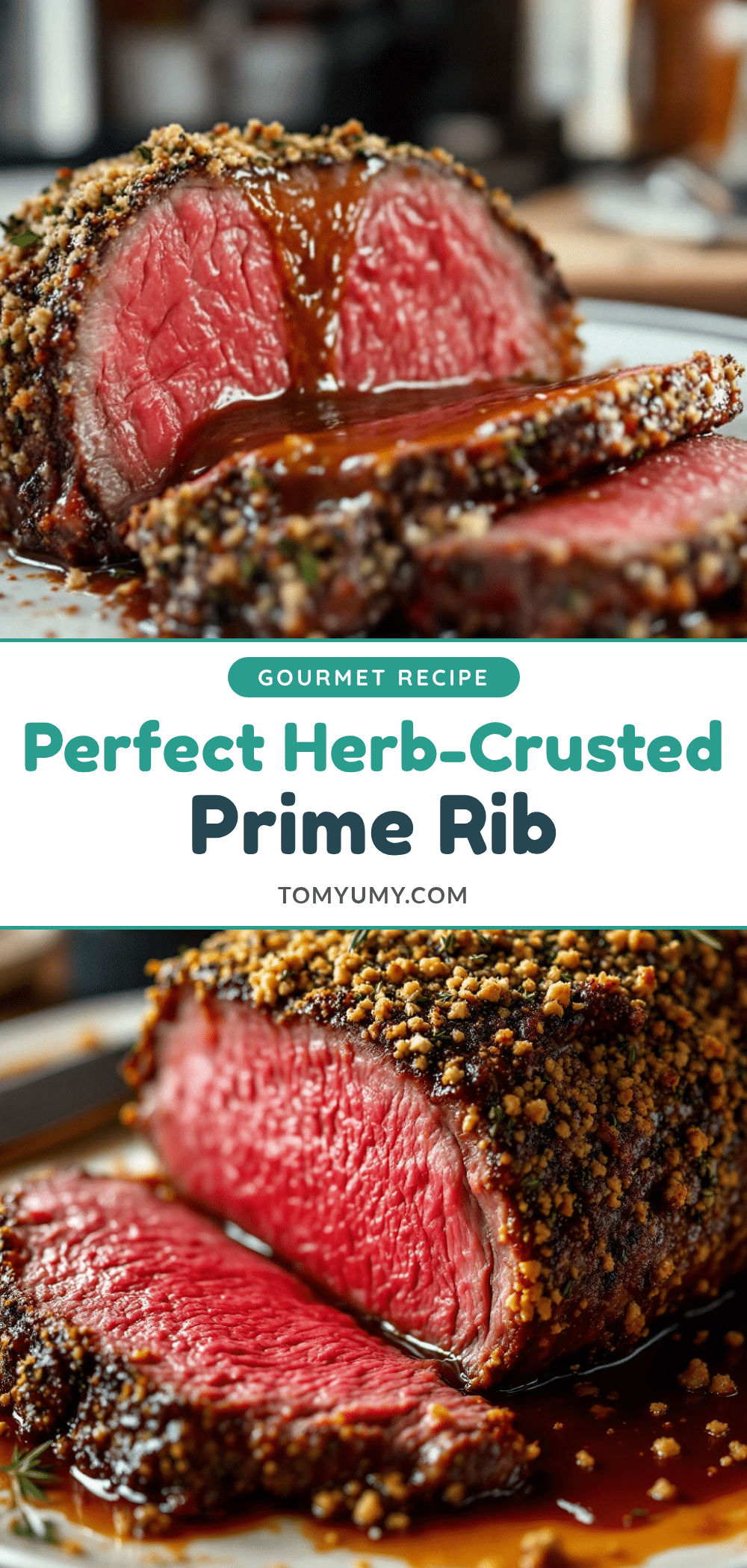
Perfect Herb-Crusted Prime Rib Roast with Au Jus
A high-heat start followed by a gentle roast creates a tender, juicy prime rib with a crunchy herb crust and rich au jus, perfect for last-minute gatherings.
- Prep Time: 15 minutes
- Cook Time: 1 hour 15 minutes (approx. 15 min sear + 60 min roast for 4lb roast)
- Total Time: 1 hour 30 minutes
- Yield: 6-8 servings 1x
- Category: Main Course
- Cuisine: American
Ingredients
- 5–7 lbs Prime Rib Roast (Bone-in or Boneless)
- Kosher Salt (coarse)
- Freshly Cracked Black Pepper
- 2–3 sprigs Fresh Rosemary, finely chopped
- 1 tablespoon Fresh Thyme, leaves stripped
- 2 tablespoons Fresh Parsley, chopped
- 4–5 cloves Garlic, minced
- 2 tablespoons Dijon Mustard
- 3 tablespoons Olive Oil
- 2 tablespoons Parmesan Cheese, grated
- 2 cups Beef Broth (low-sodium)
- ½ cup Red Wine (dry, such as Cabernet or Merlot)
- 1 small Shallot, finely diced
- 1 tablespoon Butter
Instructions
- Remove the prime rib from the refrigerator about an hour before cooking to bring it to room temperature. Pat dry with paper towels.
- Preheat oven to 450°F (230°C).
- In a small bowl, mix chopped rosemary, thyme, parsley, minced garlic, Dijon mustard, olive oil, Parmesan, salt, and pepper to form a thick paste.
- Rub the herb paste all over the roast, pressing it into every nook and cranny.
- Place the roast on a rack in a roasting pan and sear in the oven for 15 minutes.
- Reduce oven temperature to 325°F (165°C) without opening the door. Roast for 15-20 minutes per pound for medium-rare.
- Insert an instant-read thermometer into the thickest part of the meat (avoiding bone). Pull out at 125°F (52°C) for medium-rare or 135°F (57°C) for medium.
- Remove roast from oven, tent loosely with foil, and rest for at least 20 minutes.
- While meat rests, place the roasting pan on the stovetop over medium heat. Pour off excess fat, leaving about 1 tablespoon.
- Add diced shallot and cook until soft (about 3 minutes).
- Deglaze with red wine, scraping up brown bits. Reduce wine by half.
- Add beef broth and simmer for 5 minutes to thicken slightly.
- Stir in butter for a glossy finish. Strain or leave with shallots.
- Slice meat against the grain and serve with warm au jus.
Notes
Let the meat come to room temperature before cooking for even results. Do not skip the resting period, as it allows juices to redistribute. If you don’t have a roasting rack, use chopped vegetables as a bed. The au jus can be made ahead and reheated gently.
Nutrition
- Serving Size: 1 slice of prime rib
- Calories: 650
- Sugar: 1
- Sodium: 400
- Fat: 45
- Saturated Fat: 18
- Carbohydrates: 2
- Protein: 55
Keywords: prime rib, herb crust, au jus, roast beef, dinner party, holiday meal, high heat roast, beef recipe